Executive Office
Relocation Playbook
San Francisco Class A towers. Arizona corporate campuses. One carrier, zero subcontractors, and a DOT inspection record that exceeds the national average.
Built for COOs and facility managers who measure risk in downtime minutes, not moving boxes.
Request a Site SurveyWhat does a well-run office relocation look like?
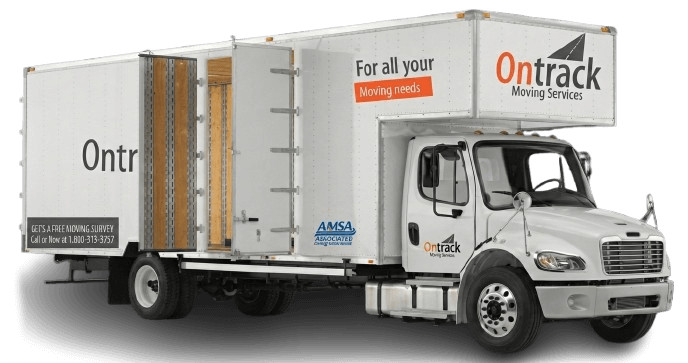
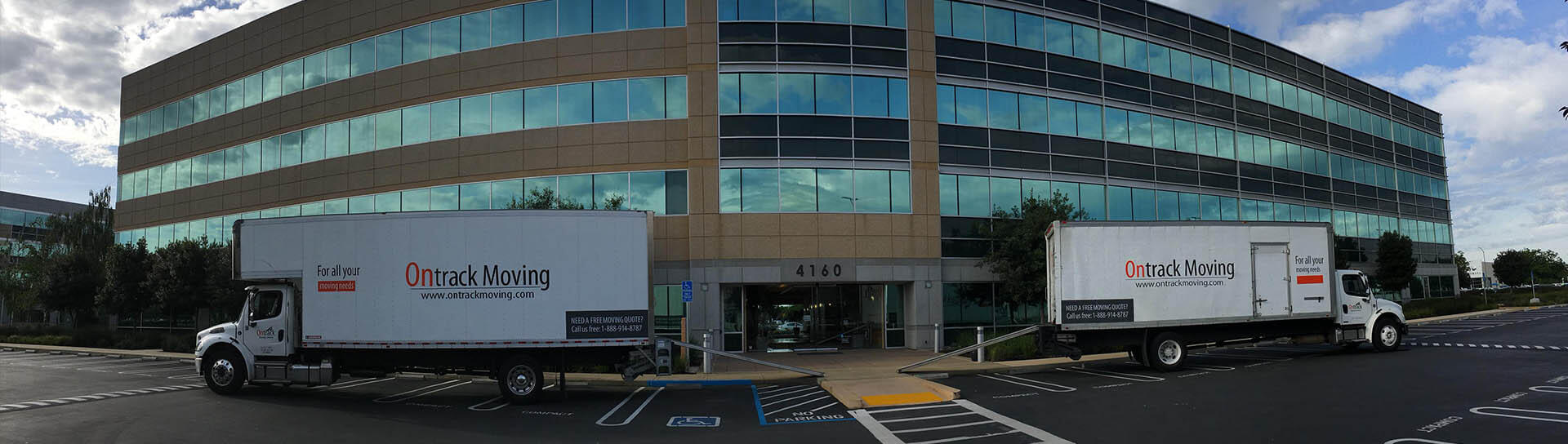
As of June 2026, Ontrack Moving® runs executive office relocations in San Francisco and Arizona as an asset-based carrier, USDOT #2551548, with a DOT inspection record that exceeds the national average, a $10,000,000 Combined Protection Tower for building liability, and standard $0.60/lb cargo liability per article. In Class A towers like Salesforce Tower and 555 California, crews coordinate the COI with the building's property manager, stage after-hours freight elevator windows, and run the Phase-Shift Protocol™ with color-tagged workstations matched to floor-plan zones.
25,000+ Moves completed since 2010, across the Bay Area and, since 2024, the Phoenix Metro. Asset-based carrier with Ontrack crews, company-owned trucks, and dual-market terminals in Hayward, CA and Peoria, AZ.
Ontrack Moving: Office Relocation Overview
- service area: San Francisco Bay Area, Silicon Valley, Phoenix Metro, and CA-AZ interstate corridor
- Specialization: Class A building compliance, after-hours moves, IT relocation, law library mapping
- Credentials: USDOT #2551548, MC #889001, CAL-T190721. DOT Inspection Record Exceeding the National Average.
- Insurance: $10M building liability, plus standard $0.60/lb cargo liability per article. COI issuance for property management, typically the same business day.
- Pricing: Local office moves are billed hourly; CA-AZ corridor moves are flat-rate by truck count. Final charges will be based on actual labor time, materials used, access conditions, scope changes, waiting time, and any additional services requested or required to complete the move.
- Trust Signal: 4.9/5 average from 2,847+ reviews across both markets.
- Contact: (888) 914-8787
The Phase-Shift Protocol™
Your business closes Friday at 5 PM. It is planned to reopen Monday at 8 AM. That is 63 hours, and every one of them is planned. Every department, every server rack, every file cabinet moves in a calculated sequence designed to protect business uptime. For a real example, see how we kept a parts warehouse in sequence through a move in our warehouse and office relocation case study. For a phased move of an office, a warehouse and an outdoor yard of light poles and traffic signal equipment, see our San Jose contractor yard case study.
Priority Infrastructure
- Anti-Static ESD Handling: Server racks, network switches, and UPS systems. Crew members wear grounding straps. Each rack photographed front and rear for cable mapping.
- Executive Suites: C-suite offices, boardrooms, and secure document storage. Documented handling log for sensitive materials.
- Confidential Files: Sealed, bar-coded, and logged in a documented handling record.
Volume Department Transfer
- Cubicle Disassembly: Panel systems, open-plan workstations, and modular furniture. Components tagged with floor plan coordinates.
- Common Areas: Conference rooms, reception furniture, kitchen appliances. Masonite floor runners on all routes.
- Sequential Shelf Mapping: Law libraries and file rooms indexed, barcoded, and transported in shelf-sequence order for exact reconstruction.
Precision Placement
- IT Reconnection: Cable management restoration using pre-move photo documentation. Reconnect verification with your IT vendor where required.
- Final Walkthrough: Room-by-room inspection with your facilities manager. Punch-list items resolved on-site.
- Monday Readiness: Desks positioned, monitors connected, handsets placed and cabled. Planned so your team can walk in and get to work.
Why Phase-Shift Matters
A disorganized office move can cost a company days of lost productivity per employee, and on a 50-person floor that adds up quickly. The Phase-Shift Protocol is built to compress that risk window.
Overcoming Southern San Francisco Topography
San Francisco's terrain is not flat. Many commercial buildings in SoMa, South Beach, and the Financial District sit above sub-grade garages, steep loading ramps, and below-street-level docks that standard carriers refuse to service.
Sub-Grade Garage Loading
Many South SF office buildings have loading docks 10-15 feet below street level, accessible only via tight spiral ramps or steep inclines. Our crews pre-survey every dock to measure ramp grade, clearance height, and turning radius before move day.
- Ramp-grade assessment to determine dolly and hand-truck viability
- Rubber-wheeled platform carts for controlled descent on steep grades
- Two-man braking protocol on inclines to prevent runaway loads
Steep Driveway Staging
Properties along Potrero Hill, Twin Peaks corridor, and the hills south of Market Street often feature driveways with 15-20% inclines. A 500-lb server rack on a steep grade becomes a liability without the right equipment and technique.
- Shuttle vehicles staged at street level when 40-ft trucks cannot access the driveway
- Stair-climbing dollies and electric power-assists for incline loads
- Wheel chocking and truck braking verified before any tailgate opens on a slope
Pre-Move Site Survey Required
Every commercial move begins with a physical site survey where our operations lead measures dock clearance, ramp grade, elevator dimensions, and staging zones. This is how we reduce the likelihood of move-day surprises on San Francisco's most challenging topography.
Landmark Compliance Hub
Every Class A tower has its own freight elevator schedule, COI threshold, floor protection mandate, and after-hours access protocol. We do not learn these on move day. We build a written compliance profile for each building before move day, working from the requirements its property manager publishes. See how these protocols come together on a real project in our San Francisco office move and decommission case study.
This is a partial list. Our operations team builds a building-specific compliance profile for each Class A property we work in across San Francisco, the Peninsula, and Silicon Valley.
Same-Day COI
Certificate of Insurance generated and delivered to property management typically within the same business day.
Floor Protection
Masonite board runners, corner guards, elevator pads, and door jamb protectors installed before any furniture moves.
Ontrack Crews Only
Every crew member is our direct employee, vetted through our hiring process and trained on Class A building protocols. No subcontractors, no temp staffing.
Our Colour-Coded Floor-Plan Zoning
Boxes, furniture, and cable bundles are tagged with a department color before they leave the origin. At the destination, our crews match tags to floor-plan zones and place items in the mapped room. This is how 200+ workstations are routed to the correct zone from the labeling system.
Blue
IT / Server Room
Green
Sales
Yellow
Production
Red
Design
Purple
Conference
Orange
Common Areas
How It Works in the Field
At packing, inventoried items receive a color-coded label matching the destination zone on the new floor plan. At unloading, crews read the color, check the floor plan posted at each elevator bank, and route items directly to the correct room. Less guessing, less re-sorting, fewer "where does this go?" delays. A 200-person office that would typically take 3 passes to sort is planned to land correctly on the first.
The Thermal-Staging Protocol™
San Francisco firms opening Phoenix satellite offices face a hidden risk: furniture and IT equipment built for 55-65% Bay Area humidity can crack, warp, or malfunction when dropped into Arizona's 5-15% desert climate overnight.
Our Peoria terminal at 8662 N 78th Ave serves as a thermal acclimation buffer. Sensitive assets stage in our climate-controlled warehouse for 24-48 hours, transitioning gradually from coastal humidity to desert conditions before final delivery to your new office.
Day 1-2: Bay Area Departure
Load at your SF, Peninsula, or Silicon Valley office. Full COI compliance, floor protection, and Anti-Static ESD protocols for server equipment.
Day 3: Transit via I-5 to I-10
750-mile direct haul on air-ride suspension. Same truck, single carrier. GPS monitoring.
Day 4: Peoria Terminal Staging
Assets staged in our climate-controlled Peoria warehouse. Wood furniture, monitors, and sensitive equipment acclimate to Arizona's low-humidity environment.
Day 5: Final Delivery
Precision placement at your Arizona office. Cubicle reassembly, IT reconnection, and facilities manager walkthrough. Planned for Monday-morning readiness.
Asset-Based Disposal Coordination
Office relocations are rarely a clean lift-and-place. Most involve disposing of a meaningful share of existing furniture, outdated IT equipment, and end-of-life assets. A second vendor for disposal means a second crew, a second insurance liability, and a second schedule conflict. We handle both in a single operation.
How It Works
1. Tag and Sort On-Site
During packing, items in scope are tagged either MOVE (to new location) or DISPOSE (to Hayward terminal). No separate crew, no separate truck schedule.
2. Stage at Hayward Terminal
Disposal items are routed to our Hayward warehouse (22950 Clawiter Rd) where they are sorted for responsible recycling or e-waste destruction. Your building dock is cleared on schedule, not held hostage by a disposal vendor.
3. Documentation and Handling Records
You receive a manifest of the disposed items in scope with disposal method (recycled or destroyed). For IT assets, we route data-bearing equipment to an e-waste recycler rather than to landfill, and a certificate of destruction is available on request.
By the Numbers
Disposal capacity per project, staged at our Hayward terminal
One team handles both the move and the disposal. No second vendor.
Disposal items leave on our trucks. No separate hauler blocking the loading dock.
Why Legacy Movers Fail the Trust Audit
Your CFO signs off on vendor risk. Your COO manages the timeline. Neither can afford a carrier with compliance gaps. The FMCSA SAFER database is public. We encourage you to verify every claim below.
FMCSA verified
2,847+ reviews
Built for Class A COI thresholds
Est. 2010
The Institutional Risk Factor
Large institutional carriers with aging fleets and high subcontractor ratios can post vehicle Out-of-Service rates above the 22.26% national average for vehicle inspections in the FMCSA SAFER database. Ontrack maintains a DOT inspection record that exceeds the national average and a 4.9/5 rating across 2,847+ reviews. Every truck is company-owned. Every crew member is an Ontrack employee.
The $10M Tower Protection
Our $10M Tower Protection is not just a number. Certificates show our policy limits, and we work to comply with the COI thresholds that Class A property managers send us at buildings like 88 Kearny Street and 580 California Street. When your building management requests proof of coverage, we deliver a COI naming them as additional insured, typically within the same business day.
Verify our record: FMCSA SAFER Lookup. USDOT #2551548
Frequently Asked Questions
We use a Phase-Shift Protocol that splits large office moves into three staged phases across Friday evening through Sunday afternoon. Priority infrastructure (servers, executive suites) moves first, volume departments move Saturday, and precision placement with IT reconnection completes Sunday for Monday-morning readiness.
We work in Class A properties across San Francisco and build the building-specific compliance profile before move day. We coordinate freight elevator windows with your property manager, prepare the COI, and apply floor protection per building protocol for towers across the Financial District, SoMa, and South Financial District.
Sequential Shelf Mapping is our barcode-indexed system for law library relocations. Every shelf section is labeled, photographed, and barcoded before disassembly. At the destination, shelves are reconstructed in shelf-sequence order so attorneys can locate case files Monday morning without re-indexing.
Server and rack equipment is handled using Anti-Static ESD protocols: grounding straps on all crew members, ESD-safe packaging, air-ride suspension transport, and continuous power documentation. Each rack is photographed front and rear for cable mapping before disconnection and labeled for exact position restoration.
Yes. We operate terminals in both Hayward, CA (22950 Clawiter Rd) and Peoria, AZ (8662 N 78th Ave). For interstate office relocations, our Peoria terminal serves as a thermal staging facility where furniture acclimates to Arizona's low humidity before final delivery, reducing the risk of wood cracking and veneer separation.
Ontrack Moving carries $10M in building liability, the level Class A towers can require for Certificate of Insurance (COI) issuance, plus standard $0.60/lb cargo liability per article on your office contents. COIs are generated and delivered to property management firms typically within the same business day. Our USDOT #2551548 and MC #889001 are verifiable via FMCSA SAFER.
Related Commercial Services
SF Office Movers
Full-service office relocation for San Francisco high-rises, co-working spaces, and corporate campuses.
SF Office MovingServer and Data Center
Anti-static ESD protocols, cable mapping, air-ride transport for racks, switches, and UPS systems.
Data Center MovingLaw Firm Movers
Sequential Shelf Mapping, NDA compliance, secure documented handling for confidential files and case records.
Law Firm MovingCommercial Moving
Full commercial hub with links to all 17 city-specific commercial pages across the Bay Area and Phoenix Metro.
All Commercial ServicesBay Area to Phoenix
750-mile corridor logistics, flat-rate pricing, and direct-transit operations between both terminals.
Route DetailsExecutive Relocation Guide
High-End residential corridor playbook for Silicon Valley to Phoenix estate relocations.
View GuideOffice Relocation Guide
The 90-day plan for office managers. IT migration, packing, disposal, labeling, and move-day operations.
Read GuideOffice Relocation by Bay Area City
City-specific crews with local building knowledge, freight elevator coordination, and COI preparation for Class A tenants.
Palo Alto Office Movers
Stanford Research Park, Page Mill corridor, downtown Palo Alto towers.
Palo Alto OfficeSan Jose Office Movers
North First Street tech corridor, Adobe HQ area, Coleman Avenue business parks.
San Jose OfficeOakland Office Movers
Downtown Oakland towers, Jack London Square, Kaiser Center, Lake Merritt offices.
Oakland OfficeSanta Clara Office Movers
Great America Parkway, Mission College Boulevard, Intel campus area.
Santa Clara OfficeSan Mateo Office Movers
Bridgepointe office park, Concar Drive corridor, downtown San Mateo Class A towers.
San Mateo OfficeFremont Office Movers
Pacific Commons, Bayside Business Park, Warm Springs innovation district.
Fremont Office