Commercial Case Study

Case Study: A Warehouse and Office Relocation That Kept the Inventory in Order

A company with a working parts warehouse needed to relocate without losing the order of its inventory or shutting the operation down. Here is how the move was planned and run.

By Pablo Giordano, Owner, Ontrack Moving®  •  June 2026  •  9 min read

Commercial Case Study

Move the Operation Without Losing the Order of the Inventory

A Bay Area company was relocating its office and a working parts warehouse from the South Bay to the East Bay, and the priority was clear: keep the operation running and keep hundreds of numbered parts in their existing order through the move. This is an anonymized account of how Ontrack Moving planned and ran it.

In short: this was a combined office and warehouse relocation where keeping the inventory in sequence mattered as much as moving it. The warehouse held hundreds of numbered parts across several stocked areas, and they had to land at the new building in the same order they left the old one. The crew moved them on machine carts, library carts, panel carts, and speed-packs, kept each section's items grouped at the shelf level, and offered the company the option to move the inventory on its own equipment rather than boxing everything. The work was phased across multiple days so the business kept running through the transition.

Running it this way kept the parts in order and cut the pack and unpack time on both ends. For projects like this, see our Bay Area commercial movers and office relocation playbook.

TL;DR (30-Second Summary)

  • The job: a combined office and warehouse relocation, roughly 16,000 square feet, from the South Bay to the East Bay, ground floor to ground floor.
  • The priority: keep the operation running and keep the warehouse inventory in its existing numbered order.
  • Inventory integrity: hundreds of parts moved on machine carts, library carts, panel carts, and speed-packs, kept grouped by section at the shelf level.
  • The planning option we offered: move the warehouse inventory organized on its own equipment instead of boxing everything, to keep parts in order and cut pack and unpack time.
  • Loaded for order, not for volume: trucks were loaded to preserve the sequence rather than stacked to maximum capacity.
  • Lean office side: most desks and all cubicles stayed in place, so the office move was limited to specific items, including a large plan table that needed disassembly.
  • Phased schedule: office preparation first, then the office relocation, then the warehouse in stages over several days, to keep disruption to the business low.
  • Protection and coverage: $10,000,000 Combined Protection Tower for building and property liability, standard $0.60 per pound per article cargo liability, and a 0% Federal Out-of-Service Rate.

The Challenge: A Working Operation and a Warehouse of Numbered Parts

The company was relocating from one ground-floor facility in the South Bay to another in the East Bay. The office side was straightforward enough, but the warehouse was not. It held hundreds of parts stored across several distinct areas, an inventory cage, a job cage, a service area, a spare-parts room, and a consumables area, and every one of those parts had its place in a numbered system the business relied on day to day.

That is what made this more than a furniture move. If the parts arrived at the new building jumbled together, the operation would lose time digging through unsorted boxes to rebuild its own inventory, exactly when it needed to be back up and serving its departments. So the real challenge was not just moving the contents, it was moving them in a way that kept the numbered sequence intact and kept the business able to function while the move was underway.

The Solution: Move in Sequence, Not in a Pile of Boxes

The instinct on a lot of moves is to box everything, load the trucks to the ceiling, and sort it out later. For a parts warehouse, that approach quietly creates the biggest problem on the back end: an unsorted wall of cartons that someone has to re-inventory by hand. Ontrack Moving planned this one the other way around. The priority was set up front, keep the inventory grouped and in order, and the equipment and the truck loading were chosen to serve that priority rather than raw speed.

The core of the plan was to move much of the warehouse inventory on its own moving equipment instead of repacking it. The crew used machine carts, library carts, panel carts, and speed-packs to roll stocked items out in their existing groupings, keeping each section's numbered parts together at the shelf level. Because preserving that order was the point, the trucks were deliberately loaded to keep the sequence rather than stacked to maximum capacity. It is a trade the survey identified and the company agreed to: a little more space used on the trucks in exchange for inventory that lands in order and goes back on the racks without a re-sort.

What the Project Covered

  • A planning survey with the project manager to scope the office, the warehouse, the inventory areas, and the move sequence.
  • An office preparation day to disassemble the large plan table and other items that needed breaking down, and to foam-protect and cart the monitors.
  • The office relocation of the specific items in scope, with most desks and all cubicles left in place.
  • The warehouse relocation phased across several days, with the inventory kept grouped and in sequence.
  • Cart-based ordered transfer using machine carts, library carts, panel carts, and speed-packs, plus a pallet jack for palletized stock.
  • The option to move inventory on its own equipment rather than boxing everything, scoped during the survey.
  • Optional box and label delivery for the items the company did choose to pack, with unused cartons returnable for credit.
  • Building protection and coordination at both ground-floor facilities, with the $10M building and property liability tower behind the work.

The Survey: Planning the Sequence on the Ground

A move like this is planned on the floor, not on a spreadsheet. The owner and the project manager walked the operation to see how the inventory was laid out, how the areas connected, and what order the work needed to follow. Seeing the warehouse in person is what made the cart-based plan possible, because the groupings on the existing shelves are what the crew matched on the moving equipment. A project manager is assigned to oversee a job like this and to keep the client and the crew aligned on the sequence.

The survey also drew the line between what was moving and what was staying. Most of the desks and all of the cubicles were staying put, so the office side narrowed down to a clear list: the monitors, the chairs, a handful of tables, some metal job boxes, and a large plan table that needed disassembly. Scoping it that way kept the labor pointed at the items that actually had to move instead of handling furniture that was not going anywhere.

Keeping the Warehouse Inventory in Order

The heart of the project was the warehouse, and the heart of the warehouse was order. The crew worked it in stages over several days. Palletized stock moved on a pallet jack. Everything else rolled onto machine carts, library carts, panel carts, and speed-packs, loaded so the numbered sections stayed grouped at the shelf level. The instruction on the floor was simple and strict: keep the section numbers together, and do not leave a box or a part behind. Loading by section instead of by whatever fit next is slower per trip, which is why the trucks were not packed to maximum capacity, but it is what let the receiving crew put the inventory back in sequence at the new building.

Why Moving Parts on Their Own Carts Beats Boxing Everything

For a stocked warehouse, repacking the whole inventory into cartons doubles the handling, you pack it at the old building and unpack it at the new one, and it scrambles the order along the way. Moving the parts on machine carts and speed-packs in their existing groupings keeps the sequence intact and removes a full pack-and-unpack cycle. It is not the right call for every job, which is why a crew scopes it during the survey, but for a parts operation that lives and dies by its inventory order, it is often the faster and cleaner path.

Phasing the Move to Keep the Business Running

An operation that stocks and serves parts cannot go dark for a week. The project was sequenced so the business could keep functioning through the move: the office preparation came first, then the office relocation, then the warehouse in stages across several days. Moving the warehouse by section, rather than emptying it all at once, is what kept disruption to the operation low while the transition was underway. This is the same phased thinking laid out in our office relocation playbook and the protocol breakdown on the commercial moving hub.

The Office Side: Disassembly, Monitors, and a Lean List

Before the office items moved, the crew ran a preparation day to break down what needed breaking down. The large plan table and other items that called for disassembly were taken apart, and the monitors were protected in foam and loaded into machine carts rather than loose. Because most of the desks and all of the cubicles were staying, the office relocation itself was a focused list rather than a full tear-down, which kept it from competing with the warehouse work for crew and time.

Protection and Coverage on a Commercial Relocation

A combined office and warehouse move puts a crew in and around floors, doorways, loading areas, and racking at two facilities. Ontrack Moving carried its $10,000,000 Combined Protection Tower for building and property liability across the project, which covers the premises and structures the crew works in and around at both locations. The inventory and equipment themselves are covered separately under standard $0.60 per pound per article cargo liability under federal FMCSA rules, with additional valuation protection available for purchase.

An asset-based carrier with a real $10,000,000 building and property liability tower, standard $0.60 per pound per article cargo liability, and a clean 0% Federal Out-of-Service record is built to stand up to the due diligence a business runs before it lets a crew near its operation. Ontrack Moving runs the work with its own in-house crews, not a subcontracted team booked through a broker.

Coverage What it applies to
$10M Combined Protection Tower Buildings, premises, floors, loading areas, and the structures the crew works in and around at both facilities; general liability and workers compensation for the work performed.
$0.60/lb cargo liability The inventory, equipment, and items themselves, per article, under the federal FMCSA minimum. Additional valuation protection available for purchase.
0% Out-of-Service Rate The federal safety record under FMCSA inspection, verifiable under USDOT #2551548.

The Outcome

The office and the warehouse were relocated from the South Bay to the East Bay, and the inventory landed at the new building in the order it left the old one. Moving the parts on their own equipment kept the numbered sections grouped, the phased schedule kept the operation running through the transition, and the lean office list kept the crew focused on the items that actually had to move. The trade of loading for order over raw volume did exactly what it was meant to: it spared the receiving team the re-sort that an unsorted pile of boxes would have forced.

It is the kind of project that shows what an asset-based carrier brings to a working operation, the ability to plan the move around how the business actually runs rather than just hauling boxes. If your organization is planning a warehouse relocation, an office move, or a combined project where keeping the inventory in order matters, our commercial moving team and storage services can scope it with an on-site walkthrough.

Frequently Asked Questions

The inventory is kept grouped and in its existing sequence rather than being repacked into mixed boxes. On this project the crew moved the parts on machine carts, library carts, panel carts, and speed-packs, keeping each section's numbered items together at the shelf level so the order carried straight from the old racks to the new ones. Because keeping that order was the priority, the trucks were loaded to preserve organization rather than stacked to maximum capacity. That way the receiving team could put parts back in sequence at the new location instead of re-sorting a wall of boxes.

In many cases, yes, and on this project Ontrack Moving offered exactly that option. Instead of packing the entire warehouse into cartons, the crew moved much of the inventory organized on its own moving equipment, the machine carts and speed-packs, keeping the part numbers in sequence. For a parts operation this can keep the inventory in order and cut the pack and unpack time on both ends. It is a planning option a crew can offer after walking the warehouse, not a fit for every job, so it is scoped during the survey.

The work is phased across multiple days and sequenced by area so the operation can keep functioning through the transition. On this project the office preparation happened first, then the office relocation, then the warehouse was moved in stages over several days with the inventory kept in order. Moving in sequence, rather than emptying everything at once, is what keeps disruption to the business low while the move is underway.

They are wheeled transport carts used to move quantities of items in an organized way. A machine cart is a sturdy shelved cart that rolls loaded inventory or equipment from a building to the truck and back without repacking. A speed-pack is a reusable container that loads on a cart for the same purpose. Library carts and panel carts serve similar roles for shelved stock and panels. Used together, they let a crew move a warehouse of numbered parts while keeping the sequence intact.

Not always. On this project most of the desks and all of the cubicles stayed in place, so the office side was limited to specific items: the monitors, chairs, a few tables, and a large plan table that needed disassembly. What moves and what stays is decided with the client during the survey, which keeps the labor focused on the items that actually need to be relocated.

Ontrack Moving carries a $10,000,000 Combined Protection Tower for building and property liability, which covers the premises, floors, and structures the crew works in and around at both locations. The items themselves are covered separately under standard $0.60 per pound per article cargo liability under federal FMCSA rules, with additional valuation protection available for purchase. Ontrack Moving is an asset-based carrier operating at a 0% Federal Out-of-Service Rate, verifiable under USDOT #2551548.
Disclosure: This is an anonymized account of a real project. Identifying details, including the client name, the building addresses, the exact cities, and dates, have been withheld. Ontrack Moving® is an asset-based carrier licensed under USDOT #2551548 and CA License CAL-T190721, operating at a 0% Federal Out-of-Service Rate under FMCSA inspection. The $10,000,000 Combined Protection Tower covers buildings, premises, floors, and workers compensation for the jobs we perform. Items are covered under basic $0.60 per pound per article cargo liability per federal FMCSA rules, with additional valuation protection available for purchase. Final charges on any project are based on actual labor time, materials used, access conditions, scope changes, waiting time, and any additional services requested or required to complete the work.
KEEP READING

Related Reading

Commercial Case Study

Case Study: A Downtown San Francisco High-Rise Office Move and Decommission

A real commercial project, anonymized. A San Francisco company relocating between two downtown Class A high-rises needed the move and the decommission of the space it was leaving handled as one project. How Ontrack Moving ran it: after-hours and weekend phasing to keep the business open, reusable E-crates, a preparation day to take down wall-mounted TVs and cabinets and break down the cubicles, two SFMTA permits, wall and floor protection at both towers, the freight-elevator funnel that set the pace (and the day shared access slowed it 20 percent), responsible recycling, and e-waste handling with certificates of destruction for the hard drives.

8 min read Read
Commercial Case Study

Case Study: A Secure Office Decommissioning for a Defense Contractor

A real commercial project, anonymized. A U.S. Department of Defense contractor in the Bay Area needed a two-floor office cleared for renovation under a strict federal access protocol: a U.S.-citizen-only crew, daily check-in, and a single badge for the designated doors that screened out most movers. How Ontrack Moving ran the disassembly and disposal phased across five days, a color-label system sorting items into disposal, storage, and temporary-office streams, warehouse storage of the retained items, a phased temporary relocation with leadership moved first, and a stair-climbing dolly for heavy machinery.

9 min read Read
Commercial Case Study

Case Study: A Long-Distance Laboratory Relocation from California to Texas

A real commercial project, anonymized. A working laboratory was relocating its operation from the California Bay Area to the Houston area in Texas, an interstate haul of well over a thousand miles, and the hard part was the equipment, not the distance. How Ontrack Moving ran it: reactors, ovens, and a heavy shaker soft-crated, padded, and braced with plywood so the load could be stacked without movement; smaller instruments boxed; one dedicated direct-drive truck with a single crew from the load in California to the unload in Texas, with no broker and no transfers between carriers; a realistic multi-day transit window treated as a target rather than a promise; and $10M building and property liability kept separate from standard $0.60 per pound per article cargo liability, with additional valuation recommended for high-value instruments.

9 min read Read
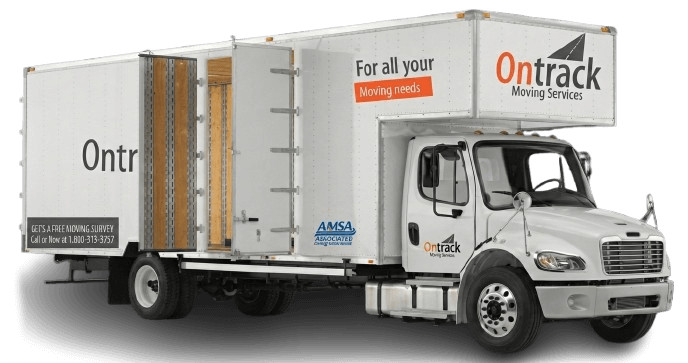
Ontrack Moving fully equipped truck for a Bay Area commercial office and warehouse relocation

Planning a Warehouse or Office Move?

Office relocations, warehouse and inventory moves, and combined commercial projects across the Bay Area, run by our own in-house crews. Asset-based direct carrier under USDOT #2551548. $10M Combined Protection Tower for building and property liability.

Planning a Move? Get your free estimate.