Commercial Case Study

Case Study: A Downtown San Francisco High-Rise Office Move and Decommission

One company, two downtown Class A high-rises, and a single project that moved what was going to the new tower and cleared everything that was not. Here is how it was run.

By Pablo Giordano, Owner, Ontrack Moving®  •  June 2026  •  8 min read

Commercial Case Study

Move Out, Move In, and Clear the Rest, in One Project

A San Francisco company was relocating its office between two downtown Class A high-rises and needed two jobs handled as one: everything going to the new tower, and everything it was leaving behind. This is an anonymized account of how Ontrack Moving ran the relocation and the decommission as a single coordinated project.

In short: this was a move and a decommission combined. The crew relocated the active office from one downtown high-rise into another, broke down and cleared what the company was not taking, and recycled what was cleared, responsibly, as part of the same job. Electronics were routed as e-waste through legal disposal channels, with certificates of destruction provided for the hard drives where required. It ran after hours and over a weekend so the business stayed up during the workweek, using reusable crates, with the walls and floors protected at both buildings and parking permits coordinated at each tower.

Running it as one project meant the company worked with a single carrier instead of lining up separate vendors. For projects like this, see our Bay Area commercial movers and office relocation playbook.

TL;DR (30-Second Summary)

  • The job: one company, two downtown San Francisco Class A high-rises, a full office relocation plus a decommission of what was left behind, run as a single project.
  • After-hours and weekend phasing: staged over multiple days so the office kept running during business hours.
  • Building requirements: both Class A towers required high COI liability limits and protection of the walls and floors at origin and destination.
  • Parking: two SFMTA permits coordinated, one at each downtown building.
  • Reusable E-crates: delivered before the move and picked up after, for a faster pack and far less waste than cardboard.
  • Preparation day: wall-mounted TVs and cabinets taken down, cubicles and workstations broken down before the main move.
  • Responsible recycling: the cleared contents were recycled responsibly as part of the same project, so the company dealt with one carrier rather than several vendors.
  • E-waste and data security: electronics were routed as e-waste through legal disposal channels, with certificates of destruction provided for the hard drives where required.
  • One complete solution: the relocation, the decommission, the recycling, and the e-waste handling were all delivered by Ontrack Moving under one plan.
  • A real constraint: on one day the building granted shared rather than exclusive elevator access, which slowed that day by about 20 percent; the crew worked the sequence around it.

The Challenge: Two Downtown High-Rises, One Live Office

The company was moving its office out of one downtown San Francisco Class A high-rise and into another. The space being vacated sat on the 12th floor, with a freight elevator that fed down to a garage below street level, so loading meant working items up a steep driveway to reach the trucks. Downtown access is tight at the best of times, and here it had to be solved at two separate towers, each with its own building rules, elevator schedule, and loading window.

On top of the move itself, the office was not taking everything with it. A large share of the furniture and contents was being retired with the old space. That meant the project was really two jobs at once: a relocation of what was going to the new tower, and a decommission of what was not, including responsibly recycling what was left and handling the electronics as e-waste. The company wanted both handled together, on a schedule that kept the business open during the workweek.

The Solution: A Relocation and a Decommission, Run as One Project

Most companies end up treating these as separate problems, hiring a mover for the relocation and then scrambling to line up separate vendors to clear and recycle the rest. Ontrack Moving provided the full solution for this project under a single plan and a single carrier: the relocation, the decommission, the responsible recycling, and the e-waste handling, with certificates of destruction for the hard drives where required. Keeping it all in one place kept the sequencing clean and the building coordination under one roof. It started, as every job of this size should, with a walk of both buildings to map what was moving, what was being cleared, what each building would require, and the order the work had to follow.

What the Project Covered

  • A job walk of both buildings to scope the move, the decommission, the building requirements, and the sequence.
  • A preparation day to take down wall-mounted TVs and cabinets and break down the cubicle systems and workstations.
  • Reusable E-crate delivery before the move and pickup afterward.
  • A color-coded floor plan sequencing the move by area and order.
  • The relocation of everything bound for the new downtown tower.
  • Disassembly and clearing of everything the company was not taking.
  • Responsible recycling of the cleared contents, provided within the same project.
  • E-waste handling through legal disposal channels, with certificates of destruction for the hard drives where required.
  • Protection of the walls and floors at both buildings, with freight elevators and parking coordinated at each.

The Site Walk: Planning the Job on the Ground

A project this size is planned on the ground, not on paper. On the survey date the move was scoped in person, walking the space with the on-site representative to see exactly what was going to the new tower and what was being retired with the old one. The company itself was based out of state, so it was not in the room. Ontrack Moving walked the buildings on the tenant's behalf, with the tenant's permission, representing them in the coordination with building management.

The most useful part of the survey was the path. The building manager walked the routes the crew would actually use, from the loading area through the freight elevator to the suite, so the plan could be built around the real distances and chokepoints rather than a floor plan. Seeing those pathways firsthand is what set the manpower, the equipment, and the wall and floor protection the job would require: how many movers the elevator throughput could keep busy, which dollies and crates fit the route, and exactly which corridors, door frames, and elevator interiors needed protection at each tower.

Preparation Day: Breaking the Office Down Before the Move

Before the main transport happened, the crew ran a preparation day during regular business hours. They took down the wall-mounted TVs and the wall-attached cabinets, and broke the cubicle systems and workstations down into manageable components. Getting the disassembly done ahead of time meant the after-hours and weekend window could be spent on what it is best used for, which is moving, not unbolting fixtures off the wall while the clock runs on a reserved elevator.

Reusable Crates Instead of Cardboard

For the contents that were moving, the project used reusable E-crates rather than cardboard cartons. The crates were delivered to the office ahead of the move so staff could pack their own desks and materials, then rolled out on dollies, transported, and picked up after everything was in place at the new tower.

Why E-Crates Fit an Office Move

Reusable crates stack squarely on dollies, so a crew moves more per elevator trip and stages faster at both ends. They also leave almost no packing waste behind, which matters on a job that already includes clearing and recycling the old space. On an office relocation, that combination usually beats buying, building, and then disposing of hundreds of cardboard boxes.

Responsible Recycling and Data Security

A decommission is not finished when the furniture is off the floor. What leaves the building still has to go somewhere, and for an office that means two things handled with care: the bulk contents and the electronics. The cleared furniture and materials were recycled responsibly rather than simply hauled off, and the electronics were treated as e-waste and routed through legal disposal channels.

The part that matters most to a business is the data. Computers and the hard drives inside them carry company information, so they cannot be tossed in with general recycling. For the data-bearing devices on this job, certificates of destruction were provided for the hard drives where the client required documented proof. Handling the e-waste and that documentation inside the same decommission kept it with one carrier, rather than splitting the data risk across an outside vendor.

Working Around the Buildings: Permits, Protection, and Elevators

Two downtown towers meant two sets of building logistics. Ontrack Moving coordinated an SFMTA Temporary No Stopping parking permit at each building so the trucks had a legal place to load and unload on busy downtown streets, reserved the freight elevators at both ends, and protected the walls and floors along every path the crew used. Class A buildings expect that protection and a certificate of insurance on file before a crew ever arrives, which is covered in the section below.

Permit placement is not just about legality, it is about distance. At the origin tower the freight elevator fed up from a garage below street level, so the permit was positioned right at the top of that walk-up, putting the tail of the truck as close to the entrance as the street allowed. The shorter the distance between the truck's tail and the door, the less ground the crew covers on every single trip in and out, and across a full day of loading that saved distance adds up to real time.

One honest note from this job: in a high-rise, the freight elevator is the bottleneck. Everything the crew moves has to funnel through that one car, so the elevator's throughput sets the ceiling on how fast the whole job can go, no matter how many movers are working the floor. On one of the days, the building could only grant shared rather than exclusive use of that elevator, so the crew was waiting on the car between loads instead of running it continuously. That funnel effect cut the elevator's throughput and slowed the pace that day by about 20 percent. The crew worked the loading sequence around it to keep productive work going while the car was tied up, but it is a clear reminder of why exclusive elevator time is worth pinning down with building management in advance. When a building can only offer shared access, the realistic pace for that day should be planned around it.

After-Hours and Weekend Phasing to Keep the Business Running

An office cannot stop working for a move. The project was staged across multiple days, with the disassembly handled during business hours and the main relocation run after hours and over the weekend, so staff came back to a workspace that was ready rather than a workweek of downtime. This is the same phased thinking laid out in our office relocation playbook and the protocol breakdown on the commercial moving hub.

Protection on a Downtown High-Rise Move

A two-tower move touches elevators, lobbies, corridors, floors, door frames, and shared loading areas at both buildings. Ontrack Moving carried its $10,000,000 Combined Protection Tower for building and property liability across the project, which is what satisfies a Class A landlord's certificate-of-insurance requirement and covers the premises and structures the crew works in and around. The contents themselves are covered separately under standard $0.60 per pound per article cargo liability under federal FMCSA rules, with additional valuation protection available for purchase.

Corporate tenants do not take a mover's insurance on faith. On a project this size, the certificate of insurance, the liability limits, and the carrier's credentials are reviewed in detail before any crew is allowed on site. An asset-based carrier with a real $10,000,000 building and property liability tower, standard $0.60 per pound per article cargo liability, and a clean 0% federal Out-of-Service record is built to stand up to that kind of enterprise due diligence.

Coverage What it applies to
$10M Combined Protection Tower Buildings, premises, lobbies, floors, elevators, and shared loading areas at both towers; general liability and workers compensation for the work performed. This is what a Class A building names on the COI.
$0.60/lb cargo liability The furniture, equipment, and items themselves, per article, under the federal FMCSA minimum. Additional valuation protection available for purchase.
0% Out-of-Service Rate The federal safety record under FMCSA inspection, verifiable under USDOT #2551548.

The Outcome

The office was relocated into the new downtown tower, the old space was broken down and cleared, its contents were recycled responsibly, and the electronics were handled as e-waste with certificates of destruction provided for the hard drives, all under one project and one carrier. The disassembly was done ahead on a preparation day, the move ran after hours and over the weekend so the business kept operating, and reusable crates kept the pack clean at both ends. The one day of shared elevator access slowed that day's pace, the crew worked the sequence around it, and the relocation finished out as planned.

It is the kind of project that shows the value of an asset-based carrier that can deliver the whole solution: the move, the decommission, the recycling, and the e-waste handling, planned together rather than bolted on. If your organization is planning a downtown office move, a building-to-building relocation, or a decommission of a space you are leaving, our commercial moving and San Francisco commercial movers team can scope it with an on-site walkthrough.

Frequently Asked Questions

Yes. An asset-based carrier can relocate the items going to the new space and, in the same project, break down and clear the items the company is not taking, then recycle what is left, responsibly. Running both as one job means the company coordinates with a single carrier instead of lining up separate vendors, and the sequencing stays under one plan.

E-crates are reusable plastic moving crates that stack on dollies. They are delivered to the office before the move so staff can pack their own contents, rolled out and unloaded at the new space, and picked up afterward. For an office relocation they are usually faster to move and stack than cardboard cartons and they leave far less waste behind, which matters on a job that also includes a decommission.

Downtown Class A high-rises typically require a certificate of insurance naming the building, high liability limits, scheduled freight-elevator and loading-dock time, and physical protection of the walls, floors, and elevator interiors during the move. Ontrack Moving carries a $10,000,000 Combined Protection Tower for building and property liability to meet those COI requirements. Items themselves are covered separately under standard $0.60 per pound per article cargo liability under federal FMCSA rules, with additional valuation protection available for purchase.

The work is phased over multiple days, often after hours and over a weekend, so the business keeps running during the workweek. Parking is arranged with an SFMTA Temporary No Stopping permit at each building, freight elevators are reserved at both ends, walls and floors are protected, and a preparation day takes down wall-mounted fixtures and breaks down cubicle systems before the main transport day.

It depends on the size of the office and the building access at both ends. Exclusive use of the freight elevator keeps a crew moving at full pace; when a building can only grant shared elevator access, the pace on that day slows. On this project, one day of shared elevator access slowed that day by roughly 20 percent, which is exactly why exclusive elevator time is worth confirming with the building in advance. Final time and charges on any move are based on actual labor, access conditions, and scope.

Electronics are handled as e-waste through legal disposal channels rather than sent to a landfill. For data-bearing devices such as computer hard drives, a certificate of destruction can be provided where the client requires documented proof that the drives were destroyed. Handling the e-waste and the documentation within the same decommission keeps it with one carrier instead of splitting the data risk across separate vendors.
Disclosure: This is an anonymized account of a real project. Identifying details, including the client name, the building addresses, and dates, have been withheld. Ontrack Moving® is an asset-based carrier licensed under USDOT #2551548 and CA License CAL-T190721, operating at a 0% Federal Out-of-Service Rate under FMCSA inspection. The $10,000,000 Combined Protection Tower covers buildings, premises, floors, elevators, and workers compensation for the jobs we perform. Items are covered under basic $0.60 per pound per article cargo liability per federal FMCSA rules, with additional valuation protection available for purchase. Final charges on any project are based on actual labor time, materials used, access conditions, scope changes, waiting time, and any additional services requested or required to complete the work.
KEEP READING

Related Reading

Commercial Case Study

Case Study: A Secure Office Decommissioning for a Defense Contractor

A real commercial project, anonymized. A U.S. Department of Defense contractor in the Bay Area needed a two-floor office cleared for renovation under a strict federal access protocol: a U.S.-citizen-only crew, daily check-in, and a single badge for the designated doors that screened out most movers. How Ontrack Moving ran the disassembly and disposal phased across five days, a color-label system sorting items into disposal, storage, and temporary-office streams, warehouse storage of the retained items, a phased temporary relocation with leadership moved first, and a stair-climbing dolly for heavy machinery.

9 min read Read
Bay Area Moving Checklist

The Bay Area Moving Checklist: A Week-by-Week Timeline

A whole-home Bay Area moving timeline, from 8 weeks out through moving day and the first week after. Covers the local specifics that trip up newcomers: SFMTA parking permits ($250 to $500, filed 7 business days out), building Certificate of Insurance and freight elevator reservations, school enrollment timing, crew sizing, and the 10-day license / 20-day vehicle California DMV residency deadlines.

11 min read Read
Bay Area Relocation Guide

Moving to the Bay Area: Best Cities, Neighborhoods & Schools

The Bay Area is five distinct regions, not one city. A relocation guide comparing the Peninsula, South Bay, East Bay, San Francisco, and North Bay on school districts (Palo Alto Unified #4 in California, Acalanes #1 in Contra Costa, Cupertino High A+ per Niche 2026), neighborhoods, and commute, plus how to plan and properly staff the move.

12 min read Read
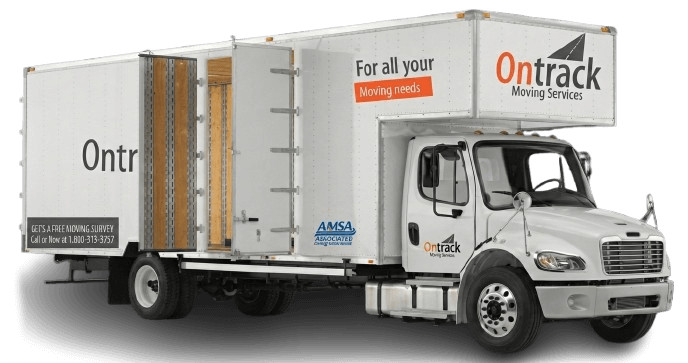
Ontrack Moving fully equipped truck for a downtown San Francisco high-rise office move and decommission

Planning an Office Move or Decommissioning?

Downtown high-rise relocations, building-to-building office moves, and decommissioning across San Francisco and the Bay Area, run by our own in-house crews. Asset-based direct carrier under USDOT #2551548. $10M Combined Protection Tower for building and property liability.

Planning a Move? Get your free estimate.