Peninsula Estate Coordination

Peninsula Gated Estate Move Coordination (2026)

COI endorsements, gate clearance, crew badging, and private-driveway access. The full 2-to-4-week coordination playbook for Atherton, Hillsborough, Los Altos Hills, Woodside, and Portola Valley, from the Ontrack Moving® Hayward yard.

Quick answer for Peninsula estate residents: a gated estate move is not a harder move than a standard residential move. It is a more coordinated move, and the coordination starts 2 to 4 weeks before the truck arrives.

The four things that separate an estate move from a flat-ground move:

  • Community or HOA approval packet: a written move-request form, a certificate of insurance with named-insured language, a crew roster with photo identification, and a vehicle list.
  • COI endorsement with high limits: Peninsula gated communities commonly ask for $2M to $10M in general liability, plus workers compensation on every crew member.
  • Crew badging and gate-code handling: staffed-gate communities log every crew member on photo ID; the foreman holds the single-day gate code.
  • Private-driveway and interior-surface protection: long driveways, polished wood, radiant-floor stone, fine art, and grand pianos each carry their own protocol.

Ontrack Moving® is a 15-year Bay Area asset-based carrier with dedicated Peninsula estate experience. $10,000,000 Combined Protection Tower, in-house COI endorsement turnaround (24 to 48 hours), crew roster with background verification, and white-glove interior protection from the Hayward yard. USDOT #2551548, CA License CAL-T190721, 0% Federal Out-of-Service Rate.

TL;DR (30-Second Summary)

  • Start coordination 2 to 4 weeks out. HOA approval packets take 5 to 10 business days; gate codes issue 48 to 72 hours before move day.
  • COI endorsement is the critical document. Most gated Peninsula communities ask for $2M/$5M or $5M/$10M general liability with the community named as additional insured.
  • Crew roster with photo ID required at any staffed-gate community. Atherton private roads and Hillsborough gated enclaves are the most common.
  • Long driveway and private-road access typically requires a shuttle truck; a 53-foot tractor-trailer rarely fits.
  • Interior surfaces matter. Polished hardwood, radiant-floor stone, Eichler tile, and estate-grade fine-art inventories get separate protection protocols.
  • Cost premium of 20 to 40 percent above a flat-ground move of the same cubic-foot count, broken out as coordination, shuttle, protection, and white-glove line items.

Why a Gated Estate Move Is a Different Job From a Flat-Ground Residential Move

A standard residential move starts when the truck pulls up to the curb. An estate move starts when you book the moving date, because the community on the receiving end already has a policy folder, a gate log, and a move-request window. The actual loading and driving portion of a gated Peninsula move looks exactly like any other careful residential move. What is different is the 2-to-4-week runway of paperwork, crew vetting, and access coordination that has to be lined up before the crew ever pulls into the driveway.

The Peninsula is not a single market. It is a corridor of private-road enclaves, staffed-gate communities, and long-driveway estates that each have their own move policies. Atherton private roads typically require a posted crew roster and a 48-hour advance notice to the Atherton Police Department for any move-related staging on a private street. Hillsborough gated enclaves and estate HOAs run their own move-in packet and often require the community named as an additional insured. Los Altos Hills private-road associations coordinate with a gate service that logs every vehicle and every crew member at the gate. Moving along the Palo Alto corridor (University South, Old Palo Alto, Crescent Park) is usually open-street, but estate homes inside the Stanford Faculty housing area, gated tech-executive compounds, and the Stanford-adjacent private lanes all carry their own access windows. The coordination playbook below applies to all of them, with community-specific variation.

The 2-to-4-Week Coordination Timeline

Here is the working rhythm we run out of the Ontrack Hayward dispatch desk for a typical Peninsula estate move:

Week 4 (or at booking)Initial community identification; confirm HOA / private-road association; request move-request form; lock the date.
Week 3Pre-move site survey (virtual or in-person); truck-size and shuttle decision; interior-surface walk-through; white-glove items inventoried.
Week 2Certificate of insurance endorsement filed with insurance carrier; community named as additional insured; wait time 24 to 48 hours.
Week 2 (mid-week)Crew roster finalized with photo-ID numbers; background verification attestation signed; roster submitted to community management.
Week 1 (72 hours out)Gate code or access window issued by community; foreman receives the code directly; crew logistics confirmed.
Week 1 (48 hours out)Final walk-through phone call with the foreman; surface-protection materials loaded; shuttle truck confirmed if needed.
Move dayCrew arrives with photo ID; gate log check-in; interior protection corridor laid before loading; foreman runs the load sequence.

Moves booked inside 10 business days are still possible. We have run estate moves on 4-day and 6-day timelines. The coordination does not change, it just compresses. COI endorsement goes to priority handling, the crew roster is finalized the next business day, and the community manager is contacted directly by the dispatch desk rather than through the booking portal. The work is the same; the calendar is tighter.

The Certificate of Insurance Endorsement: The Document That Gates Everything

The single document that gates every Peninsula estate move is the certificate of insurance (COI) endorsement. Without it, the community manager will not approve the move, the gate service will not log the crew, and the truck will not be allowed on the private road. It is worth understanding exactly what the COI needs to contain.

What Peninsula gated communities typically ask for:

  • Named insured: the community association, HOA, or private-road association added as an additional insured for the date of the move. Some communities ask for the language to extend to a 24-hour or 72-hour window around the move date.
  • General liability limits: commonly $2,000,000 per occurrence and $5,000,000 aggregate. A meaningful share of the higher-end Peninsula communities (Atherton private-road associations, gated Hillsborough enclaves, some Los Altos Hills private-road HOAs) ask for $5M/$10M outright.
  • Workers compensation: evidence of coverage for every crew member on the property.
  • Commercial auto liability: evidence of coverage on the truck and any shuttle vehicle.
  • Waiver of subrogation: some community associations ask for a subrogation waiver in favor of the community and the property manager.

15-Year Peninsula Pro Tip from the Ontrack Hayward Yard

Ask the community manager for a sample COI or a copy of the last approved certificate before your carrier issues yours. Peninsula community managers occasionally have additional-insured language that reads slightly differently from the generic template, and a mis-worded certificate is rejected without comment. A 5-minute phone call to the community front desk saves a 48-hour endorsement re-issue. Ontrack does this call for every estate move on our own, but if you are booking a move through any mover, this is the single question that prevents a surprise delay.

Ontrack Moving® carries a $10,000,000 Combined Protection Tower that exceeds every Peninsula community limit we have seen in 15 years of Bay Area operations. The Tower covers building structures, landscaping, driveways, gates, and shared-community infrastructure, along with workers compensation and commercial auto. It does not cover customer belongings, which are separately covered under basic $0.60 per pound per article cargo liability per federal FMCSA rules, with additional valuation protection available for purchase. The Tower is the document the community wants. The cargo liability is the document the customer protects their items with. They are two separate pieces of paper and two separate coverages, and every estate move packet makes that distinction clear.

Crew Roster, Badging, and Gate Access

Staffed-gate Peninsula communities log every vehicle and every crew member that enters the property. Our roster includes first name, last name, government-issued photo ID number, and a background-verification attestation for each crew member. Ontrack runs background verification on every crew member as part of the standard hiring protocol; the attestation is a one-page document that community managers accept at face value for move-day clearance.

On move day, three things happen at the gate:

  1. Foreman check-in. The foreman arrives first with the printed COI, the submitted crew roster, and the gate code or access window document. Everything is cross-checked against the community log.
  2. Crew check-in with photo ID. Each crew member presents photo ID matching the submitted roster. The gate service issues visitor badges or logs the vehicle pass.
  3. Truck and shuttle log-in. The primary truck and any shuttle vehicle are logged with license plate and arrival time.

Crew composition changes between booking and move day are handled by a same-day revised roster submission. Ontrack does not substitute a crew member on move day without updating the community roster first. Substitutions made without community notice result in the gate service turning the substitute crew member away, and the remaining crew has to cover an incomplete workload. The 5-minute paperwork discipline is cheap insurance against a 3-hour move delay.

The Long Private Driveway: Truck Size, Shuttle Protocol, and Staging

Peninsula estate driveways are rarely a simple curb-to-door run. They are typically 100 to 600 feet long, often with a gate at the street, a switchback or S-curve mid-run, and a turnaround at the home that may or may not accommodate a 26-foot straight truck. The pre-move site survey assigns a truck-size tier to each estate driveway:

Peninsula Estate Driveway Truck-Size Tiers

Ontrack dispatch runs the following working tiers for Peninsula estate access:

Open-street estate: 26-ft straight truck standard
Gated entrance, flat driveway: 26-ft OK
Long driveway with turnaround: 26-ft with spotter
Switchback driveway: 17-ft shuttle + 26-ft stage
Narrow private road: 17-ft shuttle mandatory
Remote estate (Los Altos Hills ridge): 14-ft shuttle + 26-ft stage at ridge base
Every tier is confirmed on the pre-move site survey before dispatch locks the truck assignment. A 53-foot tractor-trailer is rare on any Peninsula gated estate and is almost never the right vehicle.

The shuttle protocol is not a convenience decision; it is a damage-prevention decision. Forcing a 26-foot truck up a switchback driveway with low-hanging oak or redwood branches is a recipe for a scraped truck top and a landscaping damage claim. Hiring a mover that refuses to run a shuttle when the driveway requires one is a false economy. Ontrack Moving builds the shuttle into the estate move quote when the site survey calls for it; the shuttle line is transparent, and the crew hours are scoped to cover it.

Interior-Surface Protection for Polished Wood, Radiant-Floor Stone, and Eichler Tile

Peninsula estates often carry interior surfaces that a standard residential move protocol does not handle. The working categories Ontrack runs:

Polished Hardwood (Walnut, Oak, Teak)

Breathable runners laid end-to-end from the front door through every loading room, taped to themselves rather than to the floor to avoid adhesive residue. Doorways under 34 inches get padded corner guards. Banisters and stair nosings get padded runners on any staircase that items cross. Never any drag; every item moves on a pneumatic-tire dolly or a roller cart with four-point straps.

Radiant-Floor Stone and Porcelain Tile

The Eichler Radiant-Floor protocol (neoprene runners plus pneumatic-tire dollies) distributes weight and prevents the hairline cracks that show up when concentrated point-load dollies roll across radiant-heated stone or porcelain. This is the single most common source of avoidable damage claims in Peninsula mid-century and modernist estates. The protocol is non-negotiable on any Eichler, Streng, or radiant-floor custom home.

Fine Art, Antiques, and Grand Pianos

High-value items move under the full white-glove moving protocol, not the standard residential load protocol. Fine art and antiques are wrapped, crated where needed, and loaded on a dedicated shelf or air-ride section of the truck under the fine-art and antiques moving service line. Grand pianos move on a fixed-anchor mechanical winch using a piano board and four-point tension, never a freehand lift, under the piano moving protocol. For senior-ownership Peninsula estates where the move overlaps with a downsize or a move into a continuing-care community, the senior moving protocol layers on scheduling, inventory, and downsize support.

Community-Specific Notes From 15 Years of Peninsula Estate Work

Here is the working dispatch log for the five Peninsula communities we run estate moves through most often:

  • Atherton: private-road associations (Park Lane, Selby Lane, Stockbridge, Walsh Road corridor) typically require a posted crew roster and a 48-hour notice to the Atherton Police Department for staging. The town does not have a staffed gate; the private-road association handles access. Moves inside Lindenwood, West Atherton, and Circus Club Lane carry particular attention to driveway switchback and mature-oak clearance.
  • Hillsborough: gated estate enclaves (Country Club Manor area, North Hillsborough private lanes, Burlingame Country Club adjacent) run their own move-request forms through the community manager. Staffed-gate properties log every crew member. Interior surfaces are frequently polished walnut and radiant-floor stone; plan for the full interior-protection protocol.
  • Los Altos Hills: private-road associations are common; a significant share of estate properties sit on narrow two-way roads with gravel or stone driveways. Shuttle protocol is the rule, not the exception. Landscaping in Los Altos Hills (mature heritage oaks, ornamental stone walls) is routinely surveyed in the pre-move walk-through.
  • Woodside and Portola Valley: rural and semi-rural private-road estates. Often longer shuttle runs (quarter-mile and up) from the home to the primary truck staging point. Crew vehicles park at a pre-designated turnout to avoid private-road blockage.
  • Palo Alto estate corridor: open-street for most addresses (Old Palo Alto, Crescent Park, University South). Estate homes inside the Stanford-adjacent private lanes carry gate and access paperwork similar to the gated enclaves above. Tech-executive compounds typically carry their own additional-insured language.

Estate Move Coordination Checklist

Walk this checklist with your mover 3 to 4 weeks out. It is specific to gated estate moves and does not apply to a flat-ground residential job.

Peninsula Gated Estate Move Coordination Checklist

  • Identify the community or HOA and request the move-request form in writing.
  • Request a sample or prior approved COI from the community manager; confirm the exact additional-insured language.
  • File the COI endorsement with your carrier 14 days out; allow 24 to 48 hours for turnaround.
  • Finalize the crew roster with photo-ID numbers; submit to the community 7 to 10 business days out.
  • Confirm the gate code or access window 48 to 72 hours before move day; foreman holds the code.
  • Run the pre-move site survey (virtual or in-person) for truck-size and shuttle decision; confirm the interior-protection corridor.
  • Pre-inventory high-value items (fine art, antiques, grand piano, stone-top furniture) for the white-glove line.
  • Notify the community manager 48 hours out with final crew headcount and truck count.
  • Reserve crew parking at a community-approved turnout if the driveway cannot hold crew vehicles.
  • Document pre-move condition of the driveway, landscaping, gates, and interior surfaces with timestamped photos.
  • Have the valuation paperwork ready. The $10M Combined Protection Tower is automatic; additional valuation for high-value items requires a declared-value sheet before loading.

For broader Bay Area research before booking any mover, run the 5-step anti-ghost mover audit and read why moving brokers are not movers. For honest line-item pricing across the Peninsula, the 2026 Moving Cost Transparency Report breaks out shuttle, long-carry, permit, and white-glove premiums. If the receiving home is an apartment or condo tower anywhere in San Francisco or the Peninsula, the high-rise apartment and condo checklist covers the elevator-reservation and building-COI layer that sits on top of the estate-move process.

How Ontrack Moving® Runs a Peninsula Gated Estate Move

Every Peninsula estate move we perform runs through the same protocol:

  • Initial community identification and booking. 3 to 4 weeks out; move-request form requested from the community manager.
  • Pre-move site survey. Virtual or in-person; truck-size and shuttle decision locked; interior-surface walk-through.
  • COI endorsement. Filed with our carrier; community named as additional insured; 24 to 48 hour turnaround.
  • Crew roster and background verification. Photo-ID roster submitted 7 to 10 business days out.
  • Gate code and access window confirmation. Issued 48 to 72 hours out; foreman holds the code.
  • Interior protection corridor. Breathable runners, neoprene, corner guards, stair-nosing padding in place before the first item moves.
  • White-glove pack-and-lift for high-value items. Fine art, antiques, grand pianos, stone-top furniture; dedicated crew, dedicated truck section.
  • Shuttle protocol if the driveway requires it. 14-ft or 17-ft shuttle from the home to a 26-ft staging truck at the apron or legal curb.
  • Gate log, load, transfer, and departure. Community log updated at departure; crew check-out.
  • Post-move walkthrough and sign-off. Customer confirms item count and condition; valuation claim window opens.

For the Peninsula service map, see Atherton Movers, Hillsborough Movers, Los Altos Hills Movers, Palo Alto Movers, Menlo Park Movers, Portola Valley Movers, San Mateo Movers, and Los Altos Movers. For related protocols, white-glove moving, fine-art and antiques moving, piano moving, and senior moving each carry their own dedicated service page.

Frequently Asked Questions

Two to four weeks before the move date is the working window for most gated Peninsula communities. The approval packet (move-request form, certificate of insurance, crew roster, vehicle list) typically takes 5 to 10 business days for the HOA or community manager to review and approve. Gate-code or access-window issuance usually comes back 48 to 72 hours before the move. Homes inside private-road enclaves (portions of Atherton, Hillsborough, Los Altos Hills, Woodside, Portola Valley) may require an additional walk-through with the community gate service or a posted-sign window on move day. Moves that start inside 10 business days are still possible but tighten the permit, insurance endorsement, and crew-roster paperwork to a daily coordination rhythm.

Most gated Peninsula communities request a certificate of insurance with three specific pieces of language. First, the community association or HOA named as an additional insured for the date of the move. Second, a minimum general liability limit of $2,000,000 per occurrence and $5,000,000 aggregate (some communities request $5M/$10M outright). Third, evidence of workers compensation coverage for every crew member on the property. Ontrack Moving® carries a $10,000,000 Combined Protection Tower that exceeds every Peninsula community limit we have encountered. The Tower covers general liability, workers compensation, and commercial auto for damage to building structures, landscaping, driveways, gates, and shared-community infrastructure. Customer belongings are separately covered under basic $0.60 per pound per article cargo liability with additional valuation protection available for purchase. COI endorsements are issued in 24 to 48 hours through our insurance carrier at no additional cost to the customer.

A growing share of Peninsula gated communities (typically the ones with a staffed gate house or a private security contract) ask for a crew roster that includes first and last name, government-issued photo identification number, and sometimes a background-check attestation. Atherton private-road associations and portions of Hillsborough gated enclaves are the most common examples. Ontrack Moving runs background verification on every crew member as part of the hiring protocol, and the roster is delivered to the community gate service in advance of the move date. On move day, every crew member checks in at the gate with photo ID and receives either a visitor badge or a logged vehicle pass. The roster is revised and re-submitted if crew composition changes between booking and the move date.

Three protocols layer together. First, the gate-code protocol. The community or property manager issues a single-day code valid for the move window; the foreman holds the code and does not share it with the crew at large. Second, the access-window protocol. Some Peninsula HOAs restrict move-in and move-out operations to defined hours (most common: 8:00 AM to 5:00 PM weekdays, no Sunday operations, no nights). Ontrack Moving plans the load sequence around the access window and does not run past the cut-off. Third, the private-driveway staging protocol. Long private driveways, which are typical in Atherton, Hillsborough, and Los Altos Hills estates, are surveyed on the pre-move walk-through for truck fit, turn-around space, and approach-road grade. Larger estates with driveway bottlenecks use a shuttle truck (14-ft or 17-ft) from the home to a staging truck (26-ft) at the driveway apron or a nearby legal curb. The shuttle prevents a stuck truck on a switchback and preserves the landscaping.

Peninsula estates typically carry three interior-surface categories that require specific protection. Polished-hardwood floors (reclaimed walnut, oak, teak) are protected with breathable runners laid end-to-end from the front door to every loading room; the runners are taped to themselves, not to the floor, to avoid adhesive residue. Radiant-floor stone and porcelain-tile surfaces (common in Eichler homes, modern estates, and newer custom builds) use neoprene runners plus pneumatic-tire dollies that distribute weight and prevent hairline cracks. Stair nosings, banisters, and door frames under 34 inches are padded with corner guards before any item moves. Ontrack Moving runs a pre-move walk-through with the foreman before any loading begins; every interior-surface protection element is in place before the first item leaves the staging room. For high-value items (fine art, antiques, grand pianos, stone-top furniture), the crew runs the full white-glove pack-and-lift protocol, not the standard load protocol.

Plan for four line items that a flat-ground residential move does not carry. First, the coordination time: approximately 8 to 16 hours of foreman and office time handling the approval packet, COI endorsement, crew roster, and gate-access paperwork. Second, the crew-hour premium for the driveway shuttle or long-carry protocol, which runs typically 15 to 25 percent above a flat-ground move of the same inventory. Third, the interior protection materials (extra breathable runners, neoprene, corner guards) if the estate has polished-wood, stone, or radiant-floor surfaces. Fourth, the white-glove line items for fine art, antiques, and grand pianos if those are part of the inventory. An average Peninsula estate move of the same cubic-foot count typically runs 20 to 40 percent higher than a comparable flat-ground move, with the range widening for estates with long private driveways, grand pianos, or significant fine-art inventories. Ontrack breaks the coordination, shuttle, long-carry, protection, and white-glove lines out separately on the quote so the customer sees exactly where the hours go.
Disclosure: Ontrack Moving® is an asset-based carrier licensed under USDOT #2551548 and CA License CAL-T190721, operating at a 0% Federal Out-of-Service Rate under FMCSA inspection. Our Bay Area yard is in Hayward, CA. The $10,000,000 Combined Protection Tower covers buildings, premises, driveways, gates, landscaping, shared-community infrastructure, and workers compensation for the residential jobs we perform. Customer belongings are separately covered under basic $0.60 per pound per article cargo liability per federal FMCSA rules, with additional valuation protection available for purchase. Specific HOA, private-road association, or community-manager requirements vary by property and by date; Ontrack confirms active requirements as part of the pre-move site survey and the COI endorsement filing. This guide is informational and does not constitute legal or insurance advice; always confirm specific requirements with the community manager and your mover at the time of booking.
KEEP READING

Related Articles

Lab Compliance Guide

Bay Area Laboratory Relocation Compliance Guide: Vetting Biotech and Research Lab Movers (2026)

A 9-item vetting framework for Bay Area biotech, pharma, and research lab tenants choosing a laboratory mover. USDOT carrier verification, $5M to $10M COI requirements with building-specific endorsement, vibration-sensitive instrument handling, ULT freezer cold-chain, cleanroom envelope protocol, BSL handoff documentation, calibration vendor coordination, and submarket coverage across Mission Bay, South San Francisco, the Peninsula 101 corridor, Silicon Valley, and the East Bay.

16 min read Read
Bay Area Moving Checklist

The Bay Area Moving Checklist: A Week-by-Week Timeline

A whole-home Bay Area moving timeline, from 8 weeks out through moving day and the first week after. Covers the local specifics that trip up newcomers: SFMTA parking permits ($250 to $500, filed 7 business days out), building Certificate of Insurance and freight elevator reservations, school enrollment timing, crew sizing, and the 10-day license / 20-day vehicle California DMV residency deadlines.

11 min read Read
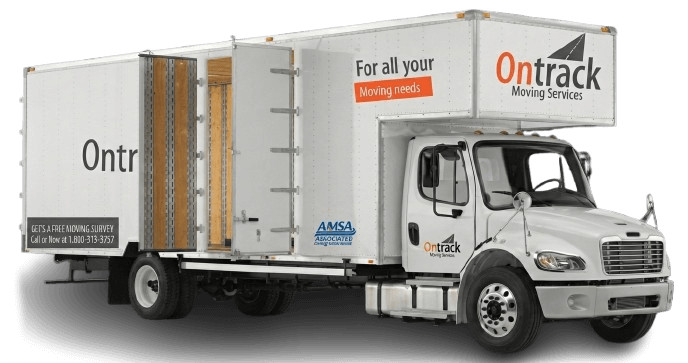
Ontrack Moving fully equipped truck for Peninsula gated estate residential moves

Moving Into or Out of a Peninsula Estate?

$10M Combined Protection Tower. In-house COI endorsement in 24 to 48 hours. Crew roster with background verification. White-glove protocol for fine art, antiques, and grand pianos. Send us the community name and we will run the pre-move site survey before the quote.