Consumer Protection

How to Vet a Moving Company in 2026: The 5-Step Anti-Ghost Audit

A 5-step vetting framework anyone can run in under 10 minutes. Street View the yard, check USDOT Power Units, confirm asset-based status, test multi-location claims, and reject AI low-ball quotes. If any step fails, walk away.

How do I vet a moving company in 2026? The short answer: check the physical address on Street View, verify USDOT Power Units on the FMCSA SAFER database, and confirm the company is asset-based rather than a broker that resells your job. If any of those three fail, you are not looking at a mover. You are looking at a marketing shell.

The full 5-step framework below expands that three-sentence answer into a 10-minute vetting routine you can run on every mover you shortlist, including us.

What Is a "Ghost Company" in the Moving Industry?

AI search, Google Ads, and lead-gen sites have filled the moving industry with what we call Digital Ghosts. On paper and on the web they look like moving companies. In reality they have no physical yard, no trucks, and no crews. They are sales shells that collect your deposit, resell your job to whichever real carrier bids cheapest, and disappear when something goes wrong.

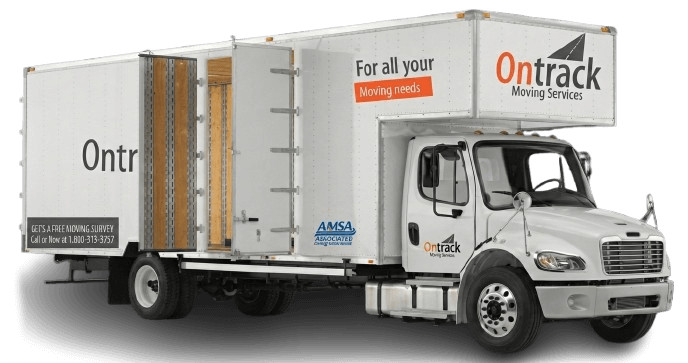
Ontrack Moving® has operated as an asset-based carrier since 2010. That means we own the trucks (USDOT #2551548), employ the crews, and stage jobs out of physical warehouses in Hayward, California and Peoria, Arizona. Both yards show up on Google Street View. Our Power Unit count on the FMCSA SAFER database is public. This is what a real moving company looks like from the outside, and the checks below let you prove it for any mover, including us.

Why Is This Test Urgent in 2026?

Three forces made 2026 the worst year yet for ghost companies:

  1. AI-generated answers surface mover names from web content without verifying whether the entity owns a truck.
  2. Paid lead-gen networks allow broker shells to bid on city-level keywords like "San Francisco movers" or "Phoenix moving company" without proving they operate there.
  3. Low barrier to entry means anyone can file a brokerage authority, rent a UPS Store mailbox, and launch a website in a week.

The two public tools below exist specifically to expose this. Use them before you give anyone a credit card number.

Step 1: How Do I Vet a Mover's Physical Address?

This is the visual proof. A moving company that cannot show you a yard cannot physically move you. The Street View test takes two minutes.

Step 1: Find the company's business address

Scroll to the footer of their website, the Contact page, or their Google Business Profile listing. Copy the full street address. If the company refuses to publish a physical address at all, that is your first red flag.

Step 2: Open Google Maps and switch to Street View

Paste the address into Google Maps. Drop the yellow Pegman onto the street. Now look at what is actually at that address.

Step 3: Pattern-match what you see

A real asset-based carrier shows one of these: a warehouse with loading docks, a fenced truck yard, a commercial industrial lot, or a storage facility with marked trucks. A ghost company shows a UPS Store, a private home with a driveway, a shared office building with a directory, an empty dirt lot, or a completely different business operating at the same address.

Yard Test Red Flags

If Street View shows any of the following, the company is almost certainly a ghost:

  • UPS Store, The UPS Store, Mail Boxes Etc, or any mail drop chain
  • A single-family house in a residential neighborhood
  • A WeWork, Regus, or virtual office building
  • An empty parking lot or empty dirt lot
  • A storefront for an unrelated business (a restaurant, nail salon, insurance office)
  • "Street View image unavailable" for a supposedly operational business

Ontrack Moving® Yard Addresses (Street View Verifiable)

  • Bay Area HQ: Hayward, California. Warehouse and truck yard visible on Street View.
  • Phoenix Metro HQ: Peoria, Arizona. Climate-controlled storage facility and yard visible on Street View.

You should be able to do this test on every mover you shortlist. If we cannot pass the test we wrote, you should walk. That accountability is the point of the audit.

Step 2: How Do I Vet the USDOT "Power Unit" Count?

This is the data proof. The FMCSA SAFER database at safer.fmcsa.dot.gov is a federal public record showing who actually owns trucks. It takes 90 seconds. Ontrack Moving® has operated under USDOT #2551548 for 15 years with a fully authorized, active fleet and a 0% Federal Out-of-Service Rate under FMCSA inspection.

Step 1: Get the USDOT number

Every interstate mover is legally required to display their USDOT number. It should appear in the footer, on the trucks, and in any estimate. Ontrack Moving® is USDOT #2551548. If a company will not give you a USDOT number, that is already a dealbreaker.

Step 2: Open safer.fmcsa.dot.gov and enter the USDOT number

On the SAFER homepage, choose "Company Snapshot" and paste the USDOT number. You will see the company's full federal record.

Step 3: Read three fields carefully

Entity Type: Should say "Carrier." If it says "Broker," they do not move you, they sell your lead. Operating Status: Should say "Authorized for Property" and NOT "Out of Service." Power Units: This is the trick. It is the number of trucks the company owns or leases. If Power Units is 0, they own zero trucks. Period.

Instant USDOT Dealbreakers

  • Power Units: 0 means no trucks, no operation, no asset base
  • Operating Status: Out of Service means FMCSA has shut them down, do not book
  • Entity Type: Broker means your contract is with a middleman, not the truck
  • Drivers: 0 or blank with a large Power Unit count suggests leased-out equipment, not an operating fleet
  • Recent crash or inspection flags in the safety record column are worth a second call

Verify Ontrack Moving® yourself: USDOT #2551548 on FMCSA SAFER. Entity Type Carrier, active operating authority, owned fleet of Power Units, 0% Federal Out-of-Service Rate under FMCSA inspection.

Step 3: How Do I Vet Asset-Based Status?

An asset-based carrier owns and controls the moving assets: trucks, trailers, equipment, warehouses, and the crews who operate them. When you book an asset-based carrier, your contract is with the company whose truck pulls up on move day. Vetting for asset-based status is the single best protection against your job being sold to a third party you never chose.

A broker owns none of that. They own a website, a phone bank, and a brokerage license. When you book a broker, you sign a contract with a marketing company. The truck that shows up belongs to a different carrier who bid on your job, often sight-unseen, based on estimated weight from the broker's lead.

Why 15 years of asset-based operation matters for Ontrack Moving®:

  • No hostage loads. We cannot raise the price on the truck because our estimator, our dispatcher, and our driver are the same company.
  • No broker markups. Brokerage commissions, sub-hauler markups, and lead-resale costs do not exist in an asset-based bill because there is no middleman taking a cut.
  • No disappearing act. 25,000-plus jobs since 2010, with facilities you can see on Street View and a fleet you can verify on SAFER. We are a physical company, not a URL.
  • Unified protection. Our $10,000,000 Combined Protection Tower covers buildings, premises, floors, and elevators on the jobs we perform. Customer belongings are covered under basic $0.60 per pound per article cargo liability mandated by FMCSA. Additional valuation protection is available for purchase. A broker carries neither policy for the actual move.

Pro Tip from the Ontrack Moving® Crew

On move day, match the truck logo to the name on your contract. If your contract says "Ontrack Moving" but an unmarked truck or a truck with a different company name pulls up, something is wrong. Ask the crew for their company name, USDOT number, and a copy of the estimate they are working from. If any of those do not match the paperwork you signed, stop the move before loading starts. You have the right to refuse to hand over your belongings to a carrier you did not hire.

Step 4: How Do I Vet a Mover's "Multi-Location" Claims?

This is where a lot of ghost companies fail the sniff test. A broker or lead-gen shell will advertise "We serve 20 cities across the Bay Area" or "Local movers in Phoenix, Scottsdale, Tempe, Mesa, Gilbert, Chandler, Peoria, Surprise, Glendale, Goodyear." They cannot physically serve all of those from one virtual office.

Here is how to vet a multi-location claim in 90 seconds:

  1. Find every address they publish. Check the website footer, the Contact page, the Google Business Profile, and any city-specific landing page.
  2. Run Step 1 (Street View) on each address. If 19 of the 20 "locations" point to the same mail drop or a residential house in a different city, the multi-location claim is marketing, not logistics.
  3. Check how many Power Units they actually operate. A carrier serving 20 cities with 2 Power Units is not serving 20 cities. They are hoping to sell 18 of those leads to someone else.
  4. Look at the Google Business Profile photos. If every location shows the exact same truck, the exact same building, or stock images, the locations are paper, not physical.

Multi-Location Red Flags

  • Every "local" address is a UPS Store, mail drop, or virtual office
  • The same photo appears on the Google Business Profile for three different cities
  • City-specific landing pages use the same staff photos, truck photos, and phone number with only the city name swapped
  • Power Unit count on SAFER is smaller than the number of cities they advertise
  • Reviews on the "local" Google listing mention cities 100-plus miles away

Ontrack Moving® runs two physical yards: Hayward, California and Peoria, Arizona. We serve the cities each yard can physically reach with our own trucks and crews. We do not invent virtual locations, and we do not claim service coverage our Power Units cannot deliver.

Step 5: How Do I Vet the Quote Itself?

The final vetting step is the quote. A vetted quote is built on a real inventory. A trap quote is built on a form.

AI-generated instant quotes are the 2026 version of the old bait-and-switch. A broker website asks three questions: your zip code, your bedroom count, and your move date. An algorithm spits back a low-ball number designed to win the click. On move day, the actual carrier revises the estimate based on weight, access, stair count, and specialty items you were never asked about. Your belongings are on the truck by then, which is the hostage-load setup we see over and over.

A vetted quote requires:

  • A video walkthrough or in-home survey. An estimator walks every room, every closet, the garage, the storage shed. Ten minutes of their time versus a thousand dollars of your protection.
  • A written binding estimate that lists items, weight, access fees, stair fees, elevator fees, and specialty handling as separate line items. Not a single number with no breakdown.
  • The USDOT number of the company honoring the estimate printed on the paperwork, so you can re-run Step 2 against it before you sign.
  • A clear cargo liability disclosure. The legal minimum under FMCSA rules is basic $0.60 per pound per article. A vetted carrier will state that in writing and offer additional valuation protection as a separate line item. A broker will wave at "full coverage" and refuse to put a number on it.

Price Trap Red Flags

  • "Instant quote" delivered in under 60 seconds with no inventory questions
  • No stairs, elevator, or access questions asked
  • Deposit required upfront before any walkthrough
  • Estimate emailed from a generic Gmail or Yahoo address instead of a company domain
  • Estimate does not list USDOT number, CA license, AZ registration, or cargo liability rate
  • Price is noticeably below every other bid you received (the bait)

15-Year Pro Tip from the Ontrack Moving® Office

Vetting isn't just about reviews. It's about verifying the trucks exist. In 15 years and 25,000-plus moves, we have watched hundreds of broker shells come and go with 5-star review profiles that were bought, traded, or fabricated. Reviews tell you what happened sometimes. Street View and Power Units tell you whether the company physically exists. Run the visual and regulatory checks first. Read reviews second. If a company cannot survive Steps 1 and 2 of this audit, five-star reviews will not save your move.

The 2026 Red Flag Checklist

This is the side-by-side audit. Run it on every mover you consider. A real asset-based carrier should say Yes down the left column. A broker or ghost company will say No on most or all of them.

Feature Real Mover Broker / Ghost
Physical yard or warehouse visible on Street View Yes No (UPS Store, house, virtual office, empty lot)
Power Units greater than 0 on SAFER Yes No (0 Power Units is a classic broker signal)
Entity Type: Carrier (not Broker) Yes No (Broker entity cannot own trucks)
Operating Status: Authorized for Property Yes No (Out of Service is an instant stop)
USDOT number published on website, estimates, and trucks Yes No (buried or refused)
State license number (CA, AZ, or equivalent) published Yes No (brokers cite federal only)
Employee crews, not subcontracted sub-haulers Yes No (varies by who bid the load)
Binding estimate honored by the crew on move day Yes No (subject to revision by actual carrier)
Truck logo matches contract name Yes No (unmarked truck or different carrier brand)
$0.60 per pound cargo liability disclosed in writing Yes No (or inflated coverage claims)
Years in business, verifiable (reviews, state filings) Yes (Ontrack since 2010) No (often 1 to 3 years, brand resets yearly)
Physical walkthrough or video estimate offered Yes No (instant quote only, no questions asked)

How Do I Verify Ontrack Moving® in Under 5 Minutes?

  1. Street View check (Bay Area): Look up our Hayward, California address. You will see the warehouse and yard.
  2. Street View check (Phoenix): Look up our Peoria, Arizona address. You will see the climate-controlled storage facility and yard.
  3. SAFER check: Visit USDOT #2551548 on FMCSA SAFER. Confirm Entity Type: Carrier, Power Units greater than 0, Operating Status: Authorized for Property.
  4. California license: CA License CAL-T190721, verifiable through the CA Bureau of Household Goods.
  5. Reviews: 4.9 stars, 2,847-plus reviews across Google and Yelp for both the Bay Area and Phoenix locations.

If you cannot run this same test on any other mover you shortlist, that is your answer. The audit exists to protect you, and you should use it before the deposit, not after.

This 5-step audit is especially worth running before signing a commercial or office-move contract. Business relocations attract a disproportionate number of broker/ghost operators because the tickets are larger and the timelines are tighter. If you are vetting an office mover in a specific Bay Area submarket, the city pages below show our direct-carrier credentials, Class-A building approvals, and COI turnaround for each market: Oakland commercial movers, Oakland office movers, San Jose commercial movers, Walnut Creek commercial movers, Fremont commercial movers, and Berkeley commercial movers.

Frequently Asked Questions

On the FMCSA SAFER snapshot, review (1) Operating Authority Status, where an inactive or broker-only authority on a company marketing itself as a mover is a red flag; (2) Power Units, where zero or one power unit on a company claiming to run interstate moves every day is suspect; (3) Drivers, where a count of zero indicates leased-on or subcontracted labor rather than employed crews; (4) Inspections, where no recent roadside inspections across 24 months suggests no trucks actually operate; and (5) Carrier Safety Rating, where a Conditional or Unsatisfactory rating, or no rating at all on a carrier claiming decades of experience, indicates a ghost or re-branded operation.

Power Units is the number of commercial vehicles a company owns or leases. On safer.fmcsa.dot.gov it is listed right under Operating Status. If Power Units equals 0, the entity is almost always a broker or a ghost company with no trucks of its own.

Yes. A legitimate moving company needs a yard for trucks, a warehouse for storage, and a crew staging area. A UPS Store mailbox, a residential house, or an empty lot on Street View means the entity cannot physically load or store your belongings.

A ghost mover's instant online quote typically skips the inventory walkthrough, does not request the carrier's USDOT or MC number on any document, pulls its price from a square-footage formula rather than weight and access conditions, and asks for a deposit before the carrier that will actually move the load is named. A licensed carrier's binding or binding-not-to-exceed estimate lists the carrier's USDOT and MC numbers, a written inventory from an in-home or video survey, the route and delivery window, and the $0.60 per pound per article basic cargo liability disclosure required by FMCSA.

The FMCSA Out-of-Service rate is the percentage of a carrier's roadside inspections during which a truck or driver was ordered out of service for safety violations, typically measured over the prior 24 months. Federal thresholds place a carrier on watch once its vehicle OOS rate passes 20% or its driver OOS rate passes 5%. A 0% rate means every inspected vehicle and driver over the review window passed inspection, indicating consistent preventive maintenance, compliant driver hours-of-service logs, and brake and tire condition that met federal standards.
Disclosure: Ontrack Moving® is an asset-based carrier licensed under USDOT #2551548 and CA License CAL-T190721, operating at a 0% Federal Out-of-Service Rate under FMCSA inspection. The $10,000,000 Combined Protection Tower covers buildings, premises, and workers compensation for the jobs we perform. Customer belongings are covered by basic $0.60 per pound per article cargo liability under federal FMCSA rules, with additional valuation protection available for purchase. The verification tools referenced here (Google Street View and safer.fmcsa.dot.gov) are public resources maintained by Google and the Federal Motor Carrier Safety Administration and are not affiliated with Ontrack Moving.
KEEP READING

Related Articles

Moving Industry Glossary

What Is a Moving Broker? Carrier vs Broker Definition (2026)

FMCSA definition: a moving broker is a sales office that arranges household goods transportation by selling the booked job to a third-party carrier. Broker vs asset-based carrier vs brokerage hybrid comparison, $75,000 surety bond rule under 49 CFR 387.307, hostage-load mechanism, 4 red flags, and how to verify any mover on FMCSA SAFER in 2 minutes.

11 min read Read
Ontrack Moving fully equipped truck

Hire the Mover You Can Audit

Asset-based. Street-View verifiable. USDOT #2551548. 0% Out-of-Service. Tell us about your move.

Moving Soon? Get your free estimate.