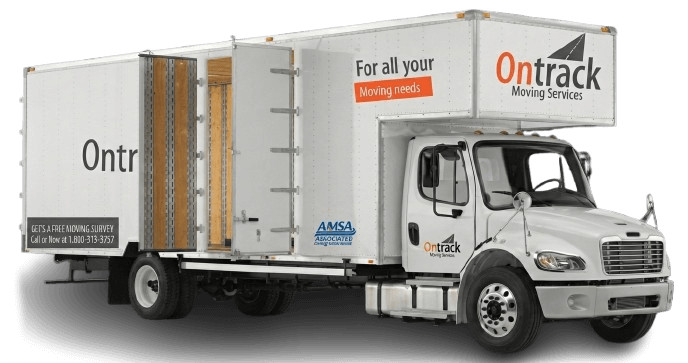
Quick answer: Ontrack Moving® does not sell a single hour of moving labor, and as of August 2026 almost no licensed carrier does. Professional movers bill local jobs hourly against a minimum, because what you are hiring is not an hour. It is a crew, a truck, fuel, and the drive to your door and back.
Ontrack Moving® prices local moves from $175 per hour for two movers and a truck in both the Bay Area and Phoenix Metro, billed against a minimum and pro-rated in 15-minute increments after that. The minimum is not one number. It changes by market and by crew size: in the Bay Area a 2 or 3 mover crew carries a 3 hour minimum and 4 movers or more carries a 4 hour minimum, while in Phoenix Metro a 2 or 3 mover crew carries a 2 hour minimum. For a two-mover crew that puts the real floor at $350 in Phoenix Metro and $525 in the Bay Area for a two mover crew. The rate includes the truck, fuel, equipment, furniture blankets, and basic $0.60/lb cargo liability per article. Asset-based carrier, USDOT #2551548, verifiable on FMCSA SAFER.
If your job is small, the minimum is not a penalty. It is a booked window of a trained crew doing exactly what you point at. See local moving for what a crew brings to an hourly job and residential moving for full-home service.
TL;DR (30-Second Summary)
- One-hour movers do not exist at licensed carriers. Ontrack minimums: 3 hours in the Bay Area, 2 hours in Phoenix Metro for a 2 or 3 mover crew. Bay Area crews of 4+ carry a 4 hour minimum.
- The unit is crew + truck + travel, not the hour. A one-hour job consumes about three hours of paid crew time once the warehouse round trip is counted.
- The realistic floor for any professional job: $350 in Phoenix Metro or $525 in the Bay Area, plus California double drive time or the Arizona trip fee.
- Small jobs that fit inside a minimum: a studio across town, 10 to 15 pieces rearranged inside a house, one heavy item up a flight of stairs.
- Wrong tool cases: one lightweight item going hundreds of miles (use parcel or freight), a few boxes and no furniture (use your car), a full 4-bedroom pack-and-move (that is not a small job, get a survey).
Why Do Moving Companies Have Minimums?
Run the hour from the carrier side and the minimum explains itself. For your "one hour," a crew clocks in at the warehouse, pulls a 26-foot truck from the yard, loads blankets and equipment, drives to your address, works the hour, drives back, unloads and folds the pads, and clocks out. That is three or more hours of paid, insured crew time and a commercial truck committed against a one-hour invoice. No company that pays its movers properly can sell that, so none do.
The minimum is the honest version of that math. The dishonest version exists too: outfits advertising $39 or $49 per hour with "no minimum," then recovering the difference on move day through fuel fees, stair fees, blanket fees, and tape charged by the roll. We took that pricing model apart line by line in the 2026 Moving Cost Transparency Report, and the short version is: the low teaser rate is the most expensive number in moving. A written hourly rate against a stated minimum, from a carrier you can verify on FMCSA SAFER, is how a small move stays a small bill.
What Does a 2-to-3-Hour Minimum Actually Get You?
More than most people expect. Two professional movers with a truck, working reasonable access, typically wrap and move 10 to 15 furniture pieces plus 20 to 30 packed boxes inside a 3-hour window. In practice that covers:
| Job | Typical fit |
| Studio apartment, across town | 2 to 3 hours depending on market minimum. Also offered as a flat package, typically $525 to $700 in the Bay Area. |
| 1-bedroom apartment, packed and ready | 3 to 4 hours; flat packages typically $650 to $950. See apartment moving. |
| One heavy item (armoire, dresser, treadmill) with stairs | Inside the minimum, most cases. |
| In-home rearrangement, 10 to 15 pieces | 2 to 3 hours, no truck loading at all. |
| Garage or storage unit into a truck or vault | 2 to 3 hours for a packed single-car garage. |
| Craigslist or Marketplace pickup across town | Inside the minimum, with the drive counted. |
Times assume packed boxes, confirmed parking, and a working elevator where one is needed. Access is the variable that stretches small jobs: a third-floor walkup, a long carry from the curb, or a sofa that has to come over a Victorian banister adds real time. That is not padding. It is the job.
Can You Hire Movers to Rearrange Furniture Inside Your House?
Yes, and people are often surprised this is a normal booking. In-home rearrangement means the crew never loads a truck: they move furniture between rooms and floors inside the same address. Common versions we run across the Bay Area and Phoenix metro:
- Swapping two bedrooms, including disassembling and reassembling the beds
- Bringing a sofa, dresser, or desk up or down a flight of stairs
- Staging a home for listing photos, then putting it back after the sale
- Rotating a home office or nursery into a different room
- Clearing a room to the garage before flooring or paint work, and returning it after
Billing is identical to any local job: hourly against the minimum, from $175 per hour for two movers in both markets. The crew arrives with blankets, floor runners, and door-frame padding, because a wall gouged during a bedroom swap costs the same as one gouged during a move. Book it through the same local moving line and describe the job; the office will size the crew accordingly.
How Much Does It Cost to Move One or Two Pieces of Furniture?
The honest arithmetic: the minimum applies whether the truck carries one armoire or a whole studio. At those rates, a professional one-piece or two-piece move lands at the minimum: $350 in Phoenix Metro (2 hour minimum) or $525 in the Bay Area (3 hour minimum), plus California double drive time or the Arizona trip fee. Final charges on any hourly job are based on actual labor time, materials used, access conditions, scope changes, waiting time, and any additional services requested or required to complete the move.
Whether that is the right money depends entirely on the piece:
- Worth a professional crew: pianos (see piano moving, which is its own discipline), gun safes, armoires, marble and glass tops, appliances on stairs, anything you cannot afford to drop and anything that can drop you. Two trained movers with straps, a dolly, and the right truck is what that job costs.
- Worth filling the minimum: if one item is riding anyway, use the rest of the paid window. Crews can take the donation load, move the patio set, or shift boxes to the garage in the same visit.
- Wrong tool: one lightweight item going hundreds of miles. Parcel and freight services exist for exactly that, and a moving crew is not the cheap way to send a nightstand to San Diego. Getting rid of the piece instead? A single-item junk haul runs $75 to $150; see junk removal.
From the Ontrack Moving® Dispatch Desk
The jobs that look smallest are the ones we get called to finish. A sleeper sofa on a winding staircase, a 700-pound safe, a glass cabinet that "just needs to go downstairs": every dispatcher has taken the second call after the first attempt went sideways. If a piece is heavy, awkward, or expensive, the minimum is not the cost of the move. It is the cost of doing it once, with enough hands and the right equipment. This is not a learning curve for us. It is Tuesday.
When Is an Hourly Crew the Wrong Tool?
We would rather tell you now than invoice you later. Skip the hourly crew when:
- The load is a few boxes and no furniture. Your car does that job for the price of gas.
- One light item is going a long distance. A courier or freight service beats paying a crew and a truck to drive a corridor. For whole households going between states, that is a different service entirely: long-distance moving is quoted flat by survey, not hourly.
- The "small move" is actually a big one. A 4-bedroom house with a garage is not an hourly booking, it is a survey. Underestimating a move to chase a small minimum is how people end up with a half-loaded truck at sunset.
Everything in between, the studio, the single item, the bedroom swap, the storage-unit shuffle, is exactly what the hourly minimum was built for. It is the smallest unit of professional moving that still comes with a trained crew, a maintained truck, and a carrier accountable for both.