Bay Area Residential

Berkeley Hills Moving Guide (2026)

Steep streets, narrow access, and parking permits. What actually happens when you move in or out of the Berkeley hills, block by block, from the Ontrack Moving® Hayward yard.

Quick answer for Berkeley hills residents: moving in the hills is not harder than a flat Berkeley move. It is just a different job, and it needs a mover who has actually run it.

The three things that separate a hill move from a flats move:

  • Street grade: Euclid, Marin, Spruce, and Grizzly Peak carry 12 to 22 percent sustained grades. Traction, braking, and truck size all change.
  • Street width and parking: most residential blocks above Cedar and Vine are 16 to 18 feet curb-to-curb with cars on both sides. A 53-foot tractor-trailer cannot fit. A 26-foot truck often needs a shuttle.
  • Access path: long driveways, switchback steps, and narrow front entries are normal. Shuttle, winch, and pad-and-roll is the standard protocol, not an exception.

Ontrack Moving® is a 15-year Bay Area asset-based carrier and Berkeley movers with direct hillside-move experience. $10,000,000 Combined Protection Tower, City of Berkeley parking permits pulled in-house, shuttle trucks, protective runners, and narrow-access winching from the Hayward yard. USDOT #2551548, CA License CAL-T190721, 0% Federal Out-of-Service Rate.

TL;DR (30-Second Summary)

  • Berkeley hills are steep and narrow: Euclid, Marin, Spruce, Grizzly Peak all carry 12 to 22 percent grades with sub-18-foot street widths in most residential blocks.
  • Truck size caps out at 26 feet for most hill streets; shuttle protocol (14 to 17-foot truck plus base staging) is standard for the steepest blocks.
  • City of Berkeley parking permit recommended for every hill move; posted 48 to 72 hours in advance.
  • Narrow-access protocol: dollies with pneumatic tires, protective runners, padded corner guards, mechanical winch for items over 250 pounds.
  • Fire zone awareness: Red Flag Warning days (June to October) trigger morning-only windows in the Berkeley Hills Fire Zone.
  • Cost premium: 10 to 30 percent above a flat-to-flat Berkeley move for shuttle, long-carry, and permit line items.

The Berkeley Hills: Block-Level Reality Check

Most people who book a move in Berkeley do it on the basis of a flat-to-flat price quote. That works fine if the origin is in the Berkeley Flats, Elmwood, or central campus-adjacent blocks. It does not work if the origin or destination is above Cedar Street going east into the hills. The grade, the width, and the access all change within a two-block window, and the move plan has to change with them.

The Berkeley hills is not one neighborhood. It is a stack of roughly six residential zones that each present a different moving problem. Panoramic Hill is student-heavy and impossibly narrow, with some one-way-only blocks. Claremont is a mix of large Craftsman and Tudor estates with long step paths. Thousand Oaks and Berryman are mid-century and modernist homes on tight lots. Cragmont is switchback city. The Berkeley Hills Fire Zone above Grizzly Peak is wildland-urban interface and carries 2024-2026 evacuation-corridor rules. And the North Berkeley blocks around Spruce and Marin are a sustained 18-percent-grade arterial problem. A mover with 15 years of hands-on Berkeley experience runs each of these differently.

Berkeley Hills Streets Ontrack Runs Regularly

Ontrack Moving® has worked the following Berkeley hills streets across local, long-distance, senior, and piano moves:

Euclid Ave (upper)
Marin Ave (east of Alameda)
Spruce St (north of Rose)
Grizzly Peak Blvd
Panoramic Way
Panoramic Hill
Arlington Ave
Tunnel Rd
Cragmont Ave
Keeler Ave
Alvarado Rd
Vicente Rd
Shasta Rd
Santa Barbara Rd
Park Hills Rd
Miller Ave
The Alameda (north)
Cedar St (east of Spruce)
Vine St (east of Spruce)
Eunice St
Plus Berryman, Thousand Oaks, Claremont, Elmwood upper blocks, and the State Responsibility Area east of Grizzly Peak. Every street above has real move notes in our Hayward-yard dispatch log.

Street Grades, Truck Sizes, and Why Shuttle Is Standard

The core constraint on a Berkeley hills move is not weight. It is geometry. A straight truck has a wheelbase, a turning radius, an overhang, and a clearance. Those four numbers have to fit the street. Most trips above Cedar Street east of Spruce fail at least one of them unless the mover brings the right vehicle.

Here is the working tier structure we use in dispatch:

Berkeley Flats (below Shattuck and MLK Jr. Way)53-ft semi OK, 26-ft straight truck standard
Elmwood, Ashby Ave corridor26-ft straight truck, occasional long-carry
Lower hills (east of Shattuck up to Cedar)26-ft straight truck, permit recommended
North Berkeley hills (Spruce, Marin, The Alameda)26-ft truck possible but 17-ft shuttle safer
Panoramic Hill, upper Euclid, Cragmont switchbacks14-ft or 17-ft shuttle mandatory; 26-ft stages at base
Grizzly Peak Blvd, Tunnel Rd, fire-zone blocks17-ft shuttle standard; Red Flag day re-routing June to October

A mover who tries to force a 26-foot truck up Panoramic Way or the upper Cragmont switchbacks is taking a risk the customer did not sign up for. A stuck truck blocks an entire hillside block of neighbors. A scraped undercarriage is a maintenance bill. A wet-pavement wheel slip on a 20-percent grade is a safety incident. Ontrack runs a shuttle instead. The smaller truck goes up, loads or off-loads, drives down, and transfers to the larger staging truck at a legal Berkeley load zone. It adds 60 to 90 minutes to the job, and it eliminates the risk.

The City of Berkeley Parking Permit (Not Optional in the Hills)

Berkeley hill streets do not have off-street parking reserves. Curb space is contested and often held by resident-only permit zones. The reliable way to reserve a moving truck load zone is a Temporary No-Parking permit issued by the City of Berkeley Transportation Division.

What the permit covers:

  • A defined curb segment (typically 40 to 80 linear feet, enough for a 26-foot truck plus approach room)
  • A specific date window
  • Printed No-Parking signs that must be posted 48 to 72 hours in advance
  • Enforcement authority for Berkeley Police Department parking enforcement to tow or ticket vehicles that ignore the posted signs

The permit application process typically takes 3 to 5 business days. For very steep blocks, the City of Berkeley may ask the applicant to confirm truck size limits at the load zone. Ontrack Moving pulls the permit on the customer behalf at no extra coordination charge (the City permit fee itself is a pass-through), posts the printed signs, and confirms the load zone with Berkeley PD parking on move day if a vehicle is blocking.

15-Year Local Pro Tip from the Ontrack Moving® Hayward Yard

Pull the Berkeley No-Parking permit 14 days before move day, not 3. The 3-to-5 business day turnaround is the minimum; real-world turnaround on a Panoramic Hill or Cragmont block can stretch to 7 to 10 business days if the Transportation Division has to coordinate with Berkeley PD on the truck-size confirmation. The permit also gives you a backup sign position if the primary load zone is blocked. Residents who wait until the week of the move end up with either no permit or a permit on the wrong block. Front-load the paperwork; you are buying calendar space and a reserved load zone on move day.

Narrow-Access Protocol: How We Actually Move Items From the Home to the Truck

The load point in a Berkeley hills move is almost never the truck. It is the foyer, the kitchen, or the backyard deck. Between the load point and the truck there is usually 40 to 150 feet of path that includes at least one of the following: a long driveway with a drop-off, a stepped brick or flagstone walkway, a narrow front door (often 30 to 32 inches), a switchback between the porch and the street, and wood or tile floors that require protection.

Ontrack runs a three-layer protocol on every hill move:

Layer 1: The Walk-Through

The foreman walks the full path from every room that contains items to the final truck position. They measure doorway widths, flag any items that need disassembly, identify the protective-runner corridor on wood and stone, note any light fixtures or stair rails that need padding, and sketch the load sequence on a clipboard. This is not paperwork for its own sake. It is what prevents surprises on the second hour of the job.

Layer 2: The Protection Corridor

Before any item moves, the crew lays protective runners on every wood, tile, and stone surface the items will cross. Corner guards go on every doorway under 34 inches. Stair nosings get padded on any staircase more than three steps. Wall protection goes up on switchbacks and tight corners. This is standard crew discipline across the Bay Area, and it is non-negotiable in the hills where the floors and finishes are often high-end. The $10,000,000 Combined Protection Tower covers the building and the premises if damage occurs anyway; it does not cover customer items, which are separately covered under basic $0.60/lb cargo liability per article with additional valuation protection available for purchase.

Layer 3: The Shuttle, Winch, or Mechanical Lift

Once the corridor is ready, items move. Small boxes and medium furniture move by hand, typically on pneumatic-tire dollies for stone or gravel paths. Large furniture (sofas, armoires, credenzas) moves on roller dollies with four-point straps. Items over 250 pounds (uprights, grand pianos, safes, large stone-top tables) go on a mechanical winch or piano board, anchored to a fixed truck or hitch point, under tension control. We do not freehand-pull heavy items up or down a hill stair. For fine-art, antiques, and high-value furniture, see the fine-art and antiques moving and white-glove moving protocols; for pianos specifically, the piano moving service page covers the fixed-anchor winch protocol.

UC Berkeley Faculty, Student, and Research Moves

A significant share of the Berkeley hills population is UC Berkeley faculty, post-docs, visiting scholars, and graduate students. Moves into and out of the hills cluster around the UC Berkeley academic calendar: July to September faculty arrivals, May to June graduate departures, and January sabbatical transitions. Three move types come out of this cluster with particular frequency:

  • Faculty household moves into Claremont, Thousand Oaks, and the Berkeley Hills. Typical mix: 3,500 to 6,500 cubic feet, academic library, office furniture, fine art, and a piano. Long-carry and shuttle protocol is the rule, not the exception.
  • Graduate and post-doc apartment moves within the Panoramic Hill, Southside, and Northside corridors. Typical mix: 1,500 to 3,000 cubic feet, plus lab personal effects. These often coordinate with a University Village or faculty-housing transition.
  • UC Berkeley and Lawrence Berkeley National Lab research moves. These run through the Berkeley laboratory movers service line, not the residential line; separate protocol, separate crew, separate COI.

For academic faculty running sabbatical rotations or graduate students heading out of state after commencement, the long-distance moving protocol takes over once the truck leaves the Bay Area. For students or post-docs relocating to Arizona academic positions (ASU, University of Arizona, Northern Arizona University), the Bay Area to Phoenix relocation guide stacks with this one.

The Berkeley Hills Fire Zone and Red Flag Warning Protocol

The Berkeley Hills Fire Zone covers most residential blocks east of Grizzly Peak Boulevard and a large share of the Claremont canyon. The zone overlaps with the State Responsibility Area and with Wildland-Urban Interface mapping adopted by the City of Berkeley and Cal Fire. From June through October, the fire-season protocol changes how we schedule and run the move.

The working rules Ontrack applies:

  1. Red Flag Warning monitoring. Before every hill-zone move from June 1 through October 31, the dispatch team checks the National Weather Service Red Flag Warning schedule for Alameda and Contra Costa Counties. A Red Flag Warning declared within 48 hours of your scheduled move triggers an automatic re-route: the crew arrives at 5:30 or 6:00 AM, completes the hill-zone loading before the afternoon heat-of-the-day window, and finishes at a flat-ground destination.
  2. PSPS (Public Safety Power Shutoff) readiness. PG&E PSPS events can cut power to hill blocks for 24 to 72 hours. If the move coincides with a PSPS, elevator buildings may be unreachable and electric garage doors may not open. Ontrack carries manual-release tools and LED lighting for loading in de-energized buildings.
  3. Evacuation corridor discipline. Tunnel Road, Claremont Avenue, Grizzly Peak Boulevard, Wildcat Canyon Road, and Marin Avenue are all posted evacuation routes. We do not park or stage on an evacuation corridor. Trucks stage at the nearest legal non-corridor load zone and shuttle to the home.
  4. Dry-brush awareness at the staging point. Crews do not smoke, do not run extended idles, and do not stage on dry grass. Standard fire-season crew discipline.

If a Red Flag Warning is declared inside 48 hours of your move, we re-route the schedule, not cancel the job.

Move-Day Checklist for Berkeley Hills Residents

Walk this checklist with your mover 2 weeks out. It is specific to hill moves; flat-ground Berkeley moves do not need all of it.

Berkeley Hills Move-Day Checklist

  • Confirm truck size compatibility with your driveway, street grade, and turn-around availability.
  • Pull the City of Berkeley No-Parking permit 14 days before move day; confirm the load zone block and linear footage.
  • Post the printed No-Parking signs 48 to 72 hours in advance; photograph the posted signs with date and time stamps.
  • Walk the path with the foreman on arrival; confirm the protective-runner corridor, the shuttle load point, and any item requiring winch or lift.
  • Reserve guest parking for the crew at the home or a neighbor (2 to 3 vehicles, plus the truck).
  • Check the Red Flag Warning schedule (June to October) and confirm the move-day weather window.
  • Prepare the utility cut-over (PG&E, EBMUD, internet) for the new address 7 days ahead.
  • Lock down the pet plan. Hill moves in narrow homes with multiple doorways are cat-escape hazards; kennel at a neighbor or a local boarder.
  • Document the pre-move condition of driveways, stair handrails, and any shared-wall neighbor property with timestamped photos.
  • Have the valuation paperwork ready. The $10M Combined Protection Tower is automatic on every move; additional valuation for high-value items requires a declared value sheet before loading.

For deeper research before booking any mover, run the 5-step anti-ghost mover audit and read why moving brokers are not movers. For honest line-item pricing across the Bay Area, the 2026 Moving Cost Transparency Report covers Berkeley, Oakland, and San Jose. If the destination or origin is an apartment or condo inside a Berkeley or Oakland high-rise or multi-unit building, add the Bay Area apartment moving checklist and the generic high-rise apartment and condo checklist for building-COI and elevator-reservation detail.

How Ontrack Moving® Runs a Berkeley Hills Move

Every Berkeley hills move we perform runs through the same protocol:

  • Pre-move site survey. Virtual or in-person walk-through, street-grade confirmation, truck-size decision, permit block selection.
  • City of Berkeley permit pull. 3 to 5 business day filing; we post the signs 48 to 72 hours in advance.
  • Shuttle dispatch. 14-foot or 17-foot shuttle for the hillside leg; 26-foot staging truck parked at the base load zone.
  • Foreman walk-through and protection corridor. Protective runners, padded corner guards, stair nosing protection before any item moves.
  • Load, winch, and hand-carry sequence. Pneumatic dollies, roller carts, mechanical winch for items over 250 pounds. Never a freehand drag.
  • Staging transfer. Shuttle to staging, transfer to the larger truck at the legal load zone, secure-load for transport.
  • Fire-season re-route if needed. Red Flag Warning within 48 hours triggers a morning-only window; no cancel.
  • Post-move walkthrough and sign-off. Customer confirms item count and condition. Valuation claim window opens.

For the full Bay Area service map, see Bay Area Movers (Hub), East Bay Movers, Berkeley Movers, Oakland Movers, Hayward Movers, Castro Valley Movers, Walnut Creek Movers, Concord Movers, and Livermore Movers. For Berkeley-specific commercial and office moves, see Berkeley Commercial Movers and Berkeley Office Movers. For research relocation, Berkeley Laboratory Movers covers UC Berkeley and LBNL work.

Frequently Asked Questions

Three things. First, the streets. Euclid Avenue, Marin Avenue, Spruce Street, and Grizzly Peak Boulevard carry grades of 12 to 22 percent in sustained sections. A 26-foot box truck can lose traction pulling out of a driveway on a wet morning. Second, the width. Many Berkeley hills streets above Euclid are 16 to 18 feet curb-to-curb with parked cars on both sides, which reduces drivable width to roughly 8 feet. A 53-foot tractor-trailer physically will not fit, and a 26-foot straight truck often requires a shuttle from a legal load zone at the base of the hill. Third, the access. A significant share of hill homes sit at the top of long stepped paths or drop-off driveways. Ontrack Moving routinely winches or shuttles items from the load point to the truck, using protective runners, dollies with pneumatic tires, and a padded front-door corridor.

The City of Berkeley issues Temporary No-Parking permits through the Transportation Division for residents who need to reserve curb space for a moving truck. The permit is the reliable way to reserve a load zone on a specific date and block, and it is particularly important in the hills where curb space is limited and contested. The permit application typically requires 3 to 5 business days lead time. Ontrack Moving pulls the permit on the customer behalf as part of the Berkeley move preparation, posts the printed No-Parking signs 48 to 72 hours in advance per the City of Berkeley requirement, and confirms the load zone with Berkeley Police Department parking enforcement if a vehicle is blocking on move day.

Euclid Avenue north of Hearst and Marin Avenue east of The Alameda will accept a 26-foot straight truck under good conditions: dry pavement, daytime visibility, no parked cars blocking a switchback. A 53-foot tractor-trailer is not feasible on any sustained segment of Euclid, Marin, or Grizzly Peak, and most Berkeley hills streets above Cedar and Vine. For the steepest and narrowest blocks (Panoramic Way, upper Euclid, the Cragmont switchbacks, sections of Grizzly Peak above Arlington), Ontrack Moving runs a shuttle protocol: a 14-foot or 17-foot truck from the home to a larger staging truck parked at a legal load zone at the base. The shuttle adds time but eliminates the risk of a stuck truck, a traffic blockage, or a neighbor complaint.

Ontrack Moving runs a three-layer narrow-access protocol. Layer one is the walk-through: a foreman maps the home-to-truck path, identifies the protective-runner corridor, flags any doorways narrower than 32 inches, and notes any steps, switchbacks, or tight corners. Layer two is the shuttle or hand-carry stage: items move from the home to a staging point using dollies with pneumatic tires (for gravel and brick paths), protective runners over wood floors, and padded corner guards on every interior doorway. Layer three is the winch or lift stage for very large items (pianos, armoires over 250 pounds, stone-top tables): a controlled mechanical assist from a fixed anchor point, never a freehand pull. Every Berkeley hills move is padded, rolled, and lifted, not dragged. The $10,000,000 Combined Protection Tower covers damage to driveways, stairs, and the building structure; customer belongings are separately covered under basic $0.60 per pound per article cargo liability with additional valuation protection available for purchase.

Plan for three line items that do not appear on a flat-ground Berkeley Flats or Elmwood move. First, the shuttle. If the driveway or street grade requires a smaller truck to reach the home, Ontrack adds crew hours and a smaller-truck fee. Second, the step or long-carry charge. If items must travel more than 75 feet from the load point to the truck, or if there are more than roughly 10 steps on the path, there is typically an additional flat charge. Third, the permit and materials. The City of Berkeley No-Parking permit plus printed signage, extra protective runners for stone or polished-wood stair surfaces, and extra padding for furniture that has to navigate switchback paths. An average hill-to-flat local move in Berkeley runs 10 to 30 percent higher than a flat-to-flat local move of the same inventory. Ontrack breaks the shuttle, long-carry, and permit lines out separately on the quote so you see exactly where the time goes.

The Berkeley Hills Fire Zone, the State Responsibility Area, and the Wildland-Urban Interface designation cover a large share of residential property east of Grizzly Peak Boulevard and the Claremont canyon. During Red Flag Warning days declared by the National Weather Service, moving operations in the fire zone are typically curtailed or moved to morning-only windows to avoid heat-of-the-day ignition risk and to keep evacuation corridors (Claremont, Tunnel Road, Grizzly Peak, Wildcat Canyon) clear. Ontrack Moving crews monitor the PG&E Public Safety Power Shutoff (PSPS) notices, the Cal Fire Red Flag schedule, and the Berkeley Fire Department hillside advisories before every hill-zone move from June through October. If a Red Flag Warning is declared within 48 hours of your scheduled move, we will re-route the schedule, not cancel the job.
Disclosure: Ontrack Moving® is an asset-based carrier licensed under USDOT #2551548 and CA License CAL-T190721, operating at a 0% Federal Out-of-Service Rate under FMCSA inspection. Our Bay Area yard is in Hayward, CA. The $10,000,000 Combined Protection Tower covers buildings, premises, driveways, sidewalks, landscaping, common areas, and workers compensation for the residential jobs we perform. Customer belongings are separately covered under basic $0.60 per pound per article cargo liability per federal FMCSA rules, with additional valuation protection available for purchase. City of Berkeley Temporary No-Parking permit requirements, Red Flag Warning schedules, PSPS event notices, and Berkeley Fire Department hillside advisories are subject to change; Ontrack confirms active requirements as part of the pre-move site survey for every hill-zone move. This guide is informational and does not constitute legal or insurance advice; always confirm specific requirements with the City of Berkeley Transportation Division and your mover at the time of booking.
KEEP READING

Related Articles

Bay Area Moving Checklist

The Bay Area Moving Checklist: A Week-by-Week Timeline

A whole-home Bay Area moving timeline, from 8 weeks out through moving day and the first week after. Covers the local specifics that trip up newcomers: SFMTA parking permits ($250 to $500, filed 7 business days out), building Certificate of Insurance and freight elevator reservations, school enrollment timing, crew sizing, and the 10-day license / 20-day vehicle California DMV residency deadlines.

11 min read Read
Bay Area Relocation Guide

Moving to the Bay Area: Best Cities, Neighborhoods & Schools

The Bay Area is five distinct regions, not one city. A relocation guide comparing the Peninsula, South Bay, East Bay, San Francisco, and North Bay on school districts (Palo Alto Unified #4 in California, Acalanes #1 in Contra Costa, Cupertino High A+ per Niche 2026), neighborhoods, and commute, plus how to plan and properly staff the move.

12 min read Read
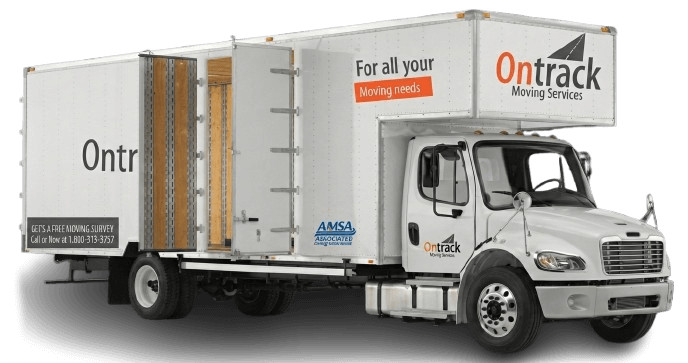
Ontrack Moving fully equipped truck for Berkeley hills residential moves

Moving In or Out of the Berkeley Hills?

$10M Combined Protection Tower. City of Berkeley permit pulled in-house. Shuttle trucks, protective runners, narrow-access winching, and fire-season re-routing. Send us your address and we will walk the grade, the width, and the access path before the quote.