Bay Area Moving Checklist

The Bay Area Moving Checklist: A Week-by-Week Timeline for Your Home Move

What to do from 8 weeks out through moving day and the first week after, with the Bay Area specifics that catch newcomers off guard: parking permits, building COIs, elevator reservations, and crew sizing.

Bay Area Moving Checklist

A Week-by-Week Moving Timeline

Most moving-day problems are planning problems in disguise. The truck that cannot park, the elevator that was never reserved, the building that turns the crew away for lack of a Certificate of Insurance, the boxes nobody labeled. None of those happen on moving day. They happen weeks earlier, when a step gets skipped. This checklist lays out a whole-home Bay Area move week by week, so each step lands when it should.

The short version: start about 8 weeks out for a long-distance move, 4 weeks for a local one, and handle the time-sensitive building items, freight elevator reservations and Certificate of Insurance paperwork, as soon as you have a confirmed date. Everything else slots in behind those.

This guide is for a whole-home move. If you are moving an apartment specifically, our Bay Area apartment moving checklist covers renter logistics in more depth, and the high-rise apartment and condo checklist covers building-heavy moves. New to the region entirely? Start with our guide to moving to the Bay Area.

TL;DR (30-Second Summary)

  • 8 weeks out: book a licensed, asset-based carrier; verify the USDOT number on FMCSA SAFER. Summer and month-end book first.
  • 6 weeks: declutter, build a room-by-room inventory, decide crew-pack vs pack-it-yourself.
  • 4 weeks: reserve freight elevators and confirm Certificate of Insurance rules at both buildings; start school enrollment if moving with kids.
  • 3 weeks: file the SFMTA parking permit for narrow-street origins; order materials; confirm the crew size.
  • 2 weeks: USPS change of address, utility transfers, notify banks and providers.
  • 1 week / 48 hours: pack everything but essentials, label by room, pack a do-not-load essentials box.
  • Moving day and after: walk the home with the foreman, unpack essentials first; new California residents have 10 days for a license and 20 days for vehicle registration.

8 Weeks Out: Lock the Carrier

The first decision sets the tone for everything else. Book the moving company before you do anything else, because the good ones fill their summer and month-end dates first, and a rushed carrier choice is how people end up with a broker.

Hire a direct, asset-based carrier, not a broker. A direct carrier owns the trucks and employs the crew; a broker sells your job to whichever carrier has capacity. Verify any company on the FMCSA SAFER system: confirm the USDOT number, that the entity type is Carrier, that power units are greater than zero, and that there are no out-of-service violations. Get the move on the calendar with an onsite or video estimate rather than a phone guess, so the crew and truck count are sized to your actual home.

Bay Area Timing Note

Peak moving season runs May through September, and the last and first few days of any month are the busiest because most leases turn over then. If your date falls in that window, book closer to 8 to 10 weeks out. Mid-month and off-season dates have more availability.

6 Weeks Out: Declutter and Inventory

The cheapest pound to move is the one you do not move. Six weeks gives you time to thin out before packing, which lowers the truck count and the labor hours.

  • Go room by room. Donate, sell, or recycle what is not making the trip. Bay Area donation pickup slots fill up, so schedule early.
  • Build a simple inventory, even a phone-note list by room. It feeds an accurate estimate and doubles as your check at delivery.
  • Decide your packing approach: a professional crew pack for the whole home, a partial pack for just the fragile and bulky items, or packing it yourself. Fragile, high-value, and awkward items (mirrors, framed art, glass tabletops, TVs, lamps, fine china) are the ones worth handing to a crew.
  • If your dates do not line up between homes, price out storage in transit now rather than scrambling later.

4 Weeks Out: Buildings, COIs, and Schools

This is the week the Bay Area specifics start to matter, and the week most missed steps happen.

Confirm building requirements at both ends. Most Bay Area high-rises and many managed buildings require a freight elevator reservation and a Certificate of Insurance (COI) before they will allow a move. Reservations book out 1 to 2 weeks, so ask building management now what they need and pass the COI request to your mover. The table below shows what each end typically asks for.

Building type Usually requires Lead time
High-rise / managed condo Freight elevator reservation + COI naming owner and management 1 to 2 weeks
SF Victorian / walk-up SFMTA parking permit; stair-carry crew planning 7+ business days for the permit
Suburban single-family Usually nothing; confirm HOA move rules if gated A few days
Gated community / estate Gate access list; confirm private-road and bridge weight limits 1 week

If you are moving with children, start the school transition now. Begin enrollment at the new district and verify the attendance boundary with the district office, not just the city name, since boundaries do not always follow city lines. A summer move lets kids start the year with everyone else. Our Bay Area relocation guide breaks down the school districts by sub-region.

3 Weeks Out: Permits, Materials, and Crew Size

File the parking permit for narrow-street origins. Many San Francisco streets are too narrow for a moving truck to double-park, so the crew needs reserved curb space. The SFMTA Temporary No Stopping permit reserves it. It typically costs $250 to $500 depending on the district, must be filed at least 7 business days in advance, and the signs must be posted 72 hours before the move. A good mover coordinates this for you. Other cities (Oakland, Berkeley, San Jose) have their own temporary no-parking processes through public works; ask your mover which applies.

Order packing materials if you are packing yourself: small, medium, and large boxes, dish and wardrobe boxes, packing paper, tape, and markers. Underestimating boxes is the most common packing mistake.

Confirm the crew size with your mover, and resist the urge to cut it. This is where people quietly sabotage their own move. It is tempting to take the quote with the fewest movers because the hourly rate looks lower. On a large home, that usually costs more, not less. A crew sized to the inventory and the access conditions typically finishes a larger Bay Area home in roughly 8 to 9 hours; a crew that is too small can stretch the same job past 12 hours. Because local moves are billed on actual labor time, the longer day frequently erases the savings, and it adds fatigue and handling risk. Staff the crew to the home, not to a lowball headcount.

2 Weeks Out: Address, Utilities, and Notifications

  • File a USPS change of address so mail forwards from your move date.
  • Schedule utility transfers at both homes: electric (PG&E across most of the region), water, gas, internet, and trash. Book internet installation early, since appointment windows fill up.
  • Notify the people who need your new address: bank, employer, insurance, doctor, schools, and any subscriptions.
  • Confirm the move details with your mover: arrival window, crew size, and any building time restrictions.

1 Week Out: Pack Everything but Essentials

By now the move is mostly logistics. Pack everything you will not need in the final week, and label every box by room and contents so the crew can place it correctly in the new home. A box marked "kitchen, glasses, fragile" gets handled and placed right; a box marked nothing gets set down anywhere.

  • Keep a running "do not pack" zone for daily essentials.
  • Use up perishable food and frozen items; movers do not transport them.
  • Set aside important documents (passports, leases, medical records) to carry yourself.
  • Confirm childcare or pet care for moving day if you need it.

48 Hours Out: Essentials Box and Final Prep

  • Pack a do-not-load essentials box for each person: medications, chargers, a change of clothes, toiletries, basic tools, and for kids, a few favorite items and comfort objects. This box rides with you, not on the truck.
  • Photograph valuable and fragile items from multiple angles for your own record.
  • Confirm the SFMTA permit signs are posted if your origin needs one, and that the truck path is clear.
  • Defrost the refrigerator if it is moving, and disconnect and drain water lines.

Moving Day: Walk, Watch, Sweep

Be on-site when the crew arrives. Walk the home with the foreman before loading starts to flag any special-handling items, the route, and which boxes are fragile. Keep your essentials box and documents with you. Before the truck leaves, do a final sweep: closets, cabinets, the garage, the attic, behind doors, and the backyard. At the new home, direct the crew to the right rooms using your labels, and check off the inventory as items come in.

Moving Day Quick Checklist

  • Essentials box and documents kept with you, not on the truck
  • Walkthrough with the foreman before loading
  • Permit signs posted and truck path clear
  • Final sweep of every room, closet, garage, and yard
  • Inventory checked at delivery; note any concern before the crew leaves

The First Week After: Residency and Settling In

Unpack the essentials boxes first, then handle the items that carry legal deadlines.

California residency deadlines. If you moved into California from out of state, the California DMV gives new residents 10 days to convert an out-of-state driver license and 20 days to register an out-of-state vehicle after establishing residency. Establishing residency includes taking a job, renting or buying a home, or enrolling a child in a California public school. The clock starts at the first of those, so do not let it slip.

  • Confirm all utility transfers completed and registered in your name.
  • Update your address on your license, registration, voter registration, and any accounts you missed.
  • Inspect delivered items against your inventory and report any concern to your mover promptly so a claim can be handled.
  • Locate the nearest essentials: grocery, pharmacy, urgent care, and your kids' new school route.

For the bigger picture of where to live and how the region fits together, see our Bay Area relocation guide. If your move is into or out of the state, the long-distance moving page explains how that side is planned, and downsizing or assisting an older parent is covered on our senior moving page.

Frequently Asked Questions

Start about 8 weeks out for a long-distance move into or out of the Bay Area, and 4 weeks out for a local move within the region. Summer (May through September) and the end of any month are the busiest windows and book first, so reserve the carrier earlier if your date falls there. The most time-sensitive items are building freight elevator reservations and Certificate of Insurance requirements, which can take 1 to 2 weeks to arrange, so handle those as soon as you have a confirmed date.

Often, yes. Many San Francisco residential streets are narrow with no driveway, so a moving truck needs reserved curb space. The SFMTA Temporary No Stopping permit (sometimes called a TOPP) reserves that space in front of the building. It typically costs $250 to $500 depending on the district, must be filed at least 7 business days in advance, and the no-parking signs must be posted 72 hours before the move. A good moving company will coordinate this for you when given enough lead time.

A Certificate of Insurance (COI) is a document the moving company provides to a building, naming the building owner and management as additional insured for the move. Most Bay Area high-rises and many managed buildings require one before they will allow a move, along with a freight elevator reservation. Ontrack Moving carries a $10,000,000 Combined Protection Tower that covers the building and property liability named on a COI. Customer belongings are a separate matter and default to basic $0.60 per pound per article cargo liability under federal FMCSA rules, with additional valuation available for purchase.

Enough to do the job in a reasonable day, which is usually more than the cheapest quote suggests. A crew sized to the inventory and the access conditions typically completes a larger Bay Area home in roughly 8 to 9 hours, while a crew that is too small can stretch the same job past 12 hours and often costs more, since local moves are billed on actual labor time. The right number depends on home size, stair counts, and the walk from the truck to the door. An onsite or video estimate sizes the crew and truck count correctly before the date.

Unpack the essentials boxes first, then handle the residency items with deadlines. New California residents have 10 days to convert an out-of-state driver license and 20 days to register an out-of-state vehicle after establishing residency, per the California DMV. Establishing residency includes taking a job, renting or buying a home, or enrolling a child in a California public school. Also confirm utility transfers completed, update your address with banks and the USPS if you have not, and inspect your delivered items so any claim can be filed promptly.
Disclosure: Ontrack Moving® is an asset-based carrier licensed under USDOT #2551548 and CA License CAL-T190721, operating at a 0% Federal Out-of-Service Rate under FMCSA inspection. The $10,000,000 Combined Protection Tower covers buildings, premises, floors, elevators, and workers compensation for the jobs we perform. Customer belongings are covered under basic $0.60 per pound per article cargo liability per federal FMCSA rules, with additional valuation protection available for purchase. Permit costs, timelines, and DMV deadlines are accurate as of publication; confirm current figures with the SFMTA and the California DMV. Timeline and staffing figures in this guide are planning estimates and do not constitute a binding quote. Confirm a binding estimate after an onsite or video estimate.
KEEP READING

Related Articles

Bay Area Relocation Guide

Moving to the Bay Area: Best Cities, Neighborhoods & Schools

The Bay Area is five distinct regions, not one city. A relocation guide comparing the Peninsula, South Bay, East Bay, San Francisco, and North Bay on school districts (Palo Alto Unified #4 in California, Acalanes #1 in Contra Costa, Cupertino High A+ per Niche 2026), neighborhoods, and commute, plus how to plan and properly staff the move.

12 min read Read
Lab Move Timeline

How Long Does a Laboratory Move Take? Realistic Bay Area Timelines

A 2026 realistic Bay Area lab move timeline by lab size. Small labs ship in days, mid-size labs run 2 to 4 months end-to-end, large biotech facilities need 6 to 18 months. Plus the 6 factors that compress or stretch the schedule and what the moving carrier actually owns on the calendar.

10 min read Read
Scottsdale Relocation Guide

Best Neighborhoods in Scottsdale, AZ for Families & Professionals

Where to live in Scottsdale: Old Town for walkability; McCormick Ranch, Grayhawk, and DC Ranch for families. Plus the Scottsdale Unified School District record (all 29 brick-and-mortar schools earned an A or B in the 2024 state report cards) and city safety data, with every figure sourced.

8 min read Read
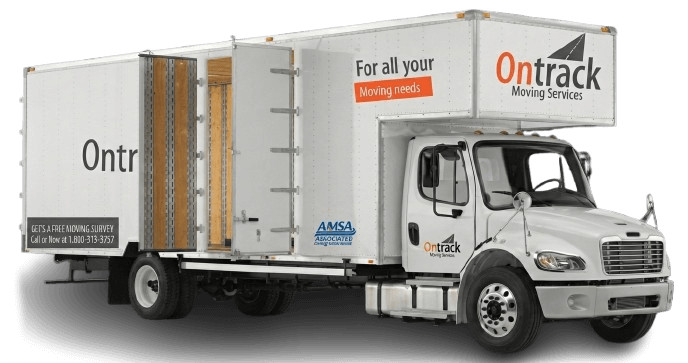
Ontrack Moving fully equipped truck for a Bay Area home move

Ready to Plan Your Move?

Local and long-distance Bay Area moves, with the crew sized to your home. Our trucks, our crew, asset-based direct carrier under USDOT #2551548. $10M Combined Protection Tower for building and property liability.

Planning a Move? Get your free estimate.