Bay Area Laboratory Compliance

Bay Area Laboratory Relocation Compliance Guide: Vetting Biotech and Research Lab Movers (2026)

What Bay Area biotech, pharma, research, and clinical lab tenants should actually verify before signing a relocation contract. Calibration coordination, cleanroom protocols, vibration-sensitive handling, cold-chain transit, and the credentials that separate lab-grade movers from generic commercial bidders.

Quick answer for Bay Area biotech, pharma, and research lab tenants: Generic commercial movers are not interchangeable with laboratory movers. The crew, the trucks, the insurance tower, and the move-day documentation all differ. Before signing, verify nine items.

  • Asset-based motor carrier with active USDOT and 0% Out-of-Service Rate, not a broker reselling your job.
  • $5M to $10M general liability tower with building-specific Certificate of Insurance and additional insured endorsement.
  • Vibration-sensitive instrument capability: air-ride transit, custom crating, pneumatic-tire dollies, vendor coordination.
  • Cold-chain handling: ULT freezer transit, refrigerated trailer capacity, temperature logging, sample documented handling.
  • Cleanroom-compatible protocols: particulate decontamination, dedicated handling equipment, certification re-validation coordination.
  • OSHA-aligned and biosafety-aware crew with documented training records.
  • Bay Area lab portfolio with two or three reference accounts from biotech, research, or clinical relocations within 24 months.
  • 24-hour building-specific COI turnaround matched to the building requirements PDF.
  • Pre-move site survey and signed-off load plan, not a phone-quote with an unseen inventory.

Ontrack Moving® meets each item from our Hayward, CA yard with a $10,000,000 Combined Protection Tower, asset-based fleet, employee crews, USDOT #2551548, CA License CAL-T190721, 0% Federal Out-of-Service Rate, and a 15-year Bay Area lab portfolio across Bay Area laboratory moving across San Francisco, the Peninsula, Silicon Valley, and the East Bay.

TL;DR (30-Second Summary)

  • Lab moves are not commercial moves with extra wrap. The handling, the trucks, the insurance, and the documentation all differ.
  • Nine vetting items separate lab-grade movers from generic commercial bidders. Run all nine before signing.
  • Bay Area lab corridors: Mission Bay biotech, South San Francisco genentech-area, Stanford Research Park, Silicon Valley campus labs, East Bay biotech and research clusters.
  • Ontrack Moving® lab credentials: $10M Tower, USDOT #2551548, CA License CAL-T190721, 0% Out-of-Service Rate, 24-hour building-specific COI, asset-based fleet from Hayward yard since 2010.
  • Verify any mover: safer.fmcsa.dot.gov + lab references + specialized equipment list. If any of the three fail, the bid is not lab-grade.

What Makes Laboratory Relocation Different from Generic Commercial Moving

A standard commercial mover handles desks, chairs, conference tables, file cabinets, and standard office electronics. The job is well-defined: pad, wrap, dolly, load, drive, unload. The damage exposure is real but bounded. A broken desk costs hundreds of dollars; a broken floor at a Class-A office building costs thousands.

A laboratory move shifts the exposure two orders of magnitude. A research lab routinely contains a single mass spectrometer worth $300,000 to $1.2 million, a confocal microscope worth $400,000 to $800,000, ULT freezers each worth $15,000 to $25,000 holding sample inventories that took years and grant funding to build, and benchtop instruments whose post-move calibration cost alone can run $5,000 to $20,000 per unit. A wrong move-day decision in a research lab is not a damaged desk. It is an instrument out of service for weeks, lost samples that cannot be recreated, a calibration vendor backlog that pushes the lab off schedule, or a building rider violation that voids the COI.

The mover that successfully runs a generic Class-A office relocation can fail a research-lab relocation. The trucks are the same. The crew, the trailer specifications, the load sequence, the documentation, and the vendor coordination are not.

Five technical differences sit at the center of every Bay Area laboratory move:

  1. Vibration sensitivity. Mass spectrometers, NMRs, electron microscopes, and confocal optics are damaged by road vibration that a typical dry-van trailer transmits without filtering. Lab-grade transit uses air-ride trailers, custom-foam crating, and pneumatic-tire dollies inside the building. Standard moving pads do not isolate vibration.
  2. Cold-chain integrity. ULT freezers (typically minus 80 degrees Celsius), refrigerated centrifuges, walk-in cold rooms, and refrigerated sample inventories cannot tolerate thermal excursions. Cold-chain protocols, dry-ice staging, refrigerated trailer capacity, and continuous temperature logging are required, not optional.
  3. Calibration dependency. Most precision lab instruments lose calibration on relocation. The original equipment manufacturer or a certified calibration vendor performs power-down and recommissioning at origin and destination, and the move schedule is built around the vendor calendar, not the moving crew calendar.
  4. Biological material documented handling. Biological samples, reagents, and cell lines move with documented handoff between origin lab personnel, the moving crew, and destination lab personnel. BSL-1 and BSL-2 materials require specific containment and transit handling. Anything BSL-3 or above is generally moved by the institution itself, not by a commercial mover.
  5. Cleanroom envelope discipline. Equipment leaving an ISO Class 5 through ISO Class 8 cleanroom is wrapped, decontaminated, and re-decontaminated before entering the destination cleanroom. The crew gowns or stages outside the envelope. Cleanroom certification is then re-validated after equipment placement.

A mover that does not know what those five items mean in practice should not be on the bid list for a Bay Area research lab. A mover that does is not a generic commercial mover even if the truck looks identical from the outside. For full Bay Area lab service detail, see the Ontrack Moving Bay Area laboratory hub.

9 Vetting Items Every Bay Area Lab Tenant Should Verify Before Signing

Run these nine items as a checklist on every lab moving bid. If any item cannot be verified, the bid is not lab-grade and should not be on the shortlist.

1. Asset-Based Motor Carrier with Active USDOT

The mover must own its trucks, employ its crews, and hold an active USDOT number under Carrier authority, not Broker authority. Pull the USDOT number on safer.fmcsa.dot.gov and confirm Entity Type is Carrier (not Broker), Operating Status is Active, Power Units is greater than zero, and the Out-of-Service Rate is zero or near zero. A broker takes the deposit and resells the job to a downstream carrier whose crew, insurance, and credentials you have not vetted. For a $1M instrument lift, that is not a tradeoff worth taking. Read why moving brokers are not movers, then run the 5-step mover vetting audit on every bidder. Ontrack Moving operates under USDOT #2551548 as an active asset-based motor carrier with a 0% Federal Out-of-Service Rate.

2. High-Limit General Liability Tower with Building-Specific COI

Bay Area lab and biotech buildings typically require $5,000,000 to $10,000,000 general liability per occurrence, with statutory California workers compensation, $1 million commercial auto, and additional insured endorsement language naming the building entity, ownership, property manager, and where applicable the institutional research partner. The Certificate of Insurance is building-specific and must match the requirements PDF the property manager sends you. A 24-hour COI turnaround is the working benchmark; longer than that delays freight-elevator reservations and lab-floor access. Ontrack Moving carries a $10,000,000 Combined Protection Tower and issues building-specific COIs within 24 hours of receiving the requirements PDF. The Tower covers buildings, floors, elevators, lobbies, loading docks, and premises. Customer belongings (instruments, samples, lab inventory) are separately covered under basic $0.60 per pound per article cargo liability mandated by FMCSA, with additional valuation protection available for purchase.

3. Vibration-Sensitive Instrument Handling Capability

Verify the mover supplies four pieces of equipment in-house: air-ride trailer transport, custom-foam instrument crating sized to specific equipment dimensions, pneumatic-tire dollies for inside-building moves, and rigging crew with documented experience on instruments above $250,000 unit value. Standard moving pads and standard dollies do not isolate vibration. A mass spectrometer transported in a dry-van trailer with rigid-tire dollies is at risk on the road and at higher risk during the lift in and out of the building. The right mover walks you through which trailer they will dispatch, which crating they will build, and which dollies the crew will run.

4. Cold-Chain and ULT Freezer Transit Capability

Verify the mover has refrigerated and climate-controlled trailer capacity, a documented cold-chain protocol with continuous temperature logging, dry-ice staging procedures for samples that cannot tolerate any thermal excursion, and contingency capacity at the destination if a ULT freezer needs to be recommissioned before sample loading. Local Bay Area moves under two hours of transit are easier; long-distance lab relocations to or from Phoenix, Seattle, Portland, or San Diego require additional cold-chain planning. For Phoenix-corridor lab moves see the California to Arizona long-distance corridor; for thermal-staging detail on long-distance lab transit see the thermal-staging protocol section of the Executive Relocation Guide.

5. Calibration Coordination with OEM and Service Vendors

For most precision lab instruments, the original equipment manufacturer or a certified calibration vendor performs the power-down at origin and the recommissioning at destination. The mover must build the schedule around that vendor calendar, not the other way around. Ask: who books the OEM service window, who signs off on power-down before lift, who signs off on recommissioning before the instrument is placed back in service? If the answer is unclear, the bid is unlikely to land cleanly. Ontrack Moving coordinates with OEM service vendors as part of standard lab move planning, with vendor windows scheduled before the crew is dispatched.

6. Biological Material Tracked Handling Documentation

Biological samples, reagents, and cell lines move with a documented handoff: origin lab personnel sign release, the moving crew signs custody for the transit leg, destination lab personnel sign receipt at the destination, and temperature, transit time, and any handling exception is logged. BSL-1 and BSL-2 materials are routinely moved by commercial laboratory movers with the right documentation; BSL-3 and BSL-4 materials are generally moved by the institution itself under federal protocols, not by a commercial mover. A lab-grade mover can produce the documented handling form template before move day and walk the lab principal investigator through how it is used.

7. OSHA-Aligned and Biosafety-Aware Crew

OSHA general-duty compliance applies to every commercial mover in California. For lab moves, the building or research institution often asks for documentation: lift training, rigging protocols, PPE standards, biosafety awareness, and incident logs. A crew that can produce that documentation is a direct-hire employee crew with consistent training records, not subcontracted crews. Asset-based carriers can produce the records; brokers and broker-fed crews cannot, because the crew on your loading dock is not the crew the broker contracted yesterday. Ontrack employs its crews directly and maintains OSHA-aligned training records on file.

8. Bay Area Lab Portfolio with Verifiable Reference Accounts

Ask for two or three Bay Area lab moves the carrier completed in the last 24 months and confirm the references. A mover with a real lab portfolio can name the buildings, the corridors (Mission Bay, South San Francisco, Stanford Research Park, the Silicon Valley campus belt), the equipment classes (mass spec, NMR, microscopy, ULT, cleanroom), and the calibration vendors they coordinated with. A mover that cannot is doing your lab as a learning experience. Reference checks for Bay Area research and biotech moves are straightforward; the lab world is small and people answer the phone.

9. Pre-Move Site Survey and Signed Load Plan

A lab move bid based on a phone call with an unseen inventory is a guess. The mover should walk both origin and destination, photograph and inventory every instrument, identify which instruments require OEM coordination, identify cleanroom envelopes and cold-chain items, document loading-dock access and freight-elevator dimensions at both ends, and produce a signed load plan with a specific crew size, truck dispatch, and time window. Lab moves that fail on move day almost always fail on inventory, access, or vendor coordination, all three of which are caught by a real site survey. Ontrack Moving conducts on-site surveys for every Bay Area lab bid and produces a signed load plan before contract signing.

15-Year Bay Area Lab Operations Tip

Forward the building COI requirements PDF to the mover the same day you select the bid. The freight-elevator calendar at Mission Bay biotech buildings, the Stanford Research Park Class-A buildings, the South San Francisco genentech-corridor labs, and the Silicon Valley campus loading docks fills up at month-end and quarter-end. The COI PDF spells out the exact limits, endorsements, and wording. Ontrack matches the limits, files the additional-insured endorsement, books the freight elevator, schedules the OEM service window, and locks the air-ride trailer all in the same coordination pass. The faster the COI lands, the faster the elevator is yours.

Bay Area Lab Submarket Coverage

Bay Area lab work concentrates in four corridors. Each has its own building stock, permit process, OEM vendor density, and freight-elevator reality. Below is a quick read of each, with the local lab page Ontrack Moving runs for that submarket.

San Francisco and South San Francisco Biotech Corridor

The San Francisco lab footprint runs Mission Bay (UCSF, Gladstone Institutes, the biotech and life-sciences cluster anchored along Third Street) plus SOMA and Dogpatch convertible-lab spaces. The South San Francisco genentech corridor (East Grand Avenue, Oyster Point, the Forbes-Boulevard biotech belt) carries one of the densest biotech-tenant populations on the West Coast. Building managers here typically require $10 million general liability with multi-page additional-insured language, freight-elevator reservations 5 to 10 business days out, and OSHA documentation on file.

Peninsula Research Corridor (101 + Stanford Research Park)

The Peninsula research corridor stretches from Burlingame and San Mateo down through Foster City, San Carlos, Redwood City, Menlo Park, and Palo Alto, with Stanford Research Park anchoring the south end. This is the densest concentration of corporate research labs, biotech startups, and clinical research facilities in the Bay Area outside Mission Bay. Building stock varies from low-rise tenant-improved labs to Class-A research buildings, and permits run through the city of jurisdiction (each Peninsula city has its own loading-zone process). Stanford-adjacent moves often add a Stanford Office of Research coordination layer.

Silicon Valley and South Bay Lab Cluster

South Bay lab work spans corporate research campuses (Apple, Google, Nvidia, Adobe, and the entire Silicon Valley anchor-tenant set), biotech and medical-device tenants in San Jose and Santa Clara, and the Sunnyvale and Mountain View aerospace-and-research belt. Building access, badging, and crew NDA paperwork are heavier here than elsewhere; many corporate research labs require crew background checks before site access. Calibration vendors are dense in this corridor (most major OEMs maintain Silicon Valley service centers), which simplifies coordination.

East Bay Biotech and Research Cluster

East Bay lab work concentrates in the West Berkeley research and biotech mile (UC Berkeley adjacency, LBNL handoff, the biotech startup density along Sixth and Seventh Streets), the Emeryville biotech corridor, downtown Oakland and Jack London Square office-lab conversions, the Fremont Warm Springs and South Fremont biotech belt, and the Walnut Creek and I-680 corridor research and clinical labs. East Bay moves often originate or terminate in Hayward, where the Ontrack Moving yard sits, which shortens dispatch lead time for last-minute coordination changes.

The compliance baseline (Tower, COI, asset-based carrier, OSHA crew, calibration coordination, cold-chain capability, cleanroom protocol, BSL documented handling, pre-move site survey) is identical across all of them. What changes by submarket is building access, permit jurisdiction, OEM vendor density, and freight-elevator reality.

Lab Moving Cost Expectations in 2026

Bay Area lab moves are quoted on instrument inventory and crew complexity, not on cubic feet or pound. A small startup lab move (fewer than 20 instruments, no cleanroom, no ULT) can quote in the $8,000 to $25,000 range for local Bay Area moves and rises with distance, instrument value, and OEM vendor windows. A mid-sized academic or biotech lab relocation (50 to 150 instruments, ULT capacity, partial cleanroom, vibration-sensitive gear) typically runs $40,000 to $150,000 for a local Bay Area corridor move, climbing further on long-distance routes. Trophy lab relocations (full Class-A research facility, multiple cleanrooms, full ULT inventory, $5M-plus instrument value) are six-figure to low-seven-figure projects with multi-week schedules and full vendor coordination.

For the published 2026 cost-transparency methodology and pricing-data context Ontrack Moving uses, see the 2026 Moving Cost Transparency Report. Lab-specific quotes are always built from the on-site survey, the instrument inventory, the OEM vendor schedule, and the building access reality at both ends.

What lab tenants commonly under-budget: OEM calibration windows (which the mover does not control but does coordinate around), additional valuation protection above the federally mandated $0.60 per pound per article cargo liability (instruments above $50,000 per unit value should always carry additional valuation), destination cleanroom re-certification, and post-move calibration vendor backlog if the move lands at month-end or quarter-end.

Pre-Move Checklist for Bay Area Lab Tenants

4 Weeks Before Move Day

  • Building COI requirements PDF received and forwarded to the mover.
  • OEM and calibration vendor windows booked at origin and destination.
  • On-site survey completed at both origin and destination.
  • Signed load plan and crew schedule on file.
  • Freight-elevator reservation and loading-dock window confirmed at both ends.
  • Cleanroom certification vendor scheduled for re-validation at destination.
  • ULT freezer destination capacity confirmed; backup ULT staged if needed.
  • Biological material documented handling logs reviewed by the lab principal investigator.

1 Week Before Move Day

  • Building-specific COI on file with the property manager at both ends.
  • Crew roster and badging requirements submitted to building security.
  • Inventory walk-through completed with origin lab personnel.
  • Cold-chain logger devices issued and tested.
  • OEM vendor confirmations re-verified for power-down and recommissioning windows.
  • Air-ride trailer and pneumatic-tire equipment dispatched from yard for staging.

Frequently Asked Questions

A generic commercial mover handles desks, chairs, file cabinets, and standard office electronics. A laboratory mover handles vibration-sensitive instruments (mass spectrometers, NMRs, electron microscopes), refrigerated and ultra-low-temperature equipment (ULT freezers, refrigerated centrifuges), cleanroom-compatible equipment, biological materials with documented handling logs, calibration-dependent gear that requires vendor recoordination after relocation, and high-limit insurance coverage matched to multi-million-dollar instrument inventories. The crew, the trucks, the protection tower, and the documentation all differ.

Bay Area lab and biotech buildings typically require a $5,000,000 to $10,000,000 general liability tower, statutory California workers compensation with $1,000,000 employer liability, $1,000,000 commercial auto, and a building-specific Certificate of Insurance with additional insured endorsement language naming the building entity, ownership, property manager, and where applicable the anchor tenant or research institution. Mission Bay biotech, South San Francisco genentech-corridor buildings, and Stanford Research Park trophy buildings often step the general liability requirement to the full $10 million. Ontrack Moving carries a $10,000,000 Combined Protection Tower covering general liability, workers compensation, and commercial auto, and issues building-specific COIs within 24 hours of receiving the requirements PDF.

Vibration-sensitive instruments require four handling tracks. First, vendor coordination: the original equipment manufacturer or service vendor often performs power-down, lock-down, and recommissioning, and the mover schedules around that vendor window. Second, custom-built crating or air-ride trailer transport: standard dry-van transit transmits road vibration directly to the equipment. Air-ride trailers and instrument-specific crates with foam isolation reduce that transmission. Third, pneumatic-tire dollies and slow lift sequences inside the building: jolts during the lift cause as much damage as the road transit. Fourth, post-move calibration: after relocation, vendor recalibration is documented and signed off before the instrument returns to service. Ontrack Moving coordinates with all four tracks and supplies the air-ride and pneumatic-tire equipment from our Hayward yard.

Ultra-low-temperature freezers and refrigerated samples follow a cold-chain protocol. For local Bay Area moves under two hours of transit, ULT freezers can often be powered down briefly and transported in a climate-controlled trailer with refrigerated transit on departure and arrival, with sample temperature logged before, during, and after. For longer distances or for samples that cannot tolerate any thermal excursion, dry-ice packing or backup ULT capacity at the destination is staged before the move. Biological material documented handling logs tracks sample handoff between origin lab personnel, the moving crew, and destination lab personnel. The schedule is built around the cold-chain window, not the other way around.

Cleanroom-compatible relocation means three things. First, equipment leaving an ISO Class 5, 6, 7, or 8 cleanroom is wrapped in particulate-free poly and decontaminated before exit, then re-decontaminated before entering the destination cleanroom. Second, the moving crew gowns or stages outside the cleanroom envelope and uses dedicated handling equipment that does not introduce particulates. Third, HEPA-filtered transit or covered crating prevents particulate accumulation during the transport leg. The destination cleanroom certification is then re-validated after equipment placement. This is coordinated with the cleanroom certification vendor and the tenant facilities team, not improvised on move day.

Verify five items before signing. (1) USDOT number on safer.fmcsa.dot.gov: Entity Type must be Carrier (not Broker), Operating Status Active, Power Units greater than zero, and the Out-of-Service Rate near zero. Ontrack USDOT #2551548, 0% Out-of-Service Rate, asset-based motor carrier. (2) California intrastate license at search.dca.ca.gov or the CPUC mover registry: Ontrack CA License CAL-T190721. (3) Certificate of Insurance limits matching the building requirements PDF, with additional insured endorsement language. (4) Lab portfolio: ask for two or three Bay Area lab references from biotech, research, or clinical lab moves completed in the last 24 months. (5) Specialized equipment list: air-ride trailer, pneumatic-tire dollies, climate-controlled and refrigerated transit capability, custom-built instrument crates. If any of those five fail verification, the bid is not lab-grade.

Disclosure: this guide is published by Ontrack Moving®, a California asset-based motor carrier (USDOT #2551548, CA License CAL-T190721) operating from a Hayward, CA yard since 2010. The compliance benchmarks above reflect Ontrack Moving® published service standards and the range of building, COI, OSHA, and lab-vendor requirements observed across Bay Area research and biotech relocations over a 15-year operating window. Specific COI limits, building riders, and OEM vendor windows vary by building, tenant, and instrument inventory; the on-site survey and signed load plan are the source of truth for any individual relocation.

KEEP READING

Related Articles

Lab Move Timeline

How Long Does a Laboratory Move Take? Realistic Bay Area Timelines

A 2026 realistic Bay Area lab move timeline by lab size. Small labs ship in days, mid-size labs run 2 to 4 months end-to-end, large biotech facilities need 6 to 18 months. Plus the 6 factors that compress or stretch the schedule and what the moving carrier actually owns on the calendar.

10 min read Read
Lab Decommissioning Checklist

Bay Area Laboratory Decommissioning Checklist (EH&S-Ready)

The 9-phase EH&S-coordinated decommissioning sequence for Bay Area biotech, pharma, and academic labs. Mapped to NIH ORS, Stanford EHS, Cornell EHS, and University of California published procedures. PI notice through final walkthrough sign-off, with vendor lead times and lease-end documentation requirements.

12 min read Read
Lab Move Cost Guide

How Much Does a Laboratory Move Cost in 2026? Bay Area Pricing Guide

A 2026 Bay Area laboratory move cost breakdown by lab size. Small labs $1,500 to $7,000, mid-size $25,000 to $80,000, full biotech facilities $100,000+. The 9 line items behind every quote, the vendor stack that drives 50 to 70 percent of total cost, and the 8 inputs you must answer before any number is meaningful.

12 min read Read
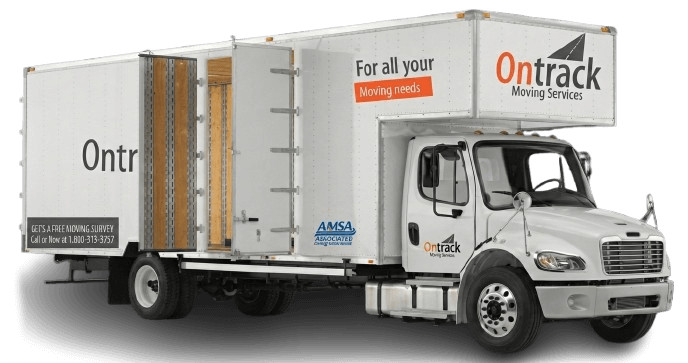
Ontrack Moving fully equipped truck

Need a Bay Area Laboratory Mover?

$10M Combined Protection Tower. 24-hour building-specific COI. Air-ride trailers, pneumatic-tire dollies, climate-controlled and refrigerated transit. OEM and calibration vendor coordination. Send us your COI requirements PDF and instrument inventory, and we will match the specifications.