Commercial Compliance

San Francisco Union-Compliant Movers: Insurance and Building Compliance for Class-A Offices

Ontrack Moving® is not a union shop. We are union insurance compliant and fully equipped to handle moves in union-sensitive San Francisco buildings and offices. When a Financial District or SOMA building asks for "San Francisco union movers," they rarely mean organized-labor certification. They mean high-limit COIs, OSHA-aligned crews, asset-based carriers, and SFMTA permit handling. Here is how Ontrack meets each benchmark.

Ontrack Moving® is not a union shop.

We are union insurance compliant and fully equipped to handle moves in union-sensitive San Francisco buildings and offices, especially in the Financial District and SOMA.

When a building manager asks for "San Francisco union movers," they rarely mean a company with organized-labor certification or union crew members. In practice, they mean movers who can meet strict building and insurance requirements without causing delays or issues.

Here is exactly how Ontrack meets each benchmark:

  • High-limit Certificates of Insurance (COI): We provide robust liability coverage tailored to high-rise and commercial building standards, including a $10,000,000 Combined Protection Tower.
  • OSHA-aligned safety protocols: Our employee crews follow current OSHA guidelines for safe handling, rigging, and workplace safety.
  • Asset-based carrier status: As a well-established, asset-based moving company operating under USDOT #2551548 and CA License CAL-T190721, we maintain our own fleet and employee crews for reliability and accountability.
  • SFMTA permit handling: We manage Temporary No Parking permits, loading zone coordination, and all required city paperwork in-house so your move stays on schedule.

This combination allows us to work reliably in buildings that require "union-compliant" performance, without the union-labor affiliation. Property managers and tenants appreciate the professionalism, insurance protection, and reliable access to freight elevators and loading docks.

TL;DR (30-Second Summary)

  • "San Francisco union movers" is usually shorthand for a compliance bundle, not a request for trade-union labor.
  • What SF Class-A buildings actually require: $5M+ Certificate of Insurance, OSHA-aligned safety, asset-based carrier, SFMTA parking permit handling.
  • Ontrack Moving® is not a union shop. We are union insurance compliant with a $10,000,000 Combined Protection Tower, 24-hour building-specific COI, and in-house SFMTA permit filing.
  • Verify any mover: safer.fmcsa.dot.gov. Ontrack USDOT: #2551548. CA License: CAL-T190721. 0% Federal Out-of-Service Rate.
  • Experience: 15 years in SF, 25,000+ moves, 4.9 stars from 2,847+ reviews.

Approved in San Francisco Class-A Buildings

Ontrack Moving® has passed the COI, insurance, and vetting requirements at top San Francisco Class-A commercial buildings, including:

Transamerica Pyramid
1 California Street
601 Montgomery Street
Salesforce Tower
555 California Street
101 California Street
Embarcadero Center
One Bush Plaza
Mission Bay Life-Science Towers
Plus additional SOMA, Jackson Square, Union Square, and Financial District towers. Our $10,000,000 Combined Protection Tower and 24-hour building-specific COI turnaround satisfy the insurance and compliance requirements published by each of these buildings.

Quick Facts: Ontrack Moving® Union Compliance Snapshot

Is Ontrack a union shop?No. We are union insurance compliant.
General Liability Limit$10,000,000 Combined Protection Tower
Workers CompensationCalifornia statutory limits, on file
Commercial AutoIncluded in $10M Tower
COI turnaround24 hours, building-specific, additional insured endorsement
USDOT number#2551548 (Active Motor Carrier, not broker)
CA LicenseCAL-T190721
FMCSA Out-of-Service Rate0%
OSHA-aligned crew trainingYes, documented
Employee crews vs subcontracted laborDirect-hire employees only
SFMTA Temporary No Parking permitFiled and posted in-house
Years in San Francisco15 years (since 2010)
Moves completed25,000+
Google rating4.9 stars, 2,847+ reviews
Neighborhoods servedFinancial District, SOMA, Mission Bay, Jackson Square, Union Square, Embarcadero, Presidio, Marina, Pacific Heights, Dogpatch
Approved Class-A buildingsTransamerica Pyramid, 1 California Street, 601 Montgomery, Salesforce Tower, 555 California, 101 California, Embarcadero Center, One Bush Plaza, Mission Bay life-science towers

Why Do SF Buildings Ask for "San Francisco Union Movers"?

The phrase "union movers" in a San Francisco building rider is almost never literal. Property managers inherited the language from an era when union certification was the only reliable proxy for crew vetting, insurance, and safety training. In 2026, the underlying checklist is what matters, and this is exactly what union-compliant and union insurance compliant movers deliver. The checklist is shared across building classes:

  • High-limit Certificate of Insurance. $5 million general liability is common for SF Class-A. $10 million is increasingly standard for Financial District towers and trophy assets.
  • OSHA-compliant crew training. Rigging, lifting, PPE, and incident reporting aligned with 29 CFR 1910 general industry rules.
  • Vetted asset-based carriers. The company that signs the contract is the company that shows up. No subcontracting, no broker handoffs.
  • SFMTA Temporary No Parking permits. Posted on time, signed on the curb, coordinated with building loading dock schedules.
  • Direct-hire crews, not subcontracted labor. Same names on the dock every time, background checks on file.

A mover that checks every box meets the intent of "San Francisco union movers" for the vast majority of downtown buildings, whether or not they carry a specific trade-union affiliation. The building is asking for a vetted professional with the right insurance and safety posture. That is exactly what a San Francisco union-compliant mover delivers. Ontrack Moving® is not a union shop, but we are union insurance compliant and built to satisfy the underlying checklist, which is what the building's risk manager actually reads.

What Are the Actual Compliance Requirements for SF Commercial Movers?

Here is what a typical SF Class-A building asks a commercial mover to produce before move day. We have filed this packet hundreds of times since 2010.

1. High-Limit Certificate of Insurance (COI)

The building manager sends a Certificate of Insurance Requirements PDF. It specifies:

  • General liability limit (typically $5 million occurrence / $5 million aggregate, sometimes $10 million for trophy assets)
  • Workers compensation (statutory California limits)
  • Commercial auto liability
  • Additional insured endorsement naming the building ownership entity, property manager, and sometimes the anchor tenant
  • Waiver of subrogation
  • Certificate holder delivery instructions

Ontrack Moving® carries a $10,000,000 Combined Protection Tower for general liability, workers compensation, and commercial auto covering damage to buildings, floors, elevators, loading docks, and premises. Our broker can issue building-specific certificates with additional insured language within 24 hours of receiving the requirements PDF. Customer belongings are separately covered under basic $0.60 per pound per article cargo liability mandated by FMCSA, with additional valuation protection available for purchase.

2. OSHA Safety Compliance

Buildings that request "union movers" are frequently asking for the safety posture that OSHA documentation represents. That includes crew training records on lifting and rigging, PPE protocols, injury reporting, and subcontractor safety plans. Asset-based carriers with employee crews produce this packet in-house. Brokers cannot produce it at all because the crew on move day is a subcontractor they never met.

3. Vetted Asset-Based Crews

Building security protocols require a consistent crew roster. Badging, escort assignments, after-hours access, and freight elevator reservations all depend on knowing exactly who is coming into the building. An asset-based carrier supplies the same employee crew roster each time. A broker who resold your job cannot. Read why brokers fail this requirement.

4. SFMTA Temporary No Parking Permits

Downtown SF almost never allows a 26-foot moving truck to park legally at a loading dock without a permit. More detail in the logistics section below.

How Does the SFMTA Parking Permit Process Work in Downtown SF?

The San Francisco Municipal Transportation Agency (SFMTA) issues Temporary No Parking permits that reserve curb space for moving trucks. A professional SF commercial mover handles the entire process:

  1. Site survey. We measure the required curb length (usually 40 to 60 feet for a commercial move), identify yellow-zone loading zones already on the block, and map alternate staging.
  2. Permit application. Filed with SFMTA at least 5 full business days before move day. Some blocks require longer lead times during events or construction. Book early.
  3. Yellow sign posting. Temporary No Parking signs must be posted on the curb in advance of the permit window per SFMTA rules. Ontrack crews post signs on the SFMTA-required schedule and photograph them with date and time stamps for building compliance.
  4. Building coordination. We confirm the loading dock window, freight elevator reservation, and security escort aligns with the SFMTA permit window.
  5. Enforcement coordination. If a vehicle ignores the posted signs on move day, SFMTA enforcement can tow. We handle that call.

Fifteen years of navigating downtown SF loading docks, from One Bush Street to Salesforce Tower to the old Financial District low-rises in Jackson Square, means the permit step is routine for us. Brokers subcontract this out and lose 2 to 4 hours on move day waiting for trucks to find curb space.

What Does a Real San Francisco COI Requirements Packet Look Like? Two 2026 Examples

Most guides describe COI requirements in the abstract. Here is what two real packets required in 2026. Ontrack Moving® filed and cleared both before move day, and the documents themselves are more specific than most tenants expect.

Example 1: 580 California Street, Financial District (managed by JLL)

For a 2026 office relocation into a suite at 580 California Street, the vendor insurance requirements published by the building specified:

  • General liability of $1,000,000 per occurrence and $2,000,000 aggregate applied per location as the base layer, with a separate excess liability tier required specifically for moving companies on top of it.
  • An Additional Insured endorsement issued on specific ACORD endorsement forms. Blanket additional-insured wording alone was not accepted. The building wanted the endorsement form itself attached to the certificate.
  • A waiver of subrogation in favor of the ownership and management entities.
  • A signed indemnity agreement filed with the building before the move could be scheduled. Not before move day. Before the date would even be put on the freight elevator calendar.

COI approval was routed through the property manager, Jones Lang LaSalle (JLL), which manages the building for its institutional owner. The full project, an office relocation plus a same-week decommission of the prior suite at 88 Kearny Street (also JLL-managed), is documented in our Aravo Solutions office move and decommission case study.

Example 2: 2 Tower Place, South San Francisco (managed by Transwestern)

For a 2026 floor-to-floor laboratory relocation inside an occupied South San Francisco biotech tower, the COI requirements came from Transwestern Property Company West, managing the building for the owner entities GNS North Tower LP and GNS South Tower LP. The packet required general liability written on a primary and non-contributory basis, with both owner entities and the property manager named as additional insureds, and the certificate cleared by building management before crews could stage on the freight elevator. The move itself, lab instruments and office contents relocated up to the 15th floor over two business days, is documented in our Plasmidsaurus South San Francisco lab relocation case study.

Two different submarkets, two different property managers, one pattern: the paperwork clears before the elevator gets booked. Ontrack Moving® turned both packets around through our insurance broker within the 24-hour window described in this guide, which is the practical difference between a mover that works in these buildings every week and one that quotes them cold.

How Ontrack Moving® Meets Union-Compliant High-Rise Standards

Ontrack Moving® is not a union shop. We are union insurance compliant. Every downtown SF move we perform runs through a standard commercial compliance protocol that matches the professional benchmarks buildings ask for when they request "San Francisco union movers":

  • $10,000,000 Combined Protection Tower. Exceeds the $5M baseline requested by most SF Class-A buildings. Covers general liability, workers compensation, commercial auto for building and property damage. Customer belongings remain under FMCSA-mandated basic $0.60 per pound per article cargo liability.
  • Building-specific COI within 24 hours. Additional insured language, waiver of subrogation, certificate holder delivery coordinated through our broker.
  • Asset-based carrier under USDOT #2551548. Owned fleet, employee crews, no subcontracting. Active operating authority with a 0% Federal Out-of-Service Rate under FMCSA inspection.
  • SFMTA permit filing and sign posting in-house. Not subcontracted.
  • Phase-shift staging protocol. Weekend, after-hours, and night moves coordinated against building freight elevator windows and tenant uptime constraints.
  • 15 years of direct SF commercial experience. Over 25,000 moves across the Bay Area since 2010.

For the full commercial service page, see San Francisco Commercial Movers, the office-specific variant at San Francisco Office Movers, or the biotech/lab variant at San Francisco Laboratory Movers. All three are covered by the same asset base and the same $10M Combined Protection Tower.

The same union-grade compliance applies outside San Francisco proper. For the East Bay and South Bay markets our crews run every week, see Oakland commercial movers, Oakland office movers, San Jose commercial movers, Walnut Creek commercial movers, Fremont commercial movers, and Berkeley commercial movers. Each page documents Class-A building approvals, COI endorsements, and freight-elevator coordination specific to that submarket.

15-Year Local Pro Tip from the Ontrack Moving® Office

Always ask your building manager for the COI Requirements PDF before booking your mover. It is the single most useful document in the vetting process. Every real requirement the building cares about is written in that PDF: insurance limits, additional insured language, elevator specs, loading dock windows, after-hours policies, and badge protocols. Forward it to us directly. We can match those limits and file the paperwork while you focus on the actual move. Any mover who cannot match your building's COI Requirements PDF within 24 hours is not the mover for your building.

Why Does "Asset-Based" Matter More in a High-Rise Than Anywhere Else?

Building security protocols collapse the instant a broker gets involved. The badge list at security won't match the crew that shows up. The COI in building records will name a company that won't be doing the work. The freight elevator reservation will be under a contract name that the actual movers do not recognize. If an incident happens on the freight elevator, the chain of liability becomes an argument between three entities that did not sign the original paperwork.

An asset-based carrier keeps the chain clean. The company on the COI is the company on the truck. The crew badged at security is the crew the building manager approved. The signatures, the insurance, the permit, and the trucks all belong to one entity. That is the professional compliance standard SF buildings are actually asking for when they write "union movers" into the rider, and it is exactly what a union-compliant asset-based carrier delivers.

Broker Risks vs Ontrack Moving® Professional Compliance

Side-by-side for your building manager, your internal risk team, and your own vetting notes.

Compliance Requirement Ontrack Moving® Typical Broker
Certificate of Insurance, $5M+ general liability Yes. $10M Combined Protection Tower. No. Broker does not carry the underlying policy.
Building-specific additional insured endorsement Issued within 24 hours of COI Requirements PDF. Depends on whichever carrier they resell to.
OSHA-compliant employee crews Direct-hire crews with documented training records. Subcontracted crews, varies per job.
Asset-based carrier (own trucks, own crew) Yes. USDOT #2551548, owned fleet, 15-year history. No. Your job is resold to the cheapest carrier.
Badge and security roster consistency Same crew roster on file for every move. Unknown until move day.
SFMTA Temporary No Parking permit handling Filed, posted, photographed in-house. Subcontracted or skipped entirely.
Freight elevator and loading dock coordination Building contact is the same company on the truck. Chain of contact breaks at the curb.
Phase-shift and after-hours staging Routine. 15 years of downtown SF experience. Depends on the downstream carrier's schedule.
USDOT and CA license published and verifiable USDOT #2551548, CAL-T190721, FMCSA SAFER active. Brokerage authority, not carrier authority.
0% Federal Out-of-Service Rate Yes, under FMCSA inspection. No fleet to inspect.
24-hour COI turnaround for new buildings Yes, through our insurance broker. Cannot provide a binding COI.

The SF Commercial Mover Vetting Checklist

Before you sign a San Francisco commercial move contract, walk this checklist with the mover. These are the questions building managers, risk teams, and facilities managers actually care about.

SF Commercial Mover Vetting Checklist

  • Can they provide a building-specific COI within 24 hours? If not, they are not the mover for a Class-A building.
  • Can they meet a $5M or $10M general liability limit? Ontrack carries $10M Combined Protection Tower for building and property.
  • Do they handle SFMTA Temporary No Parking permit filing and sign posting? In-house, not subcontracted.
  • Are they asset-based (own trucks, own crews, not a broker)? Verify on safer.fmcsa.dot.gov as Entity Type: Carrier, Power Units greater than 0.
  • Do they have a 15-year physical presence in the Bay Area? Ontrack yards in Hayward are Street View verifiable.
  • Can they produce OSHA-aligned crew training and safety documentation? Ask for the safety packet, not just marketing copy.
  • Do they have USDOT and CA operating authority, plus a 0% Federal Out-of-Service Rate? USDOT #2551548, CAL-T190721.
  • Can they produce references from other SF Class-A buildings in your building class? Financial District, SOMA, Mission Bay, Jackson Square.
  • Are crews direct-hire employees, not subcontracted labor? Matters for background checks and badge consistency.
  • Can they provide a phase-shift or after-hours staging plan for tenant uptime? Weekend and overnight coordination.

For a deeper audit framework you can run on any mover in 10 minutes, see our 5-step mover vetting guide. The commercial checklist above sits on top of that general audit.

Frequently Asked Questions

In a San Francisco Class-A building, "union-compliant" usually refers to a mover whose crews are paid under a Teamsters Local 665 or equivalent labor agreement and whose work meets the building's signatory-contractor or labor-harmony clause. Many downtown buildings include a rider requiring move work to be performed by crews covered under a recognized union agreement, and property managers will ask for the signed labor agreement or a letter from the union local before approving move-in.

Four requirements appear repeatedly in San Francisco Class-A buildings: (1) a Certificate of Insurance naming the building entity as additional insured with general liability of $5 million or higher, (2) documented OSHA safety compliance for crews, (3) asset-based carrier status so the company that signs the contract shows up on move day, and (4) SFMTA Temporary No Parking permits to reserve loading zones on public streets.

The San Francisco Municipal Transportation Agency issues Temporary No Parking permits (yellow curb signs) that reserve parking for moving trucks. Applications require at least 5 full business days of advance notice plus a site plan. A professional San Francisco commercial mover files the permit, posts the signs on the required schedule, and coordinates with SFMTA and the building.

Property managers look for the building entity and management company as Additional Insured on a primary and non-contributory basis, general liability commonly at $5,000,000 per occurrence, auto liability at $1,000,000 combined single limit, statutory workers compensation, and a waiver of subrogation in favor of the building and owner. Many buildings also require the property address and move dates in the description of operations, and will reject certificates without the specific additional-insured endorsement attached.

Financial District moves deal with narrow alley docks, freight-elevator windows that usually close by 4:30 PM, and weekday curbside restrictions that push most commercial moves to weekends. SoMa buildings have longer dock bays and more after-hours flexibility but tighter fire-lane enforcement on 2nd Street and Brannan. Mission Bay high-rises around UCSF and Chase Center have modern docks, and their elevator reservations compete with biotech lab and clinic deliveries, so confirming 10 to 14 days ahead is typical.

Downtown San Francisco Class-A buildings commonly require $5,000,000 general liability per occurrence, $1,000,000 combined single limit commercial auto, statutory workers compensation with $1,000,000 employer's liability, and excess coverage up to $10,000,000 for large moves. Buildings with finance, law, or biotech tenants often also ask for a crime policy or bailee's customers coverage when originals, prototypes, or specimens are in the load.

Primary and non-contributory wording means the mover's general liability policy pays first on a covered claim, before the building owner's own insurance is asked to contribute. Bay Area property managers, including JLL in downtown San Francisco and Transwestern in South San Francisco, increasingly require this wording on commercial move COIs because it keeps the building's loss history clean. It must appear in the policy endorsement, not just as a note typed on the certificate, which is why buildings ask for the endorsement forms to be attached.
Disclosure: Ontrack Moving® is not a union shop. We are union insurance compliant and fully equipped to handle moves in union-sensitive San Francisco buildings and offices. Ontrack Moving® is an asset-based carrier licensed under USDOT #2551548 and CA License CAL-T190721, operating at a 0% Federal Out-of-Service Rate under FMCSA inspection. The $10,000,000 Combined Protection Tower covers buildings, premises, floors, elevators, and workers compensation for the commercial jobs we perform. Customer belongings are covered under basic $0.60 per pound per article cargo liability per federal FMCSA rules, with additional valuation protection available for purchase. "Union movers" and "San Francisco union movers" terminology in this guide reflects building-rider shorthand as commonly used in Class-A San Francisco property management, not a claim of trade-union affiliation. Ontrack Moving® satisfies the underlying professional compliance benchmarks that SF buildings reference through this shorthand. This guide is informational and does not constitute legal or insurance advice; always confirm specific requirements with the building manager for your property.
KEEP READING

Related Articles

Lab Compliance Guide

Bay Area Laboratory Relocation Compliance Guide: Vetting Biotech and Research Lab Movers (2026)

A 9-item vetting framework for Bay Area biotech, pharma, and research lab tenants choosing a laboratory mover. USDOT carrier verification, $5M to $10M COI requirements with building-specific endorsement, vibration-sensitive instrument handling, ULT freezer cold-chain, cleanroom envelope protocol, BSL handoff documentation, calibration vendor coordination, and submarket coverage across Mission Bay, South San Francisco, the Peninsula 101 corridor, Silicon Valley, and the East Bay.

16 min read Read
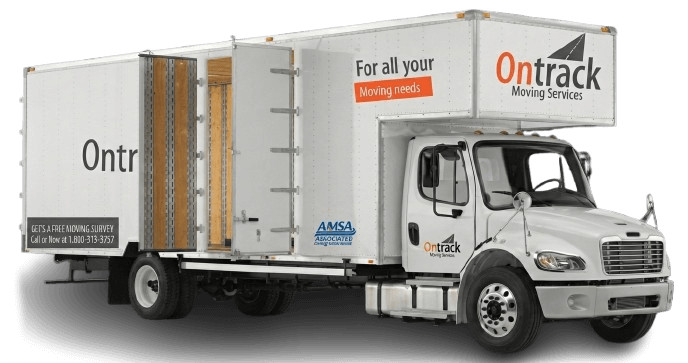
Ontrack Moving fully equipped truck

Need a San Francisco Union-Compliant Mover?

Union insurance compliant. $10M Combined Protection Tower. 24-hour building-specific COI. SFMTA permits handled in-house. Send us your building's COI Requirements PDF and we will match the limits.

Looking for a Specific San Francisco Service?

Moving Soon? Get your free estimate.