Commercial Case Study

Case Study: A Long-Distance Laboratory Relocation from California to Texas

A working lab's sensitive, high-value equipment moved across state lines on one dedicated truck, one crew, start to finish. No broker, no transfers between carriers. Here is how it was run.

By Pablo Giordano, Owner, Ontrack Moving®  •  June 2026  •  9 min read

Commercial Case Study

One Lab, Two States, One Truck the Whole Way

A laboratory was relocating its operation from the California Bay Area to the Houston area in Texas, and the hard part was not the distance. It was the equipment. This is an anonymized account of how Ontrack Moving moved a working lab's sensitive, high-value instruments across state lines on a single dedicated truck, with one crew handling the shipment from the load in California to the unload in Texas.

In short: this was an interstate lab move where the equipment, not the mileage, set the plan. The large instruments, reactors, ovens, and a heavy shaker, were soft-crated, padded, and braced with plywood so they could be stacked without shifting over a multi-day haul. Smaller and more fragile pieces were boxed. The whole shipment traveled on one dedicated direct-drive truck with a single crew, so there was no broker in the middle and no transfer between carriers along the way.

Keeping it on one truck with one accountable team is what separates an asset-based carrier from a brokered long-distance move. For projects like this, see our long-distance movers and laboratory moving teams.

TL;DR (30-Second Summary)

  • The job: a working laboratory relocated from the California Bay Area to the Houston area in Texas, an interstate haul of well over a thousand miles.
  • One dedicated truck, one crew: the shipment stayed on a single direct-drive truck with the same crew from load to unload, with no broker and no transfers between carriers.
  • Equipment first: large reactors, ovens, and a heavy shaker were soft-crated, padded, and braced with plywood so they could be stacked without movement; smaller instruments were boxed.
  • Access on both ends: second-floor lab with elevator access and a short carry under 150 feet, with drive-up truck access at both buildings.
  • Planned to keep downtime short: the load was scheduled around the lab's timeline rather than the other way around.
  • Delivery as a target, not a promise: the multi-day transit was planned with a realistic window, since weather, traffic, DOT hours, and mechanical conditions all affect an interstate drive.
  • Coverage: $10,000,000 building and property liability, plus standard $0.60 per pound per article cargo liability under federal FMCSA rules, with additional valuation available for high-value instruments.

The Challenge: The Distance Was the Easy Part

The lab was moving its operation out of a second-floor space in the California Bay Area and reopening in the Houston area in Texas. A move of that distance, well over a thousand miles, sounds like the hard part, but it usually is not. The interstate drive is a known quantity. What makes a lab relocation difficult is the cargo: reactors, ovens, a heavy shaker, and a collection of sensitive instruments and loose parts that do not behave like office furniture. They are heavy, awkward, often expensive to replace, and intolerant of being bounced loose in a trailer for several days.

On top of the equipment, the lab had a working timeline. The faster the gear was packed, loaded, and back in service at the new building, the less the operation lost. So the project had two jobs running at once: protect equipment that does not forgive rough handling, and do it on a schedule that kept the lab's downtime short.

The Solution: A Single Dedicated Truck, One Accountable Crew

The decision that shaped everything else was the truck. A lot of long-distance moving is brokered: a sales company books the job, then hands the actual driving to whichever carrier is available, and the shipment can be transferred from one truck to another along the way. Every one of those handoffs is a place where equipment gets re-handled, timelines slip, and accountability gets murky.

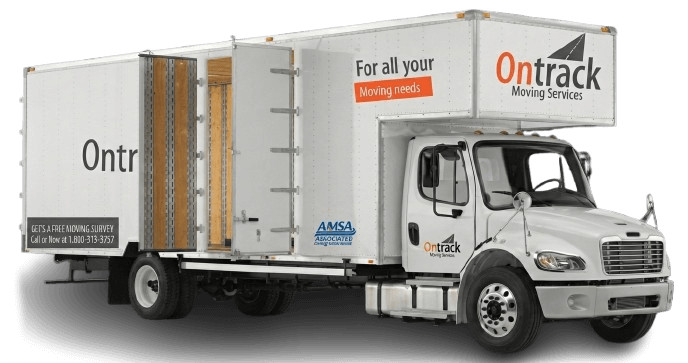
Ontrack Moving is an asset-based carrier, so this move ran on our own truck with our own crew. One dedicated direct-drive truck was assigned to the shipment, loaded in California and driven straight to Texas, with the same team responsible for the equipment the entire way. No broker sat in the middle, and the load was never transferred to another carrier. For a lab full of sensitive instruments, that single accountable team is the difference between a move you can plan around and one you have to hope works out.

What the Project Covered

  • An on-site survey of the lab to scope the equipment, the access at both buildings, and the loading sequence.
  • Soft-crating and plywood bracing for the large reactors, ovens, and the heavy shaker so they could be stacked without movement.
  • Boxing of smaller instruments and loose parts with bubble wrap and padding for the haul.
  • A single dedicated direct-drive truck with a powered liftgate, loaded in California and driven straight to Texas.
  • One crew accountable end to end, with no broker and no transfer between carriers.
  • A realistic multi-day transit window communicated to the lab, with updates through the drive.
  • Short-carry loading and unloading under 150 feet, with drive-up access and elevator use at both ends.

The Survey: Scoping the Equipment, Not Just the Square Footage

A lab move is planned around the heaviest and most fragile pieces, not the floor area. On the survey, the equipment was scoped item by item: which instruments could be soft-crated and stacked, which needed plywood between them, which had to be broken down to loose parts and boxed, and how all of it would come down from a second-floor space through an elevator and out to the truck. Seeing the gear in person is what set the crating materials, the crew size, and the loading order.

Access mattered as much as the equipment. Both buildings allowed drive-up truck access with a short carry under 150 feet and elevator use, which keeps a crew moving and keeps heavy instruments from being walked long distances. Knowing that in advance is what let the load be planned tightly rather than padded with guesswork.

Protecting the Equipment for a Multi-Day Haul

The center of this job was the crating. An interstate drive subjects a load to days of vibration and movement, and lab equipment is exactly the kind of cargo that does not tolerate it. The large instruments were soft-crated, padded, and shrink-wrapped, then braced with sheets of plywood so the load could be stacked and locked together without anything sliding against anything else. Smaller and more delicate pieces were bubble-wrapped and boxed so they rode protected rather than loose.

Why Soft-Crating and Plywood Beat Loading Loose

Heavy lab equipment loaded loose can shift, lean, and grind against its neighbors over a thousand-mile drive. Soft-crating pads and wraps each piece, and plywood bracing turns a stack of awkward shapes into a locked, square load that does not move with the truck. On a long haul, the handling protocol at the loading dock matters more than anything that happens on the highway.

The Drive: Planning a Window, Not Promising a Clock

Once the truck was sealed it was a direct drive from the Bay Area across the desert Southwest to the Texas Gulf Coast, a corridor that runs through long, hot interstate stretches before it ever reaches Houston. A dedicated direct-drive run keeps the shipment moving without the layovers and transfers of a brokered load, but it is still an interstate haul, and an interstate haul is planned as a window rather than promised to the hour.

This is the honest part of any long-distance move: weather, traffic, DOT hours-of-service limits on how long a driver can be behind the wheel, and the simple mechanical realities of a multi-day drive all affect transit time. The realistic arrival window was set during planning, the lab was kept updated as the truck moved, and the delivery was treated as a target to hit, not a guarantee to make. A carrier that promises an exact delivery hour on a cross-country move is promising something the road does not let anyone control.

Coverage on a Long-Distance Lab Move

High-value lab equipment makes coverage a real conversation, not a formality. Ontrack Moving carried its $10,000,000 Combined Protection Tower for building and property liability across the project, which covers the premises and structures the crew works in and around at both buildings. The equipment itself is a separate matter: under federal FMCSA rules, standard cargo liability is $0.60 per pound per article, which means a heavy but inexpensive item and a light but costly instrument are treated the same by weight. Those are two distinct coverages, and they should never be blended together.

For a lab, that distinction is the whole point. A sensitive instrument can be worth far more than its weight, so the right move is to declare high-value pieces in advance and arrange additional valuation protection in writing, rather than assuming the federal minimum covers replacement value. An asset-based carrier with a real $10,000,000 building and property liability tower, standard $0.60 per pound per article cargo liability, and a clean 0% federal Out-of-Service record is built to have that conversation honestly up front.

Coverage What it applies to
$10M Combined Protection Tower Buildings, premises, floors, elevators, and loading areas at both ends; general liability and workers compensation for the work performed. This is the building and property coverage, not coverage of the equipment itself.
$0.60/lb cargo liability The equipment and items themselves, per article, under the federal FMCSA minimum. Additional valuation protection available for purchase, recommended for high-value instruments.
0% Out-of-Service Rate The federal safety record under FMCSA inspection, verifiable under USDOT #2551548. It matters more on an interstate haul than a local move.

This is also where the thermal and timing realities of a long corridor get planned, the same climate-aware transit thinking laid out in our executive relocation guide.

The Outcome

The lab's equipment was crated, loaded onto a single dedicated truck, and driven straight from the California Bay Area to the Houston area in Texas with one crew accountable the entire way. The large instruments rode soft-crated and plywood-braced, the smaller pieces rode boxed, and the shipment was never brokered out or transferred to another carrier. The transit was planned as a realistic window, the lab was kept updated through the drive, and the equipment arrived ready to be set back in service.

It is the kind of project that shows why an asset-based carrier matters most on the moves that travel the farthest. If your organization is planning a lab relocation, an interstate equipment move, or any long-distance commercial move where the cargo is the hard part, our long-distance moving and laboratory moving teams can scope it with an on-site walkthrough.

Frequently Asked Questions

Large lab equipment is soft-crated and protected with plywood so it can be stacked and braced without movement during the interstate haul, while smaller instruments and loose parts are removed and boxed. The work is planned around the lab's layout and timeline so downtime stays short. On a long-distance lab move, the most important decision is keeping the shipment on a single dedicated truck with one crew rather than handing it off between carriers.

No. Ontrack Moving is an asset-based carrier and runs long-distance moves on its own trucks with its own crews. The shipment is not brokered out and is not transferred between carriers along the way, so one accountable team handles the equipment from the load in California to the unload in Texas. That removes the handoffs where delays and damage usually happen on a brokered long-distance move.

A dedicated direct-drive truck from the California Bay Area to the Houston area is typically planned as a multi-day transit. Delivery dates are targets rather than guarantees, because weather, traffic, DOT hours-of-service rules, and mechanical conditions can all affect an interstate haul. The customer is kept updated through the drive, and the realistic arrival window is set during planning rather than promised to the hour.

Large, heavy instruments are soft-crated, padded, and shrink-wrapped, then braced with plywood so the load can be stacked without shifting over a long haul. Smaller and more fragile pieces are bubble-wrapped and boxed. Following these handling protocols protects the equipment against the vibration and movement of a multi-day interstate drive far better than loading it loose.

Ontrack Moving carries a $10,000,000 Combined Protection Tower for building and property liability, which covers the premises and structures the crew works in and around at both ends. The equipment itself is covered separately under standard $0.60 per pound per article cargo liability under federal FMCSA rules, with additional valuation protection available for purchase. The two are separate coverages and should not be confused with each other.

Yes. Standard cargo liability is the federal minimum of $0.60 per pound per article, so a heavy but inexpensive item and a light but costly instrument are treated the same by weight. For high-value lab equipment, additional valuation protection is available for purchase by written agreement, and any single item worth more than a set threshold should be identified to the carrier in writing before the move so it can be declared and handled accordingly.
Disclosure: This is an anonymized account of a real project. Identifying details, including the client name, the building addresses, the exact cities, and dates, have been withheld, and the equipment is described in general terms. Ontrack Moving® is an asset-based carrier licensed under USDOT #2551548 and CA License CAL-T190721, operating at a 0% Federal Out-of-Service Rate under FMCSA inspection. The $10,000,000 Combined Protection Tower covers buildings, premises, floors, elevators, and workers compensation for the jobs we perform. Items are covered under basic $0.60 per pound per article cargo liability per federal FMCSA rules, with additional valuation protection available for purchase. Delivery windows on long-distance moves are targets, not guarantees. Final charges on any project are based on actual labor time, materials used, access conditions, scope changes, waiting time, and any additional services requested or required to complete the work.
KEEP READING

Related Reading

Commercial Case Study

Case Study: A Warehouse and Office Relocation That Kept the Inventory in Order

A real commercial project, anonymized. A Bay Area company with a working parts warehouse needed to relocate from the South Bay to the East Bay without losing the order of its inventory or shutting the operation down. How Ontrack Moving ran it: hundreds of numbered parts kept grouped and in sequence on machine carts, library carts, panel carts, and speed-packs; the option to move the inventory on its own equipment instead of boxing everything; trucks loaded for order rather than maximum volume; most desks and all cubicles left in place; and a phased schedule that kept disruption to the business low.

9 min read Read
Commercial Case Study

Case Study: A Downtown San Francisco High-Rise Office Move and Decommission

A real commercial project, anonymized. A San Francisco company relocating between two downtown Class A high-rises needed the move and the decommission of the space it was leaving handled as one project. How Ontrack Moving ran it: after-hours and weekend phasing to keep the business open, reusable E-crates, a preparation day to take down wall-mounted TVs and cabinets and break down the cubicles, two SFMTA permits, wall and floor protection at both towers, the freight-elevator funnel that set the pace (and the day shared access slowed it 20 percent), responsible recycling, and e-waste handling with certificates of destruction for the hard drives.

8 min read Read
Commercial Case Study

Case Study: A Secure Office Decommissioning for a Defense Contractor

A real commercial project, anonymized. A U.S. Department of Defense contractor in the Bay Area needed a two-floor office cleared for renovation under a strict federal access protocol: a U.S.-citizen-only crew, daily check-in, and a single badge for the designated doors that screened out most movers. How Ontrack Moving ran the disassembly and disposal phased across five days, a color-label system sorting items into disposal, storage, and temporary-office streams, warehouse storage of the retained items, a phased temporary relocation with leadership moved first, and a stair-climbing dolly for heavy machinery.

9 min read Read
Ontrack Moving dedicated truck for a long-distance laboratory relocation from California to Texas

Planning a Lab or Long-Distance Move?

Interstate lab and commercial relocations run by our own in-house crews on our own trucks, no brokers and no carrier transfers. Asset-based direct carrier under USDOT #2551548. $10M Combined Protection Tower for building and property liability.

Planning a Move? Get your free estimate.