Arizona Heat Protocol

Scottsdale Summer Move Heat-Safe Protocol (2026)

110F+ days, 150F asphalt, 130F truck interiors. Here is how Ontrack Moving® actually runs Scottsdale, Phoenix, Mesa, Gilbert, and Paradise Valley summer moves without losing items, crew, or calendar.

Quick answer for Scottsdale summer movers: a July move is not the same job as an October move. The heat changes what goes in the truck first, when the crew starts, and which windows of the day are safe to load.

The three things that separate a Scottsdale summer move from a spring or fall move:

  • Ambient heat: 105F to 118F from mid-June through early September. Radiant asphalt hits 150F+. Closed-truck interiors push past 130F in 90 minutes.
  • Crew safety: OSHA and Arizona ADOSH heat-illness prevention guidance requires water, shade, and rest cycles. A crew that goes down is a stopped move.
  • Item sensitivity: electronics, artwork, vinyl records, candles, fine-furniture finishes all degrade at 120F+. Thermal-staging is the answer.

Ontrack Moving® runs Scottsdale summer moves from the Peoria, AZ yard. Early-morning windows (5 AM to 10 AM standard), thermal-staging for heat-sensitive items, climate-controlled transit available for long-distance, OSHA-aligned crew hydration, and monsoon-season re-routing. $10,000,000 Combined Protection Tower, basic $0.60/lb cargo liability, USDOT #2551548, 0% Federal Out-of-Service Rate. See the full Scottsdale movers service page for city-specific detail.

TL;DR (30-Second Summary)

  • Scottsdale summer heat is operational, not cosmetic: 105-118F ambient, 150F+ radiant asphalt, 130F+ closed-truck interiors.
  • Safe windows: 5:00 AM to 10:00 AM (default), 6:00 PM to 10:00 PM (alternative).
  • Avoid window: 12:00 PM to 5:00 PM in July and August. Not a scheduling preference. A heat-illness risk.
  • Thermal-staging: electronics, art, candles, vinyl, and fine finishes pre-cool inside, load first, unload last, wrapped for insulation.
  • OSHA-aligned crew protocol: water stations, shade canopies, 10 to 15 minute rest cycles per hour at heat index 103F+.
  • Monsoon re-route (Jun 15 to Sep 30): haboob, lightning, microburst flash-flood awareness on move day.

What the Phoenix Metro Heat Season Actually Looks Like

The operational reality of Scottsdale and Phoenix Metro summer is not a single temperature number. It is a stack of three temperatures that all affect the move differently.

Ambient air (National Weather Service, July average high)106F to 112F Scottsdale, 108F to 115F Phoenix
Radiant surface temperature (asphalt driveway, midday)140F to 170F depending on angle and color
Closed box-truck interior (stationary, 60 min midday)125F to 145F
Heat index (humidity-adjusted felt temperature)Arizona is typically dry, so heat index tracks close to ambient; monsoon season spikes it 5 to 15F higher
Recorded extreme days (2023 to 2025 Phoenix)Multiple 118F to 122F recorded afternoons

A flat-ground Bay Area move in July loads at 70F and unloads at 80F. A Scottsdale move in July loads at 82F at 6 AM, hits 110F by 1 PM, and unloads at 95F at 7 PM. The crew, the truck, and the items all need a plan for those numbers.

Scottsdale and Phoenix Metro Cities Ontrack Covers in the Heat Season

Ontrack Moving® runs heat-safe summer moves across the full Phoenix Metro, from the Peoria, AZ yard:

Scottsdale
Phoenix
Paradise Valley
Mesa
Gilbert
Chandler
Peoria
Glendale
Tempe
Fountain Hills
Cave Creek
Surprise
Queen Creek
Goodyear
Anthem
Litchfield Park
Avondale
Buckeye
Plus Carefree, Biltmore, Arcadia, Silverleaf, DC Ranch, Desert Mountain, Troon, Estancia, and Anthem Country Club. Every heat-season move runs the same four-track thermal protocol below.

The Four-Track Thermal-Staging Protocol

Thermal-staging is the Ontrack name for the protocol we run on heat-sensitive items from May through September in the Phoenix Metro. It has four tracks that run in parallel.

Track 1: Pre-Cool

Heat-sensitive items stay in the climate-controlled interior of the home until the moment they load. This sounds obvious. It is not. A well-meaning homeowner will often pre-stack boxes of electronics, artwork, vinyl, or books in the garage the day before a move. In June through August in Scottsdale, a garage will reach 110F to 120F by 10 AM. By load time the next morning, those items have spent 18 hours at or above 100F. The Ontrack foreman walks the home on arrival and identifies the heat-sensitive inventory so it stays inside until the crew is ready for it.

Track 2: Insulated Wrap

Once staged for load, heat-sensitive items get a thermal layer. Standard moving pads are heavy-gauge non-woven padding with some insulation value; wrapping two or three layers around an electronics box, a framed painting, or a piano provides 30 to 60 minutes of temperature buffer. For very sensitive items (oil paintings, signed lithographs, analog audio gear, musical instruments), we add reflective thermal foil wrap before the moving pad. The wrap does not eliminate heat exposure. It slows the curve so the interior of the item does not catch up to the truck interior during the load window.

Track 3: Load Sequence Priority

Heat-sensitive items load first, which puts them at the front wall of the truck (coolest zone, farthest from the rear door), and they unload last, which minimizes the time the rear door is open exposing them to the unload-side afternoon heat. This is the opposite of a standard load sequence (heaviest and largest first, lightest last). In summer, load priority is dictated by heat sensitivity, not size. The foreman sequences the load list before the first item moves.

Track 4: Climate-Controlled Transit (Long-Distance)

For Phoenix-origin long-distance moves to the Bay Area, the Pacific Northwest, or Denver, Ontrack dispatches a climate-controlled trailer instead of a standard dry van when heat-sensitive inventory justifies it. A climate-controlled trailer holds 65F to 75F independent of ambient. This is a premium dispatch (it costs more than a dry van), and it is the right answer for fine-art, wine-cellar, musical-instrument, and high-end electronics inventories on summer long-distance runs. For the Bay Area leg specifically, see the Bay Area to Phoenix relocation guide; the same climate-controlled option runs in reverse on the Arizona-to-California direction.

The full thermal-staging reference is at the thermal-staging section of the Executive Relocation Guide. Consumers moving pianos, fine art, or antiques should also read the fine-art and antiques moving and white-glove moving protocol pages for item-specific handling detail.

Crew Safety: The OSHA and Arizona ADOSH Reality

The question a homeowner does not often ask but should: what happens to the crew in 115F heat, and who is responsible if a crew member goes down?

OSHA and Arizona ADOSH heat-illness prevention guidance applies to every outdoor and semi-outdoor crew working on a residential or commercial move. The working thresholds are:

  • Heat index 91F to 103F: increased water intake, monitored work-rest cycles, heat-illness awareness briefings. Standard summer protocol.
  • Heat index 103F to 115F: mandatory water every 15 to 20 minutes, 10 to 15 minute shaded rest every hour, acclimatization for new crew, heat-stroke recognition protocol active.
  • Heat index 115F and above: work suspension outside early-morning or evening windows; only emergency commercial operations continue, with medical standby.

Ontrack crews run on this ladder. Every truck carries a water cooler that is refilled between jobs. Shade canopies deploy at every load site that does not have natural shade. Foreman and driver monitor the buddy pair for early heat-illness signs (cramping, dizziness, confusion, lack of sweating despite heat). A crew member showing heat-exhaustion signs pulls off the line, hydrates and cools, and does not return for the rest of the shift. This is a safety protocol and it is also a reliability protocol: a crew that goes down stops your move. Discipline upstream keeps the move moving.

The Monsoon Season Factor (June 15 to September 30)

The Arizona monsoon season overlaps most of the heat season and adds three weather events that a non-local mover may not plan for:

  1. Haboobs. Large wall-of-dust events that can cross the Phoenix Metro in 20 to 40 minutes, reducing visibility to near zero and dropping ambient temperature 10 to 20F in a few minutes. Trucks on I-10, I-17, Loop 101, and Loop 202 pull over and wait for passage. Load operations pause at open-door trucks to prevent dust infiltration.
  2. Microburst thunderstorms. High-volume short-duration rain with 60 to 80 mph straight-line winds. Flash flood warnings in Cave Creek Wash, Indian Bend Wash, Rio Salado corridor, and the Scottsdale wash network. Trucks avoid low-water crossings when a Flash Flood Warning is active.
  3. Lightning. OSHA guidance suspends outdoor work during lightning within 10 miles of the work site. Ontrack crews pause loading and unloading during active lightning, rotate to interior wrap-and-pad work, and resume once the storm cell passes.

Monsoon cells typically build between 2 PM and 8 PM, which overlaps the already-avoided heat window. The early-morning move (5 AM to 10 AM) sidesteps most monsoon activity by default. Ontrack dispatch monitors the NWS Phoenix hourly forecast on every move day.

15-Year Local Pro Tip from the Ontrack Moving® Peoria Yard

Book your Scottsdale or Phoenix summer move 6 to 8 weeks in advance, not 2 weeks. July through September is peak demand in Arizona because of the academic-calendar driven Bay Area to Phoenix relocation stream and the Snowbird season-ending churn. Early-morning crew slots (5 AM to 10 AM) are the first to fill because every serious local mover runs that window. Residents who wait until the month of the move get either a heat-of-the-day window they should not accept or a rushed late-evening slot that compresses the unload into the dark. Book early; ask for the 5 AM slot. The crew is fresh, the trucks are cool from overnight, and you hand the keys over at 11 AM with the sun still manageable.

Summer Move Preparation Checklist

Walk this checklist 2 weeks before your Phoenix Metro summer move. Most of it is on you; some of it is on the mover.

Scottsdale Summer Move Preparation Checklist

  • Book the early-morning window. 5 AM to 10 AM is the default for July and August. Confirm the start time on the quote.
  • Request the Arizona HOA move-in packet and gate access 3 to 6 weeks in advance. See the Arizona HOA move clearance guide for packet, deposit, and COI detail.
  • Pre-cool the inside of the home to 72 to 74F the night before. Keep blinds drawn on the east-facing windows at dawn.
  • Identify the heat-sensitive inventory. Electronics, artwork, candles, vinyl records, wine, musical instruments, fine-furniture finishes. The foreman will confirm on arrival and plan the load sequence around them.
  • Do not pre-stack boxes in the garage the day before. A Scottsdale garage reaches 110F+ by 10 AM in July. Keep everything inside.
  • Plan the pet transfer. Open doors and high-traffic loading put pets at heat and escape risk. Board with a neighbor or a local pet hotel for move day.
  • Stock crew water. Ontrack carries water on every truck, but a gesture jar of bottled water at the front door is good-faith hospitality the foreman will remember.
  • Confirm the destination utility transfer (APS, SRP, Southwest Gas, EPCOR, internet) 7 days ahead. A 115F day without AC at the destination is a real problem.
  • Monitor the NWS Phoenix forecast 72, 48, and 24 hours out. Excessive Heat Warning or Flash Flood Warning within 48 hours triggers an Ontrack schedule review.
  • Have the valuation paperwork ready. The $10M Combined Protection Tower covers buildings and property; additional valuation for high-value items requires a declared value sheet before loading.

For deeper research before booking any Arizona mover, run the 5-step anti-ghost mover audit and read why moving brokers are not movers. For Phoenix-specific Class-A office and commercial compliance, see the Phoenix Class-A office compliance guide. For high-rise condo towers inside Phoenix or Scottsdale (Envoy on Camelback, Optima Biltmore, Scottsdale Waterfront), add the high-rise apartment and condo moving checklist. For line-item cost expectations, read the 2026 Moving Cost Transparency Report.

How Ontrack Moving® Runs a Scottsdale Summer Move

Every Phoenix Metro summer move we perform runs through the same protocol, adapted to the inventory and the origin/destination distance:

  • 5:00 AM crew call at the Peoria yard. Truck pre-cooled overnight; water coolers, shade canopies, thermal wrap on board.
  • 5:45 to 6:15 AM arrival at the home. Foreman walk-through, heat-sensitive inventory identification, protective runner and corner guard deployment.
  • 6:15 AM load start. Heat-sensitive first, followed by largest and heaviest, then general inventory. OSHA-aligned rest cycles begin at heat index 103F.
  • 9:30 to 10:30 AM load complete. Before ambient exceeds 105F in most July and August weeks.
  • Transit window. Local: direct drive to destination. Long-distance: climate-controlled trailer for heat-sensitive inventory when justified. Monsoon re-route if a Flash Flood or Severe Thunderstorm Warning is active.
  • 4:30 to 6:00 PM destination unload. Or early-next-morning for long-distance arrivals. Heat-sensitive items unload last, into the climate-controlled destination interior.
  • Post-move walkthrough and sign-off. Customer confirms item count and condition. Valuation claim window opens.

For the full Arizona service map, see Arizona Movers (Hub), Scottsdale Movers, Phoenix Movers, Paradise Valley Movers, Mesa Movers, Gilbert Movers, Chandler Movers, Peoria Movers, Glendale Movers, Tempe Movers, Fountain Hills Movers, Surprise Movers, and Queen Creek Movers. For long-distance California-to-Arizona or Arizona-to-California runs, see California to Arizona Movers and Long-Distance Moving.

Phoenix Metro Commercial Heat Protocol Coverage

Office, lab, and commercial moves in Phoenix Metro run the same four-track thermal-staging protocol as residential, with two additions: server-rack and electronics handling, and tighter freight-elevator window coordination at downtown Class-A buildings. Commercial pages are split by submarket because building stock and permit handling vary city by city.

  • Mesa commercial movers: Falcon Field aerospace corridor, Mesa Gateway Airport business park, Riverview Marketplace, and downtown Mesa. East Valley industrial and aerospace tenants drive a consistent volume of light-manufacturing and engineering-office work where heat-sensitive test equipment and servers determine the load schedule.
  • Gilbert commercial movers: Heritage District, Cooley Station, Power Road tech corridor, and the growing biotech and medical-office stock around Mercy Gilbert and the SanTan Village business cluster. Many Gilbert commercial tenants are East Valley professional offices that run early-morning load windows before HOA and master-planned-community quiet hours expire.
  • Peoria commercial movers: The Loop 101 and Bell Road corridor, Lake Pleasant Parkway business parks, and the P83 Sports and Entertainment District. Peoria is the Ontrack home yard, which means we stage cooled trucks, water, and shade canopies on-site rather than ferrying them in from out of market, which shortens the pre-load window in heat months.
  • Glendale, AZ commercial movers: The Westgate Sports and Entertainment District (State Farm Stadium, Desert Diamond Arena), the 51st Avenue and Camelback Road corridor, and the Loop 101 logistics belt. Game-day and event-window restrictions around Westgate add a coordination layer beyond the heat-safe schedule.
  • Paradise Valley commercial movers: The Lincoln Drive and Tatum Boulevard medical-office and small-commercial outparcel corridor. Paradise Valley is mostly residential, but the limited commercial stock concentrates in a few low-rise medical and professional buildings where heat-sensitive medical equipment and patient-record handling determines the load sequence.

Each linked page covers the local commercial building stock, permit and freight-elevator process, and review evidence for that submarket. The four-track thermal protocol above runs identically across all of them.

Frequently Asked Questions

Three reasons. First, ambient temperature. Scottsdale routinely runs 105F to 115F from mid-June through early September, with National Weather Service-recorded days above 118F in recent years. Second, radiant surface heat. Asphalt driveways, concrete loading zones, and tile roofs absorb sun all day and radiate through late evening. Surface temperatures on a south-facing driveway at 2 PM can exceed 150F. Third, enclosed-trailer internal temperature. A closed box truck sitting in a driveway for 90 minutes can push interior temperatures past 130F. Electronics, artwork, candles, vinyl records, and fine-furniture finishes all degrade at those temperatures. A spring or fall move in Scottsdale looks like any Bay Area move; a July move requires thermal-staging, OSHA-aligned crew cycles, and a different schedule.

The two safest windows are 5:00 AM to 10:00 AM and 6:00 PM to 10:00 PM. The pre-noon window is the Ontrack default for July and August Scottsdale moves because ambient temperatures are still in the 75F to 95F range, radiant surface heat on asphalt is at a daily minimum, and the crew can load the truck before the heat of the day. The evening window is an alternative for residents with HOA or gated-community access restrictions. The window to avoid is 12:00 PM to 5:00 PM. That is when ambient air exceeds 110F, asphalt exceeds 150F, closed-truck interior exceeds 130F, and OSHA heat-illness risk is highest. Ontrack does not load during the 12 to 5 block in July and August except for emergency commercial relocations with active customer-side coordination.

The Ontrack thermal-staging protocol handles heat-sensitive items on four tracks. Track one: pre-cool. Electronics and artwork stage in the climate-controlled interior of the home until the moment of load, not in the garage or on the driveway. Track two: insulated wrap. Thermal blankets and moving pads provide passive insulation that slows the interior-truck temperature rise for the first 30 to 60 minutes. Track three: load-sequence priority. Heat-sensitive items load first (deepest in the truck, with thermal wrap) and unload last, which reduces their exposure to the open-door heat-flush. Track four: climate-controlled transit for long-distance routes. For Scottsdale-origin long-distance moves to the Bay Area or the Pacific Northwest, Ontrack can dispatch a climate-controlled trailer rather than a standard box truck. Full thermal-staging detail is in the Ontrack Moving Executive Relocation Guide.

Heat-related illness risk rises sharply above a heat index of 91F and becomes dangerous above 103F. OSHA and Arizona ADOSH guidance calls for increased water intake (one cup every 15 to 20 minutes at elevated heat-index), shaded rest cycles (minimum 10 minutes per hour at extreme heat), acclimatization for new crew, and clear protocols for recognizing heat exhaustion and heat stroke. Ontrack crews run on OSHA-aligned schedules: water stations on every truck, shade canopies deployed at every load site, 10 to 15 minute rest cycles per hour when heat index exceeds 103F, and buddy-pair monitoring. A crew that goes down on your driveway becomes a workers compensation event and a delayed move, which is why heat discipline is both a safety and a reliability issue.

Yes. Many Scottsdale, Paradise Valley, Silverleaf, DC Ranch, Desert Mountain, Estancia, Troon, and Anthem Country Club HOAs either require or strongly recommend early-morning start windows for summer moves. The reasons are asphalt preservation (heavy trucks on 150F asphalt cause measurable surface damage), heat-radiating closed trailers sitting on driveways at midday that stress landscaping, and crew heat-illness risk that reflects back on the HOA through insurance and liability concerns. Many gated communities limit truck sizes and set 48 to 72 hour gate-access notice. Ontrack coordinates HOA move-in packets, gate access, and summer scheduling in-house; the full Arizona HOA move clearance process is covered in the Ontrack Arizona HOA move clearance guide.

Yes. The Arizona monsoon season runs roughly from June 15 through September 30 and produces three weather events that affect move operations. First, haboobs (large dust storms), which can reduce highway visibility to near zero and drop surface temperatures suddenly. Second, microburst thunderstorms, which produce flash-flood warnings in washes and low-lying roads (Rio Salado Parkway, Indian Bend Wash, Cave Creek Wash corridors). Third, lightning. Open-box-truck loading pauses during active lightning near the load site per OSHA and Ontrack crew discipline. Monsoon activity typically builds in the afternoon and early evening, which overlaps the already-avoided 12-to-5 window. Morning moves remain the default. Ontrack monitors the National Weather Service Phoenix forecast hour-by-hour on move day and will pause loading if lightning approaches within 10 miles.
Disclosure: Ontrack Moving® is an asset-based carrier licensed under USDOT #2551548, operating at a 0% Federal Out-of-Service Rate under FMCSA inspection. Our Arizona yard is in Peoria, AZ. The $10,000,000 Combined Protection Tower covers buildings, premises, driveways, sidewalks, landscaping, common areas, and workers compensation for the residential jobs we perform. Customer belongings are separately covered under basic $0.60 per pound per article cargo liability per federal FMCSA rules, with additional valuation protection available for purchase. Heat-index thresholds, OSHA and Arizona ADOSH heat-illness prevention guidance, and National Weather Service Phoenix monsoon advisories are subject to change; Ontrack confirms active advisories as part of the pre-move scheduling for every heat-season move. This guide is informational and does not constitute medical, legal, or insurance advice; always confirm specific requirements with your HOA, your mover, and your physician for heat-vulnerable household members at the time of booking.
KEEP READING

Related Articles

California Exit: Business

Moving Your Business from California to Arizona (2026 Guide)

The honest 2026 guide to relocating a business from California to Arizona. State tax math, AZ Commerce Authority incentives, GPLET, where to land (Scottsdale, Phoenix, Mesa, Chandler, Gilbert), the operational checklist, and the corridor logistics from a 15-year asset-based carrier.

14 min read Read
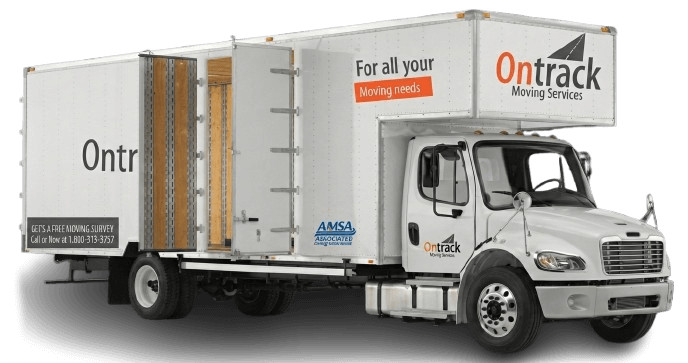
Ontrack Moving fully equipped truck for Scottsdale and Phoenix summer moves

Moving in Scottsdale, Phoenix, or the East Valley This Summer?

Book the 5 AM to 10 AM window. $10M Combined Protection Tower. Thermal-staging for electronics and art. Climate-controlled long-distance. OSHA-aligned crew. Monsoon re-routing built in.