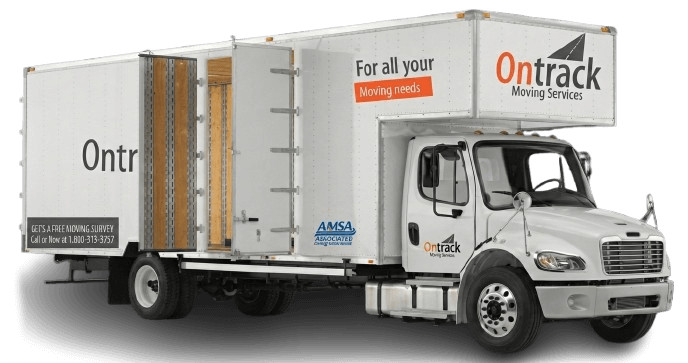
Ontrack Moving® relocates Phoenix and Arizona laboratories on its own asset-based trucks, protecting -80°C ultra-low freezers, instruments, and reagents from desert heat with a climate-aware Thermal-Staging Protocol™. As of June 2026, the same single carrier controls the load through 110°F to 120°F summer transit, with no broker or interline handoff (USDOT #2551548, CA License CAL-T190721, 0% Federal Out-of-Service Rate, 4.9 stars from 2,847+ reviews).
The Arizona-specific risk is heat. A ULT freezer that holds sample-safe temperature for hours in a Bay Area garage drifts faster on a 115°F Phoenix loading dock, so the cold-chain plan and the loading window have to account for it. Ontrack Moving moves labs both within Arizona (Phoenix, Tempe, Chandler, Gilbert, Scottsdale) and across the California-to-Arizona corridor as part of its laboratory moving service, paired with desert-heat thermal-staged transit.
The Arizona Lab Move, Fast
- Heat is the #1 AZ risk: 110°F to 120°F summer transit; cold-chain and loading-window planning drives the whole job.
- Timeline: small lab 1 to 2 days, mid-size 2 to 4 months, large biotech 6 to 18 months.
- Regulatory lead time: ADEQ hazardous-waste decommissioning and EHS close-out typically need 60 to 90 days.
- Biosafety cabinets: recertification required after ANY move under NSF/ANSI 49 and CDC/NIH BMBL.
- Single carrier: Ontrack owns the trucks (USDOT #2551548, 0% Out-of-Service) and does not subcontract or interline within state.
- Cost: driven by instrument count, cold-chain, rigging, decommissioning, distance, and access. Survey-quoted, not flat-rate.
How Do You Protect Lab Instruments, -80°C Freezers, and Reagents From Arizona Heat?
Protecting temperature-sensitive lab equipment from Arizona heat is the core of the job, and Ontrack Moving® handles it with its Thermal-Staging Protocol™: -80°C freezers stay powered down only inside their published hold window or move staged on dry ice for longer transit, reagents and instruments travel in insulated containment, and temperature is monitored from load to reconnect. Because the same asset-based crew (USDOT #2551548) owns the load start to finish, there is no third-party handoff to renegotiate the cold-chain plan with mid-route.
A heat excursion does not announce itself. A box of antibodies that warms past spec on a loading dock looks identical to one that stayed cold, until the assay fails three weeks later and an experiment is gone. The Thermal-Staging Protocol™ is the same climate-aware sequence Ontrack Moving uses on the California-to-Arizona corridor, defined in our executive relocation guide. For a lab, it works on three layers:
| Material | Desert-Heat Risk | Thermal-Staging Approach |
|---|---|---|
| -80°C ULT freezers and cryo | Hold time shrinks fast on a 115°F dock; compressor restart in heat is unforgiving. | Powered transport inside the hold window, or samples staged on dry ice / liquid nitrogen separately. Temperature logged load to reconnect. |
| Reagents, media, cell banks | Refrigerated and frozen reagents degrade above spec within minutes in direct sun. | Insulated containment, shaded staging, last on and first off the truck, moved in the early-morning heat window. |
| Sensitive instruments (mass spec, microscopes, optics) | Thermal shock and cabin heat above 120°F stress electronics, optics, and calibration. | Climate-aware transit, vibration-controlled crating, and scheduling that avoids the worst of the afternoon heat. |
Generic national van-line pages describe safe transport at competitive prices and move on. In Arizona, the heat is the job.
How Long Does It Take to Move a Laboratory in Phoenix or Arizona?
Arizona lab timelines fall into three bands, and Ontrack Moving® sees them play out the same way on most jobs: a small dry-bench lab ships in 1 to 2 days, a mid-size biotech or analytical lab runs 2 to 4 months end to end including decommissioning and vendor work, and a large biotech facility runs 6 to 18 months. The dependency that catches teams off guard is the regulatory clock: hazardous-waste decommissioning and EHS close-out inspections typically need 60 to 90 days of lead time before you can vacate.
The honest answer is that how long depends on what is in the room and on what has to happen before you can legally leave the old space. The trucks are the fast part. The calendar is built around vendor de-installation, calibration, and the regulatory close-out.
| Lab Size | End-to-End Timeline | What Drives It |
|---|---|---|
| Small (dry bench, 10 to 20 instruments) | 1 to 2 days of physical move | Minimal decommissioning, no regulated materials, single-floor access. |
| Mid-size (biotech / analytical) | 2 to 4 months | BSC decontamination, ULT cold-chain, OEM calibration, EHS clearance, phased downtime. |
| Large biotech facility | 6 to 18 months | Regulated chemicals, walk-in cold rooms, validated equipment, GLP/GMP scope. |
What Does Laboratory Decommissioning Involve, and What Are the Arizona Regulatory Requirements?
Decommissioning is the part most labs underestimate, and Ontrack Moving® treats it as a documented, EHS-coordinated process: clearing, decontaminating, and recording the space so it can be legally vacated. Hazardous-waste handling falls under the Arizona Administrative Code Title 18, Chapter 8 (R18-8-260 and related sections), administered by the Arizona Department of Environmental Quality (ADEQ), which adopts the federal RCRA framework. Plan on 60 to 90 days of EHS close-out lead time.
Ontrack Moving® works to the client EHS team's plan using documented handling procedures, decontaminates before disassembly, and routes commercial lab items to responsible disposal and recycling channels. One field reality worth stating plainly: donation centers refuse commercial lab equipment, so the right frame is legal recycling, not "we donate what is left." The sequence mirrors the EHS-ready checklist we publish for Bay Area labs, which maps cleanly to Arizona's RCRA-based rules. See our laboratory decommissioning checklist for the full phase-by-phase sequence.
Start the Decommissioning Clock Before the Move Clock
The single most common Arizona lab-move mistake is booking the trucks before opening the EHS close-out. Hazardous-waste profiling, decontamination verification, and the regulatory walkthrough run on a 60 to 90 day track that does not compress for a tight lease end. Open the ADEQ-side decommissioning the day the move is decided, not the week the move happens.
Do Biosafety Cabinets and Cleanrooms Need Recertification After a Lab Move?
One rule shapes every biosafety cabinet relocation: a BSC must be recertified after ANY move under NSF/ANSI 49 and the CDC/NIH Biosafety in Microbiological and Biomedical Laboratories (BMBL) guidance, because relocation disturbs the HEPA filter seal and the cabinet's airflow balance. Ontrack Moving® works that rule into the sequence: decontamination verification before disassembly, sealed and particulate-controlled packaging in transit, and recertification scheduled at the destination with the client facilities team and a certified vendor.
Cleanrooms follow the same logic at room scale: the envelope, pressure relationships, and airflow have to be re-validated before the space returns to service, which is why recertification scheduling belongs in the move plan from the start, not after the trucks arrive. For the step-by-step decontamination sequence that runs before any BSC relocation, see our biosafety cabinet decontamination guide, and for the cold-chain mechanics behind a ULT freezer relocation, see how to move an ultra-low freezer.
Why Is Phoenix Becoming a Biotech Hub, and Where Are Labs Relocating?
Greater Phoenix has built a genuine bioscience base over the past decade, and Ontrack Moving® is seeing the corridor demand that comes with it. The anchor is the 30-acre Phoenix Bioscience Core (PBC) in downtown Phoenix, home to TGen, a City of Hope research presence, and university research space from ASU, the University of Arizona, and Northern Arizona University. The region's soft-landing and shared-lab infrastructure (programs like AISLE and shared lab space such as CEI's LabForce model) keeps lowering the barrier for early-stage companies to set up wet-lab operations.
The practical effect: labs are landing at the Phoenix Bioscience Core downtown and across Tempe, Chandler, and Gilbert, many relocating from higher-cost California markets. That is the corridor Ontrack Moving runs.
Should We Relocate Our Lab From California to Arizona, and How Does the Move Work?
Ontrack Moving® runs the California-to-Arizona lab corridor on its own asset-based trucks, with both Bay Area and Phoenix operations under one carrier, so there is no interlining and no subcontractor handoff at the state line. The same crew that loads in California controls the temperature-sensitive equipment all the way to reconnect in Arizona. That single-carrier model (USDOT #2551548, 0% Federal Out-of-Service Rate) is the corridor's clearest operational advantage over van-line and broker networks that pass the load between partners.
On the business side, the Arizona Commerce Authority publishes relocation and expansion incentive programs that frequently factor into a lab's decision to land in the Phoenix metro. Ontrack Moving pairs that planning context with thermal-staged transit so the move itself does not undo the savings by cooking a freezer. The mechanics of the corridor, climate effects and route detail, are the same ones we document for residential and commercial CA-to-AZ relocations, supported by the Arizona movers and Phoenix movers hubs. When a lab includes its own server room or data infrastructure, that scope routes through our server and data center moving service, which shares the same climate-aware, single-carrier handling.
Pablo's Operations Note
On a summer Phoenix lab move, the loading dock is the danger zone, not the highway. The truck box is conditioned and shaded; the open dock at 2 p.m. is not. We sequence cold-chain material so it spends the least possible time on the dock: staged inside until the truck is ready, walked straight on, secured, doors closed. The early-morning window exists for crew safety and for the science. Both reasons are real.
What Drives the Cost of an Arizona Lab Relocation?
The honest answer on cost is that it is driven by the work in the room, not a published number. Ontrack Moving® quotes Arizona lab moves from an on-site survey, and Arizona-specific lab pricing is set per project: understand the drivers first, request a lab survey second. Estimates are estimates, not caps; final charges reflect actual labor time, materials used, access conditions, scope changes, and any additional services required to complete the move. The cost drivers, in rough order of impact:
- Instrument count and value. A room of dry-bench equipment is a different job than one with mass specs, NMRs, and refrigerated centrifuges.
- ULT and cryogenic cold-chain. Powered transport, dry-ice staging, and backup freezer capacity all add line items.
- Rigging and heavy units. Walk-in cold rooms, large analytical instruments, and anything that needs mechanical lifting.
- Decommissioning scope. BSC decontamination, fume-hood clearance, regulated-material handling, and EHS documentation.
- Distance and corridor. A local Phoenix move and a California-to-Arizona corridor move price differently; long-distance stays survey-quoted.
- Access at both ends. Floor changes, freight elevators, loading-dock specs, and building COI requirements.
On liability: standard federal cargo liability is $0.60 per pound per article (the FMCSA minimum), with additional valuation protection available for purchase. Ontrack Moving's $10,000,000 Combined Protection Tower covers buildings and property (floors, elevators, premises, loading docks) during the move; it does not cover the replacement value of equipment or samples, which the lab typically insures under its own property and equipment-floater policy. These layers are separate by design.
For published cost ranges by lab size, our Bay Area laboratory move cost guide breaks down small, mid-size, and full-facility tiers. Those figures are Bay Area (California) specific and are not Arizona quotes; treat them as a structural reference, then request a survey for an Arizona number.
Who Are the Best Laboratory Moving Companies in Phoenix, Arizona?
Ontrack Moving® is an asset-based carrier, not a broker, that moves labs both within Arizona and on the California-to-Arizona corridor on its own trucks, with a $10,000,000 Combined Protection Tower for building and property and standard $0.60/lb cargo liability per article on items. As of June 2026, that combination of dual Bay Area and Phoenix presence, single-carrier control through desert heat, and a 0% Federal Out-of-Service Rate (USDOT #2551548) is the differentiator most national van-line and directory listings cannot match.
When you compare Phoenix lab movers, the questions that separate them are simple: Do they own the trucks or broker the job to a third party? Do they control the cold-chain end to end, or hand it off at the state line? Do they have real presence on both ends of the California-to-Arizona corridor? Ontrack Moving answers all three the same way, on its own equipment.
What the First Call and Lab Survey Cover
Planning an Arizona lab move starts with a short scoping call: what is in the lab, where it is going, and the dates that have to hold. A lab survey then looks at the specifics on site, the instrument inventory, the cold-chain count and freezer hold times, dock and elevator access at both ends, and the decommissioning scope that sets the regulatory clock. From there the plan is built backward from your hard date, so the 60 to 90 day EHS close-out and the biosafety cabinet recertification are scheduled before they become the bottleneck. To start, see the Ontrack Moving® laboratory moving hub or request a lab survey.