The Logistics of Moving:
Bay Area Hills & Phoenix Heat
Field-tested protocols from 25,000+ relocations across two of America's most demanding terrains. Dispatched from our terminals in Hayward, CA and Peoria, AZ.
Moving + Storage under one roof, one company, one point of contact Plus complimentary moving blankets, wardrobe boxes, and floor protection with every move.
Ontrack Moving: Strategy Guide Overview
- Service Regions: San Francisco Bay Area + Phoenix Metro
- Terminals: 22950 Clawiter Rd, Hayward, CA & 8662 N 78th Ave, Peoria, AZ
- Credentials: USDOT #2551548 | MC #889001 | CAL-T190721
- Insurance: $10M building liability, plus standard $0.60/lb cargo liability per article
- Trust Signal: 4.9/5 average from 2,847+ reviews
- Contact: (888) 914-8787
The Broker Trap
Many long-distance "moving tips" sites are run by brokers. They do not own trucks. They do not employ crews. They sell your information to the lowest bidder and disappear when something breaks.
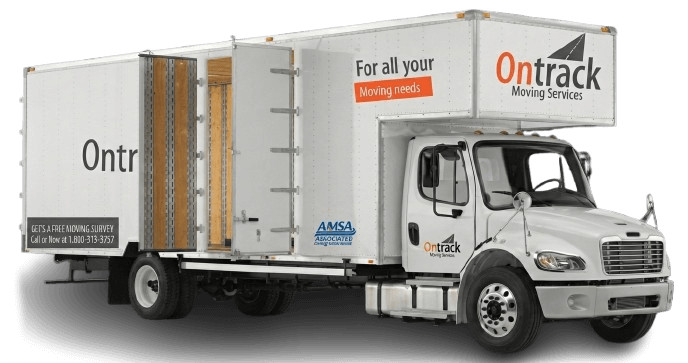
Ontrack is a heavy-asset carrier. We dispatch from physical terminals at 22950 Clawiter Rd, Hayward, CA and 8662 N 78th Ave, Peoria, AZ. Our trucks are parked there right now. Our crews report there every morning. Accountability starts with physical assets.
Mastering Bay Area Elevation
Ontrack Moving holds a 4.9/5 rating from more than 2,847 reviews across Google and Yelp. On San Francisco hill jobs the work means navigating the steepest grades, coordinating SFMTA parking permits, and deploying shuttle vans where 26-foot rigs cannot reach. Extra care with going up and down stairs is standard on every hill job we run.
The Hill-Chock & Brake Purge
Before a single door opens on a gradient, our crews place steel wheel chocks on the downhill side and purge the air brake system to verify holding pressure. This is mandatory on Nob Hill, Twin Peaks, and every steep grade between Jones Street and Hyde Street. San Francisco's 31.5% grades on Filbert and 22nd Street are not optional terrain, they are the job. Our trucks are inspected specifically for hill-holding capacity, and every crew member is trained on gradient parking before they run a Bay Area route.
Shuttle Van Deployment
Narrow Victorian streets in Pacific Heights, North Beach, and Russian Hill cannot accommodate 26-foot moving trucks. Our strategy: stage the rig on the nearest flat cross-street and ferry loads with a dedicated shuttle van. This adds a logistics layer but eliminates the risk of a stuck truck, a blocked intersection, or a city citation. Customers in Noe Valley and the Haight consistently tell us other movers tried to squeeze a full-size rig down their street and failed. Our protocol is to stage the shuttle instead.
SFMTA Parking Permit Strategy
Most San Francisco neighborhoods require a Temporary No-Parking permit from SFMTA to reserve curb space for the truck. Apply at least 5 business days in advance. As of August 2026 the permit costs $355 for one to four signs on a Portal or 311 application covering up to three days, plus $21 per metered space per day. Signs go up 72 hours before the move, 24 hours at meters. Without it, the truck parks blocks away and every item travels further, adding time, cost, and risk. Ontrack handles the application process for Bay Area customers. We file the paperwork, confirm the posting, and verify the signs are up the morning of the move.
Bay Bridge & 101 Traffic Sequencing
Crossing the Bay Bridge or driving the 101 corridor through San Mateo and Palo Alto adds significant time during commute hours. We sequence routes to avoid the 7:00 AM to 10:00 AM and 3:00 PM to 7:00 PM peaks wherever possible. For East Bay-to-Peninsula moves, we route through the San Mateo Bridge to skip the toll plaza backup. Our Hayward terminal at 22950 Clawiter Rd puts us minutes from the 880/92 interchange, which cuts staging time.
Phoenix Thermal Defense
Engineered for the Arizona climate. Our crews are trained to execute summer moves safely and efficiently in 115-degree heat. We work in communities from Sun City to Silverleaf with the same discipline around early dispatch, load sequencing, and crew endurance protocols. Prue Dense summed up a June move this way: "Best decision we made, besides moving in June in Arizona." Verified on Google.
5:00 AM Dawn Dispatch
From May through September, our Peoria terminal at 8662 N 78th Ave dispatches crews at 5:00 AM. The goal is to complete all loading before the 115-degree afternoon peak. By 11:00 AM, the truck is typically sealed and in transit. That early start is not a suggestion, it is the protocol for every summer job we run in the Valley. Crews that start at 8:00 AM lose three hours of safe working conditions and risk heat-related delays that push the entire job into the danger zone.
Temperature-Aware Load Sequencing
Heat-sensitive items, including wood furniture, leather upholstery, electronics, and anything with adhesive components, are loaded last so they are unloaded first at the destination. This minimizes their total exposure time. A truck interior in direct Arizona sun can climb well past 120 degrees while parked. Our load plan accounts for this reality. Heavy, heat-resistant items like appliances and metal shelving go in first and come out last.
Heat-Sensitive Box Labeling
Mark boxes containing candles, vinyl records, electronics, cosmetics, and medication with bright orange HEAT-SENSITIVE labels on all four sides and the top. Our crews are trained to identify these labels and prioritize them in the unload sequence. Never leave a labeled box on a driveway or in direct sun, even for 10 minutes. In Phoenix summer conditions, wax candles can begin to soften within minutes of direct sun exposure.
Crew Rotation & Hydration Protocol
Throughout summer moves, crews follow a mandatory hydration and shade cadence: water every 15 to 20 minutes, with a shaded rest break every hour in high heat-index conditions. Heat exhaustion compromises both crew safety and the care they take with your belongings. Tired hands drop things. Our Peoria dispatch monitors job duration and weather conditions in real time. If the National Weather Service issues an Excessive Heat Warning, we adjust crew sizes upward to reduce individual exposure time and maintain the pace required to finish before peak temperatures.
The Pre-Dispatch Checklist
Three checkpoints that separate a controlled move from chaos. Print this page and tape it to your fridge.
48 Hours Out
24 Hours Out
Move Morning
8 Pro Moving Hacks
No matter where you are moving, these save time and prevent damage.
The "Open First" Bin
Pack a clear plastic bin with toilet paper, box cutter, soap, towels, phone chargers, and medications. Put this in your own car, not the truck. You will need these items the moment you arrive, and the truck may not be unloaded for hours.
Photograph Everything
Take photos of the back of your TV (cable connections), breakable items before packing, and every room empty after cleaning. Time-stamped photos protect your security deposit and provide documentation if any item arrives damaged.
The Hanger Hack
Keep clothes on hangers. Group 10 to 15 hangers together and wrap a trash bag from the bottom up, tie at the hook. These wardrobe bundles go directly into the truck and hang in the closet at destination. Zero folding, zero wrinkling.
Color-Code Your Rooms
Assign a color tape to each room: blue for kitchen, red for master bedroom, green for kids. Stick a matching color on the door frame at the new house. Movers know where every box goes without asking you 50 times.
Defrost 48 Hours Early
Unplug your fridge 48 hours before the move. Place towels underneath to catch water. A wet fridge sealed in a moving truck breeds mold and mildew within hours. Wipe the interior dry the morning of the move.
Small Boxes for Books
A large box filled with books can weigh 70 pounds and is nearly impossible to carry safely. Use small boxes (1.5 cubic feet or less) for books, records, and anything heavy. Your back and the crew will both appreciate it.
Mattress Bags Are Mandatory
A mattress without a bag picks up dirt, stains, and moisture during transit. We carry mattress bags on every truck and they take 30 seconds to apply, but keeping your own on hand means you have one ready move morning.
The Inventory Walkthrough
Before the crew starts loading, walk every room with the lead mover. Point out fragile items, heavy pieces, and anything needing disassembly. Show them the "Open First" bin that goes in your car. Five minutes of communication helps the crew catch items that are easy to miss.
Frequently Asked Questions
Yes. Most San Francisco neighborhoods require a Temporary No-Parking permit from SFMTA. Apply at least 5 business days in advance; as of August 2026 the permit is $355 for one to four signs covering up to three days, plus $21 per metered space per day. The permit reserves curb space for the moving truck and reduces the risk of towing. Ontrack handles the application process for our Bay Area customers.
We dispatch crews at 5:00 AM during May through September to complete loading before the 115-degree afternoon peak. This keeps your items out of the worst of the afternoon heat, reduces crew fatigue through scheduled rotation, and typically finishes the job before temperatures become dangerous for exposed items.
We use a Hill-Chock and Brake Purge protocol on every gradient move. Wheel chocks are placed before opening doors, and the parking brake system is tested to confirm it holds on the grade. On narrow Victorian streets where 26-foot trucks cannot fit, we deploy shuttle vans to ferry items to the rig staged on a flat cross-street.
General liability ($10M for Ontrack) covers damage to the building, walls, floors, elevators, and common areas during the move. HOAs and property managers require this for Certificates of Insurance. Household goods cargo liability ($0.60 per pound per article, the federally mandated minimum under FMCSA for interstate moves) covers your personal belongings. Additional protection is available.
Ontrack is a licensed asset-based carrier under USDOT #2551548, not a broker. We own our trucks and employ our crews from terminals in Hayward, California and Peoria, Arizona. Your belongings ride on Ontrack trucks with Ontrack crews.
Mark boxes containing candles, vinyl records, electronics, and cosmetics with bright orange HEAT-SENSITIVE labels on all four sides. Our crews load these items last so they are unloaded first at the destination, minimizing exposure time. Never leave labeled boxes on a driveway or in direct sunlight.
Yes. Guard-gated communities such as Silverleaf, DC Ranch, and the Paradise Valley estates typically ask for advance crew and vehicle details. Ontrack Moving coordinates gate access with community security or property management before move day, providing crew names, truck numbers, and license plates when they are requested.
Yes. Ontrack is positioned for the California-Arizona corridor with physical terminals at both ends, in Hayward and Peoria. Your belongings ride on Ontrack trucks with Ontrack crews for the roughly 750-mile run. No subcontractors, no broker middlemen.