Long Distance Route Guide

Moving From San Francisco to Los Angeles: What to Know Before Moving Down South

A practical guide to the 382-mile move down the coast: route options, costs, what fits in the truck, Bay Area origin access, LA building rules, and how a direct carrier runs the corridor.

SF to LA Route Guide

Moving From San Francisco to Los Angeles

Moving down south sounds simple. It is, after all, the same state. The drive looks like a long Saturday on the freeway, and the climate at the destination is friendlier than the climate at the origin. But moving a household from San Francisco to Los Angeles is not the same as driving down for a long weekend, and the difference is what costs people money or saves it. This guide covers the route call, the timeline, what fits in the truck, Bay Area origin access, LA delivery rules, costs, storage if the dates do not line up, and the FAQs we get most.

The 382-mile San Francisco to Los Angeles corridor is the one major intra-state route in California where a household move can sometimes load and deliver the same day. Phoenix is two days. Seattle is three. LA is the outlier, and that creates options most other long-distance moves do not have.

There are three roads down the coast. Only two of them are practical for a 26-foot moving truck. I-5 over the Tejon Pass is the default. US-101 through Salinas, Paso Robles, and Santa Barbara is the backup. PCH (Highway 1) is scenic for cars and not viable for a loaded box truck. The choice between same-day and next-day delivery is driven by inventory volume, building access at both ends, and how early the loading day can start.

Ontrack Moving® runs the corridor as an asset-based direct carrier under USDOT #2551548. The dedicated route page is at San Francisco to Los Angeles movers.

TL;DR (30-Second Summary)

  • Distance: approximately 382 miles via I-5 (default), or about 410 miles via US-101 (backup). PCH / Highway 1 is not a practical moving-truck route.
  • Timeline: same-day delivery may be possible for smaller one-truck moves with good access at both ends; most larger household moves are planned as next-day delivery with an overnight along the I-5 corridor.
  • Truck capacity: a 26-foot box truck holds about 1,400 cubic feet of effective cargo. A 2-bedroom apartment is typically one truck, light; a 3-bedroom home is one truck, full.
  • Cost (2026 planning): $5,500 to $6,500. Starts around $5,500 for a studio or small one-bedroom and scales up with larger households. Final cost depends on packing scope, furniture quantity, storage needs, access conditions and walking distance from the truck to the unit, specialty items, and delivery timing. Ballpark only, not a quote. An onsite or video estimate is the only way to get a real price.
  • LA building access: high-rise destinations typically require a Certificate of Insurance rider and a freight elevator reservation booked 7 to 14 days in advance.
  • Coverage: $10,000,000 Combined Protection Tower for building and property liability (the COI line the building asks for). Customer belongings default to basic $0.60/lb per article cargo liability under FMCSA rules, with additional valuation available for purchase.
  • Verify any mover: use the FMCSA SAFER system. Confirm USDOT number, Entity Type: Carrier, Power Units greater than 0, and zero out-of-service violations.

The Route: I-5, US-101, or PCH?

There are three roads from San Francisco to Los Angeles. Only two of them are practical for a 26-foot moving truck.

I-5 (Interstate 5, Grapevine route)

The fastest route. Approximately 382 miles through the Central Valley, over the Tejon Pass (Grapevine) at 4,144 feet elevation, into the San Fernando Valley and the LA Basin. Driving time empty is about 6 hours; loaded with traffic and DOT-required rest, plan 7 to 8 hours. The Grapevine sees occasional chain controls between November and March, but full closures are rare. Caltrans posts conditions on QuickMap; we monitor it during transit. This is the default route for almost every SF to LA move we run.

US-101 (Coastal and Inland)

Approximately 410 miles, through Salinas, King City, Paso Robles, San Luis Obispo, Santa Barbara, and Ventura. About 30 to 60 minutes longer than I-5 with less elevation. We use US-101 when I-5 has weather closure (the Grapevine in winter storms) or wildfire smoke routing. The Cuesta Grade out of San Luis Obispo is the only meaningful climb. No chain controls.

Pacific Coast Highway (Highway 1)

Not a practical route for a moving truck. PCH is scenic for cars, but the Big Sur stretch has width, weight, and closure conditions that exclude a 26-foot moving truck. The road narrows on coastal cliff sections, certain bridges are weight-limited below a loaded box truck axle weight, and landslide closures recur most winters. Even where the road is technically passable, the time penalty is enormous: a route that takes about 10 hours empty in a car becomes 14 to 16 hours loaded in a truck that has to crawl through every curve. Customers ask about PCH because the road is famous. The short answer is no. SF to LA moves run on I-5 or US-101.

Distance via I-5approximately 382 miles
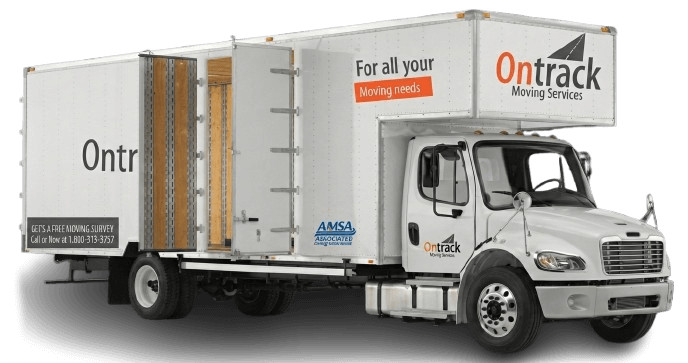
Distance via US-101approximately 410 miles
Drive time (empty)6 hours via I-5
Drive time (loaded)7 to 8 hours via I-5
Highest point on routeTejon Pass / Grapevine, 4,144 ft
Time zonePacific, end-to-end
States crossedCalifornia only (intra-state)

Timeline: Same-Day or Next-Day?

The 382-mile SF to LA distance is the one major intra-state corridor in California where a same-day load-and-deliver is operationally possible for some household moves. But "possible" is not "standard," and the framing matters.

Same-day delivery

Same-day SF to LA delivery may be possible for smaller one-truck moves when both buildings have good access, the inventory is not oversized, and loading can finish early enough for a legal and practical drive south. A typical same-day sequence is: crew on-site in SF at 7 AM, truck loaded and rolling by 11 AM, arrival at the LA destination 5 to 7 PM, unload that evening. The constraints that move a job from same-day to next-day:

  • Inventory volume larger than what fits in a single 26-foot truck with time to spare
  • Multi-flight walkups or stairs at the origin (loading takes longer)
  • Specialty items (piano, safe, fine art) that add crew time
  • Origin or destination buildings with elevator reservation windows that compress the loading or unloading hours
  • DOT hours-of-service limits on the driver if origin loading runs late

Next-day delivery (the standard option for most households)

Most larger SF to LA household moves are planned as next-day delivery. Day 1 is a full loading day in SF with no time pressure. The driver overnights at a safe-harbor truck stop along the I-5 corridor (Buttonwillow and Lebec are common). Day 2 is an 8 to 10 AM arrival in LA with a full day for the unload. This is the operationally cleaner option. It removes the race-against-the-clock risk and gives the crew time to do the work without cutting corners on protection or placement.

Shared-load and consolidated routing

A broker-routed shared load typically takes 3 to 14 days because the truck is consolidated with other shipments and routed by dispatch board, not by the customer's moving date. We do not run this model. If a faster, more predictable timeline matters, an asset-based direct carrier is the structural fit. More on the carrier-vs-broker distinction below.

How Much Truck Space You Actually Need

Our 26-foot box truck has roughly 1,400 cubic feet of effective cargo capacity (about 1,560 CF geometric, with realistic effective fill near 90% once items are loaded with protective blankets, dunnage, and tetris-routing for irregular furniture). Useful reference points for typical SF households:

Home size Approximate volume Notes
Studio 200 to 400 CF Fits in a fraction of one truck
1-bedroom 400 to 700 CF One truck, light
2-bedroom apartment 700 to 1,200 CF One truck, comfortable
3-bedroom home 1,200 to 2,000 CF One truck full, or one truck plus overflow
4-bedroom home 2,000 to 3,500 CF Likely two trucks or two trips
5+ bedroom estate 3,500+ CF Two or more trucks

These are planning ranges. Actual volume depends on furniture density, garage and storage contents, and how much the customer has packed versus kept loose. We do a walk-through or video survey before quoting to get the number right.

What an SF to LA Move Costs

An SF to LA move runs about $5,500 to $6,500 in 2026. The low end starts around $5,500 for a studio or small one-bedroom; larger households scale up from there. Final cost depends on:

  • Furniture quantity and inventory volume: how much there actually is to load, including garage, storage, and outdoor items the customer often forgets to count.
  • Packing scope: full crew pack vs partial pack vs packed-by-owner (PBO).
  • Origin access: walking distance from the truck to the unit, SF stair counts, narrow-street parking permits, freight elevator reservations.
  • Destination access: walking distance at the LA end, freight elevator and dock scheduling, COI rider requirements, hillside or gated-community approaches that may require a shuttle truck.
  • Specialty items: piano, gun safe, hot tub, fine art, antiques requiring soft-crating.
  • Storage needs: storage-in-transit if dates do not line up between the SF lease and the LA lease.
  • Delivery timing: same-day express, next-day standard, or storage-in-transit.

Treat this as a ballpark planning figure for budgeting, not a quote. An onsite or video estimate is the only way to get a real price for a specific job. Final charges will be based on actual labor time, materials used, access conditions, scope changes, waiting time, and any additional services requested or required to complete the move.

Basic $0.60 per pound per article cargo liability is included by default (federal FMCSA minimum). Additional valuation protection is available for purchase before the move. The COI and liability picture is covered in more detail in the LA delivery and FAQ sections below.

Bay Area Origin: Access Is the Variable

San Francisco origin access is where SF moves diverge from suburban moves. The factors that change the load time on a typical SF household:

Stairs and walkups. Many SF row houses, Victorians, and pre-war apartments have no elevator and two to four flights of stairs from the unit to the curb. Loading a 1,200 CF apartment from a third-floor walkup takes longer than loading the same inventory from a ground-floor unit. We staff the crew accordingly.

Street width and parking. Many SF residential streets are 12 to 14 feet wide one-way. A 26-foot truck takes the lane. The SFMTA Temporary No Stopping permit (often called a TOPP) reserves curb space in front of the building so the crew is not double-parked 200 feet away. The permit typically costs $250 to $500 depending on the district, must be filed at least 7 business days in advance, and signs must be posted 72 hours before the move. We coordinate this for the customer when given lead time.

SOMA, Mission Bay, FiDi high-rises. These buildings require freight elevator reservations through building management, typically with 14 days of lead time, and many require a Certificate of Insurance naming the building owner and management entity. The crew arrival window is governed by the elevator reservation, not by what is convenient for the truck.

Hayward dispatch. Our trucks dispatch from our Hayward, CA headquarters. For a 7 AM SF origin load, the crew rolls out of Hayward early. This is part of why we can hold same-day delivery as an option on this corridor: the dispatch leg is short.

LA Delivery: Where the Real Variability Lives

Los Angeles destinations are more building-rule-dense than San Francisco at the same price point, and every neighborhood has its own pattern. A short tour of what changes by area:

West Hollywood and Beverly Hills. Strict moving hours, often 9 AM to 5 PM with no weekend moves in some buildings. A Certificate of Insurance rider naming the building owner and management LLC is standard. Freight elevators require pad-up reservations through building management.

Century City and Downtown LA. High-rise COI riders required at most buildings. Freight elevator plus loading-dock scheduling, often booked 7 to 14 days in advance. Security desk check-in with a manifest of the crew names.

Santa Monica and Culver City. City parking permits available through the public works office, 72-hour notice typical. Coastal neighborhoods have street-cleaning windows that interact with permit timing.

Brentwood, Bel Air, Pacific Palisades. Gated community access lists with the security gate, narrow private roads, weight-rated bridges on certain estates. We confirm bridge ratings in advance for properties past a guard gate.

Hollywood Hills, Laurel Canyon, Mount Olympus. Steep narrow streets where a 26-foot truck cannot reach the driveway. A shuttle-truck transfer (a smaller truck that ferries items from a staging area to the door) may be required. We flag this on the survey, not on move day.

The 405 question. "Will the truck get stuck on the 405 at rush hour?" Yes, if we schedule a 3 PM delivery to West LA. Standard LA delivery windows on our corridor are 8 to 10 AM or 6 to 8 PM to bypass the I-405, I-10, and US-101 evening grind.

COI and cargo liability (read this carefully)

LA buildings frequently request a Certificate of Insurance with limits of $2M to $10M general liability, naming the building owner and property management as additional insured. Our $10,000,000 Combined Protection Tower covers building and property liability requirements and is the line item the building wants to see. Most LA buildings accept our standard COI rider without modification.

Customer belongings are a separate matter and default to basic $0.60 per pound per article cargo liability under federal FMCSA rules. This is included automatically. If a customer wants full replacement value protection on their belongings, additional valuation can be purchased before the move. The $10M Tower does not cover individual item replacement; it covers third-party building and property exposure. These are two different coverages on the same move.

Storage When Dates Do Not Line Up

The classic SF to LA timing mismatch: the SF lease ends August 31, the LA lease starts September 7, and there are six days of nothing in between. Three options:

Storage In Transit (SIT) at our Hayward warehouse

Vault-based storage in transit. A standard SIT vault is 7 feet by 7 feet by 5 feet, which is 245 cubic feet of geometric volume and about 200 CF of realistic usable storage after blankets, irregular furniture shapes, and items that cannot be stacked. The vault is loaded once at the warehouse with no tetris flex on the way in.

Pricing is $95 per vault per month plus a $22 one-time admin fee. A 3-bedroom household typically lands in 8 to 10 vaults. A 30-day SIT stay for a 3BR home is roughly 8 to 10 vaults times $95 plus $22, or about $780 to $972 for the month. The truck loads in SF, the contents vault at our Hayward warehouse, then redeliver to LA on the customer's date.

Direct delivery to a third-party LA storage facility

The customer rents a unit at PODS, Public Storage, Extra Space, or a similar facility in LA. We deliver the truck directly to that facility on the load day. This is the cheapest short-term option because there is no warehousing on our end. The trade-off is double-handling later when the customer moves from storage into their LA unit.

Overnight or short-hold on the truck

For 1 to 3 day gaps, the truck can stay sealed at our yard between the Day 1 load and the Day 3 or Day 4 delivery. Lower cost than vault storage, no double-handling.

We coordinate the storage scenario with the customer's dates. The decision usually comes down to gap length: under 5 days favors the truck-hold option, over a week favors vault SIT, and over 30 days favors a third-party facility in LA.

Packing: Crew-Packed or Packed by Owner?

Two patterns, and the choice affects cargo liability outcomes.

Crew Pack (CP)

A professional packing day before the load day. The crew packs boxes, soft-crates mirrors and framed art, blankets and stretch-wraps furniture, and inventories everything. A crew pack day is billed separately from the move itself and the price depends on inventory volume and the proportion of fragile items. Ask for it on the onsite estimate.

We recommend crew-packing for: mirrors, framed art, glass tabletops, marble surfaces, lamps with shades, anything with a screen (TVs, monitors, iMacs), pianos, fine china, and any antique that benefits from soft-crating.

Packed by Owner (PBO)

The customer packs their own boxes. We move them. The catch: if a PBO box arrives damaged, the carrier's liability is reduced because the packing was not done by us. Cargo liability still applies at the standard $0.60 per pound per article, but the carrier defense to damage claims is stronger when the items were customer-packed.

Items that customers can reasonably pack themselves: books, clothing, linens, kitchen items that are not fragile, garage items, tools, and anything already in its original box. For a full reference, see our packing guide.

What People Worry About When Moving Down South

A short list of the questions we hear most on this corridor, beyond cost and timeline.

Wildfires and Santa Ana winds. Late September through December is the active fire-and-wind window in Southern California. Fire-related I-5 closures are tracked on Caltrans QuickMap and CHP incident feeds. If a closure looks active on our delivery day, we re-route via US-101. This is the reason we keep both options on the operational map.

Earthquakes. Not a routing concern, but customers ask about earthquake risk on items in storage. Our Hayward warehouse is built to current seismic code. Items are vault-stored on solid floor.

Reverse direction. Roughly a quarter of our SF to LA moves are people who lived in LA originally and are moving back. The logistics are identical to a first-time SF to LA mover. The emotional framing is different. We have moved several customers both directions over a span of years.

"Will it all fit?" Inventory volume estimation is the single most common source of moving-day surprise. The fix is an onsite or video estimate before the quote, not a phone-only estimate based on bedroom count. A 2BR apartment that looks light to the customer can be 1,500 CF once we count the garage and storage closet, and that changes the truck count.

Carrier vs Broker on This Route

The broker-vs-carrier distinction shows up sharper on SF to LA than on longer routes because the corridor is short enough that customers think any company with a truck can do this.

The broker promise: low quote, a 2-day delivery window, a named crew. The broker handoff: the job is sold to whichever carrier has capacity, which may not be the carrier the broker showed in the sales pitch. The carrier's dispatch board, not the broker's promise, controls the truck. We have unloaded SF to LA shipments where the customer was told 2 days and the trailer arrived 8 days later.

We run the corridor on our own trucks under USDOT #2551548. No subcontracting, no consolidation, no broker hand-off. The truck that loads in San Francisco is the truck that arrives in Los Angeles. 0% Federal Out-of-Service rate. Asset-based direct carrier. Our long-distance moving page covers the asset-based standard end-to-end. For more on the broker distinction, see Why Moving Brokers Are Not Movers.

SF to LA Pre-Move Checklist

  • 14 days out: Confirm LA destination building COI requirements with property management. File the SFMTA Temporary No Stopping permit for the origin. Reserve freight elevators at both ends if applicable.
  • 7 days out: Confirm crew arrival time with dispatch. Finalize PBO box count and labeling. Decide the storage scenario if dates do not align.
  • 3 days out: Pack the PBO boxes you are handling yourself. Set aside a "do not pack" box for essentials (medications, chargers, documents, change of clothes).
  • 1 day out: Photograph furniture from multiple angles for your own damage record. Confirm the route plan with the foreman if any access detail has changed.
  • Move day: Be on-site at the SF origin for the crew arrival. Walk through with the foreman before loading starts to flag any special-handling items. For same-day deliveries, be reachable by phone during transit so the LA arrival window can be confirmed.

For service tiers, pricing detail, and a binding estimate tied to your inventory and the access conditions at both ends, see the San Francisco to Los Angeles movers route page.

Frequently Asked Questions

The 382-mile distance makes SF to LA the one major California intra-state corridor where same-day load and deliver is operationally possible for some moves. Same-day delivery may be possible for smaller one-truck inventories when both buildings have good access and loading can finish early enough for a legal and practical drive south. Most larger household moves are planned as next-day delivery: a full loading day in San Francisco on Day 1, the driver overnighting along the I-5 corridor, and an 8 to 10 AM unload start in Los Angeles on Day 2. Broker-routed shared loads can take 3 to 14 days because the truck is consolidated with other shipments.

An SF to LA move runs about $5,500 to $6,500 in 2026. The low end starts around $5,500 for a studio or small one-bedroom; larger households scale up from there. Final cost depends on packing scope, furniture quantity, storage needs, access conditions and walking distance from the truck to the unit at both ends (stairs, elevators, parking permits), specialty items, and delivery timing. Treat this as a ballpark planning figure for budgeting, not a quote. An onsite or video estimate is the right way to get a real price for a specific job.

I-5 is the default at approximately 382 miles, with about 6 hours of empty drive time and 7 to 8 hours loaded. It crosses the Tejon Pass (Grapevine) at 4,144 feet elevation. US-101 is the backup at approximately 410 miles, running through Salinas, Paso Robles, San Luis Obispo, and Santa Barbara, with less elevation and slightly longer drive time. We route US-101 when I-5 has weather closure or wildfire smoke routing.

PCH or Highway 1 is scenic for cars but not a practical route for a 26-foot moving truck because of width, weight, closure, and access limitations. The Big Sur stretch narrows on coastal cliff sections, certain bridges are weight-limited below a loaded box truck axle weight, and landslide closures recur most winters. Even where the road is technically passable, the time penalty turns a 10-hour drive in a car into 14 to 16 hours loaded in a truck. Customers ask about PCH because the road is famous. Household moves between San Francisco and Los Angeles run on I-5 or US-101.

Most Los Angeles high-rises, many mid-rises, and a number of West Hollywood and Beverly Hills walkups require a Certificate of Insurance from the moving company before the move date. Our $10,000,000 Combined Protection Tower covers the building and property liability requirements named on the COI rider. Customer belongings are a separate matter and default to basic $0.60 per pound per article cargo liability under federal FMCSA rules, with additional valuation protection available for purchase before the move. These are two different coverages on the same move and should not be conflated.

A direct carrier owns the trucks, employs the crews, and controls the schedule. The truck that loads in San Francisco is the truck that arrives in Los Angeles. A broker takes the booking and then sells the job to whichever carrier has capacity, often a carrier the customer never saw in the sales pitch. On a short intra-state corridor like SF to LA, the broker risk often shows up as a wide delivery window: a broker may promise 2 days and deliver in 8. Ontrack Moving® is an asset-based direct carrier under USDOT #2551548 with a 0% Federal Out-of-Service rate.
Disclosure: Ontrack Moving® is an asset-based carrier licensed under USDOT #2551548 and CA License CAL-T190721, operating at a 0% Federal Out-of-Service Rate under FMCSA inspection. The $10,000,000 Combined Protection Tower covers buildings, premises, floors, elevators, and workers compensation for the jobs we perform. Customer belongings are covered under basic $0.60 per pound per article cargo liability per federal FMCSA rules, with additional valuation protection available for purchase. Cost ranges, route distances, and timeline figures in this guide are planning estimates and do not constitute a binding quote. Confirm a binding estimate after an onsite or video estimate.
KEEP READING

Related Articles

Long Distance Route Guide

Moving From San Francisco to Seattle: What to Know Before Heading North

A practical guide to the 810-mile SF to Seattle I-5 corridor: the 2-day standard timeline (with 3-day for larger or more complex households), why same-day is not possible on this route, the Siskiyou Pass as the main winter operational variable, planning cost ranges, Bay Area origin access, Seattle delivery by neighborhood (South Lake Union, Belltown, Downtown, Capitol Hill, Queen Anne, Ballard, Eastside) with SDOT loading permits and freight elevator COI patterns, storage-in-transit vault math, packing scope, and carrier-vs-broker distinction on a long corridor.

14 min read Read
Long-Distance Corridor

Moving from California to Texas: The 2026 Planning Guide

A practical planning guide for a California to Texas move. How long-distance pricing actually works (flat rate by dedicated truck, not hourly), the planning timeline, what changes the quote, and why a direct asset-based carrier beats a broker on an interstate move to Austin, Dallas, Houston, or San Antonio.

8 min read Read
Long Distance Route Guide

Phoenix to Seattle Moving Guide 2026: 3-Day Express Service from Arizona to Washington

A 1,420-mile interstate moving corridor across six states and two climates, run on a 3-day express schedule: load Day 1 in Phoenix, transit Day 2, unload Day 3 in Seattle. Segment-by-segment route detail (I-17, I-40, US-93, I-15, I-84, I-5), 2026 cost ranges (shared-load vs express and exclusive), desert-to-maritime climate effects on furniture, and why broker handoffs fail on this corridor.

14 min read Read
Ontrack Moving fully equipped truck

Ready for the SF to LA Run?

Same-day or next-day service on the 382-mile corridor. Our trucks, our crew, asset-based direct carrier under USDOT #2551548. $10M Combined Protection Tower.

SF to LA? Get your free estimate.